


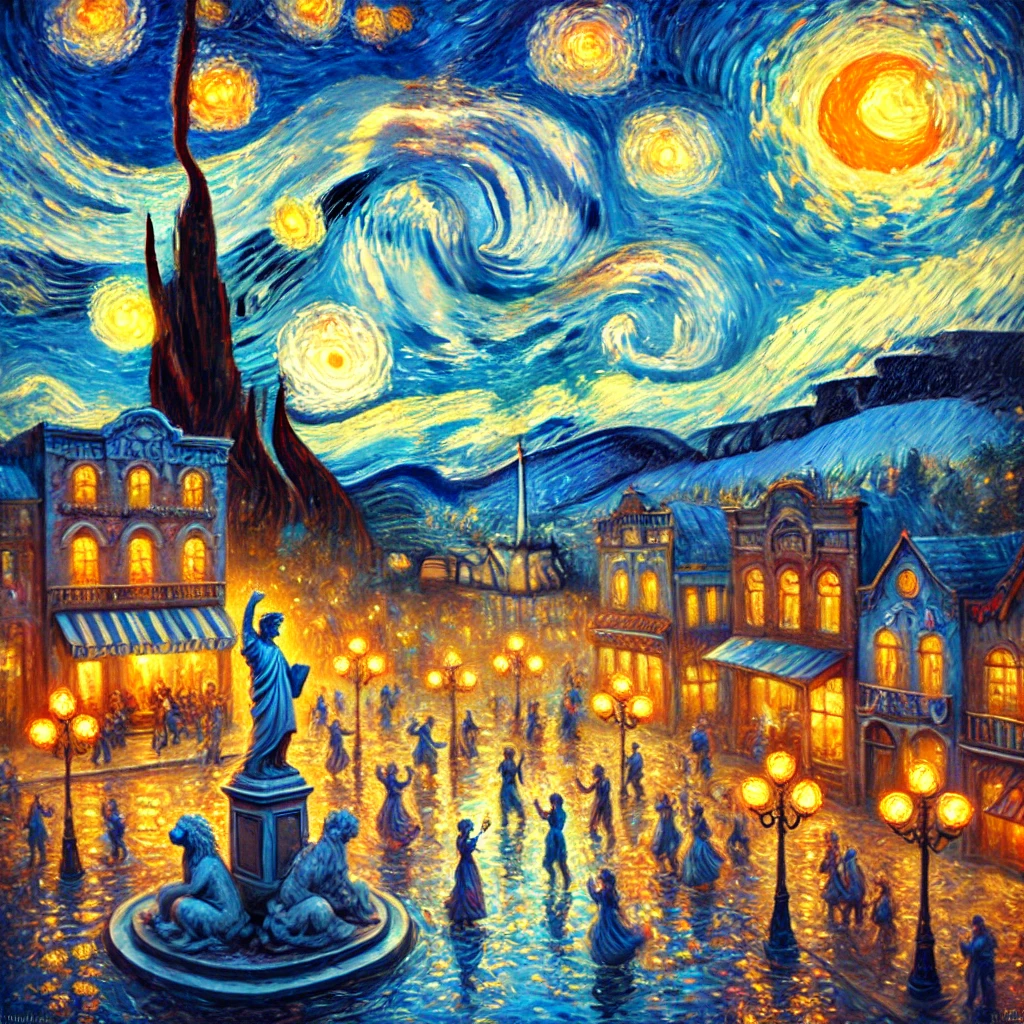
A Festival for a Past That Never Existed, Brought to You By People Who Can’t Agree on the Present
By Tom Seest
At Sequatchie Crossing, we tell the stories of Sequatchie Crossing.
Please share this post with your friends, family, or business associates who may want follow the news from Sequatchie Crossing.
🎤 Audio Overview
Paradise Found, Then Lost Again
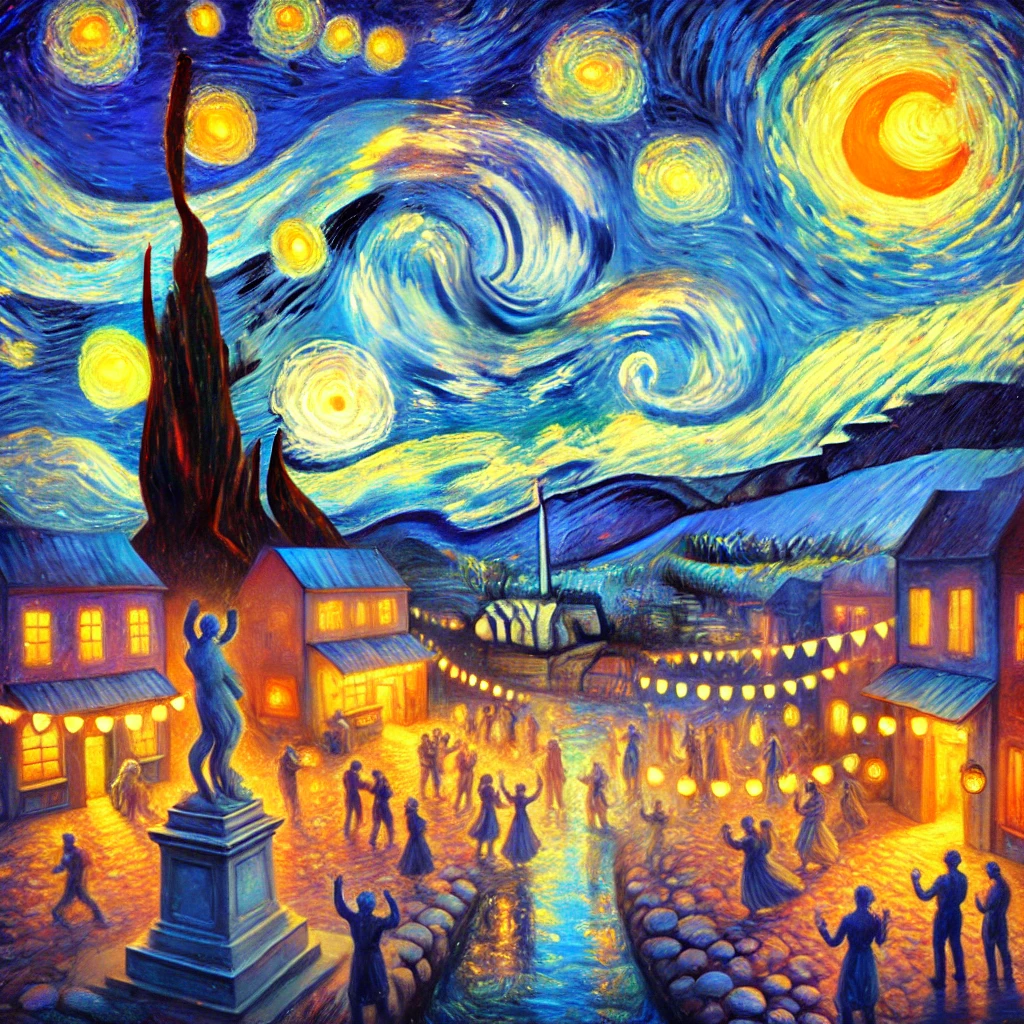
Paradise Found Then Lost Again
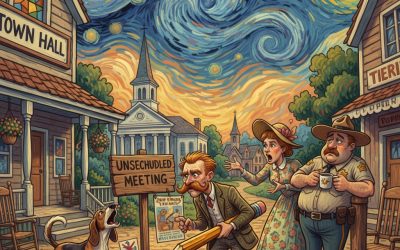
Act I — Announcing Eden (Committee Meets at Dusk)
The flyers went up like hopeful moths—sun-faded blue sheets stapled between notices for a church bake sale and “FOUND: One Rubber Boot (Left).” Across town, a single sentence made people stop and pinch their hearts:
THE FESTIVAL OF PARADISE LOST
A celebration of how things used to be, before they got how they are.
By suppertime, the Multipurpose Room at the Sequatchie Crossing Civic Annex was full enough to violate the posted fire code and three unwritten ones. Metal chairs chirped against linoleum as the festival committee assembled for its inaugural bicker.
At the head table sat Mabel Dean, her clipboard squared to the table’s edge like a judge’s gavel and a librarian’s conscience. Beside her, Clovis Harden arranged his hat, his thermos, and his skepticism in a tidy row. Reverend Hank tugged at his collar, the kind of man who could bless a casserole and indict a zoning violation in the same breath. Marla Gentry (poet), Ethel Mae Henson (sculptor), Harold Beeler (painter), and Junior Latham (sound equipment, fireworks when not strictly necessary) rounded out the roster.
“Order,” Mabel declared, as if the word could be stapled to the room. “We’re here to design a festival honoring the golden days before…well, before.”
“Before outsiders,” said someone from the folding-chair gallery.
“Before the bypass,” someone else offered.
“Before oat milk,” said a voice with dark historical gravity.
Reverend Hank lifted a hand. “Let us be charitable, friends. We can celebrate the goodness of the before-time without condemning the present.”
“Right,” Clovis said. “We condemn the present on Facebook.”
A chuckle sloshed around the room like weak punch. Mabel tapped her clipboard.
“Agenda item one,” she said. “Theme.”
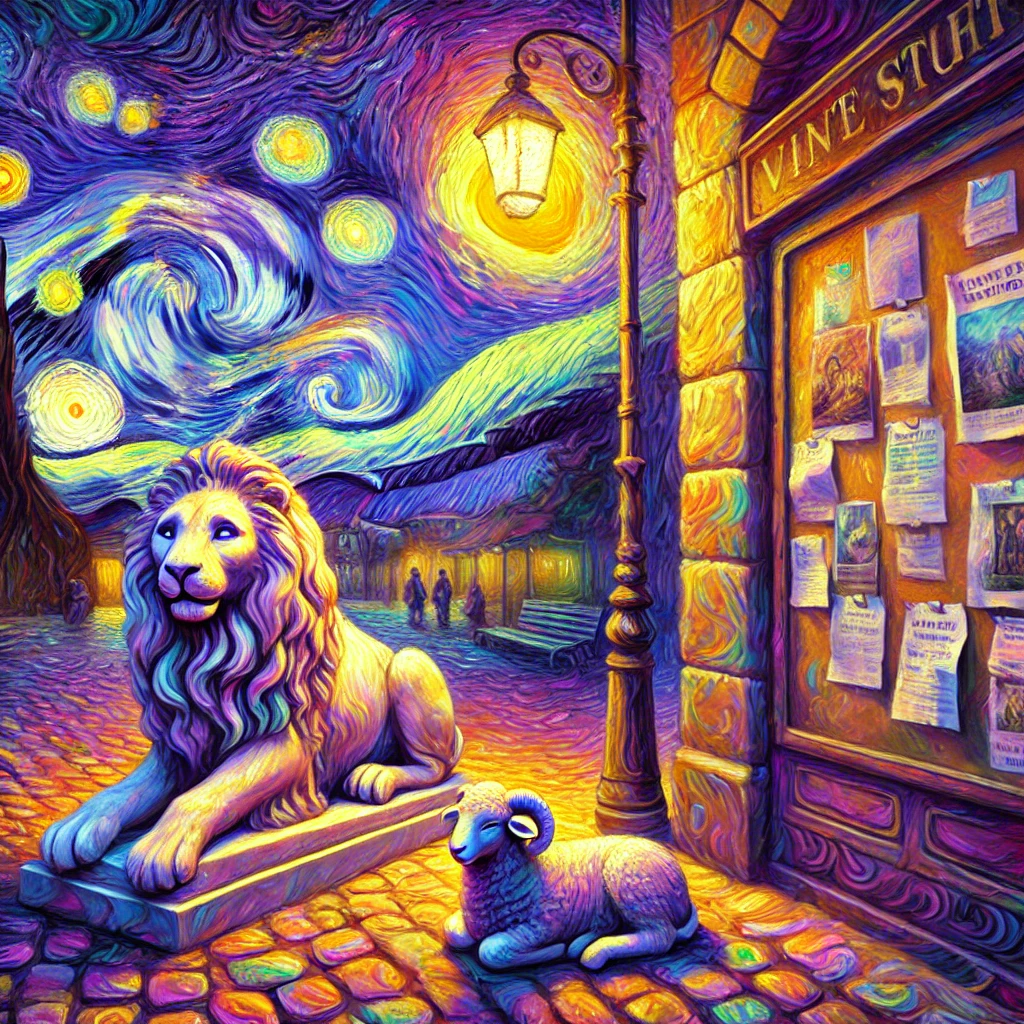
Marla sat up, eyes bright. “I propose a unifying motif: ‘The lion shall lie down with the lamb.’ Peace. Harmony. Sequatchie before fuss.”
Junior raised a hand. “Do we need an actual lion? Because I got a cousin in Dunlap who—”
“No,” said the room in a single braided syllable.
“We can sculpt one,” Ethel Mae said, already sketching. “Marble. A lion and lamb under a sycamore—nostalgia in stone.”
“I’ll paint sunrise,” Harold added. “Long shadows, dew on the courthouse lawn. The morning before everything got complicated.”
“Which morning was that?” Clovis asked. “I missed it.”
Mabel ignored him. “Agenda item two: programming. I want square dancing, pie contests, tractor parades, and a poetry hour. All celebrating the way things were.”
Marla scribbled a title: ‘Ode to Pre-Wi-Fi.’ She smiled like a mother who had already named the baby.
“Agenda item three: messaging.” Reverend Hank leaned forward. “We must define what ‘outsider’ means, and more importantly, what ‘neighbor’ means.”
The room grew quiet. The word outsider hovered, a moth near a porch light, dangerous in its dumb attraction.
From the doorway, Dottie Pearl, who had moved to Sequatchie six months ago and still apologized for existing, cleared her throat.
“If I may,” she said. “I love it here. I brought my grandmother’s quilt to the fair. I pick up litter. Am I an outsider?”
“You made your banana pudding with that boxed stuff,” said a voice.
“It was requested,” Dottie said, cheeks warming. “For the lactose-intoler—”
“Friendliness,” Mabel trilled. “Let’s remember friendliness, which we used to have in the good old days.”
Clovis rubbed his jaw. “In the good old days,” he said, “we argued just as hard. We just had to do it on porches. Took more calories.”
“I vote we do this,” Junior said, raising a hand. “Paradise. For a weekend. Lions. Lambs. Sunrise. No oat milk.”
“Friendly,” Mabel repeated, but she didn’t write the last part down.
The motion passed, not unanimously but emphatically. A volunteer sheet circled the room like a collection plate with a budget attached; names bloomed beside tasks. STRING LIGHTS: Ida Ray. BALES & BUNTING: The Beeler Brothers. ART WALK: Ethel Mae & Harold. POETRY: Marla (with time limits this year, please).
As chairs scraped and assignments were claimed, Reverend Hank closed with a prayer that sounded suspiciously like a set of design guidelines.
“Lord, make us one town out of many opinions. Let the lion and the lamb be our emblem, not our lawsuit.”
“Amen,” the room said, in a chorus that promised both cooperation and appetite.
Out in the parking lot, the sky had gone mauve and forgiving. Dottie stood beneath the big light and exhaled a hopeful breath. The air smelled like cut grass and the possibility of a town being kinder than it remembered.
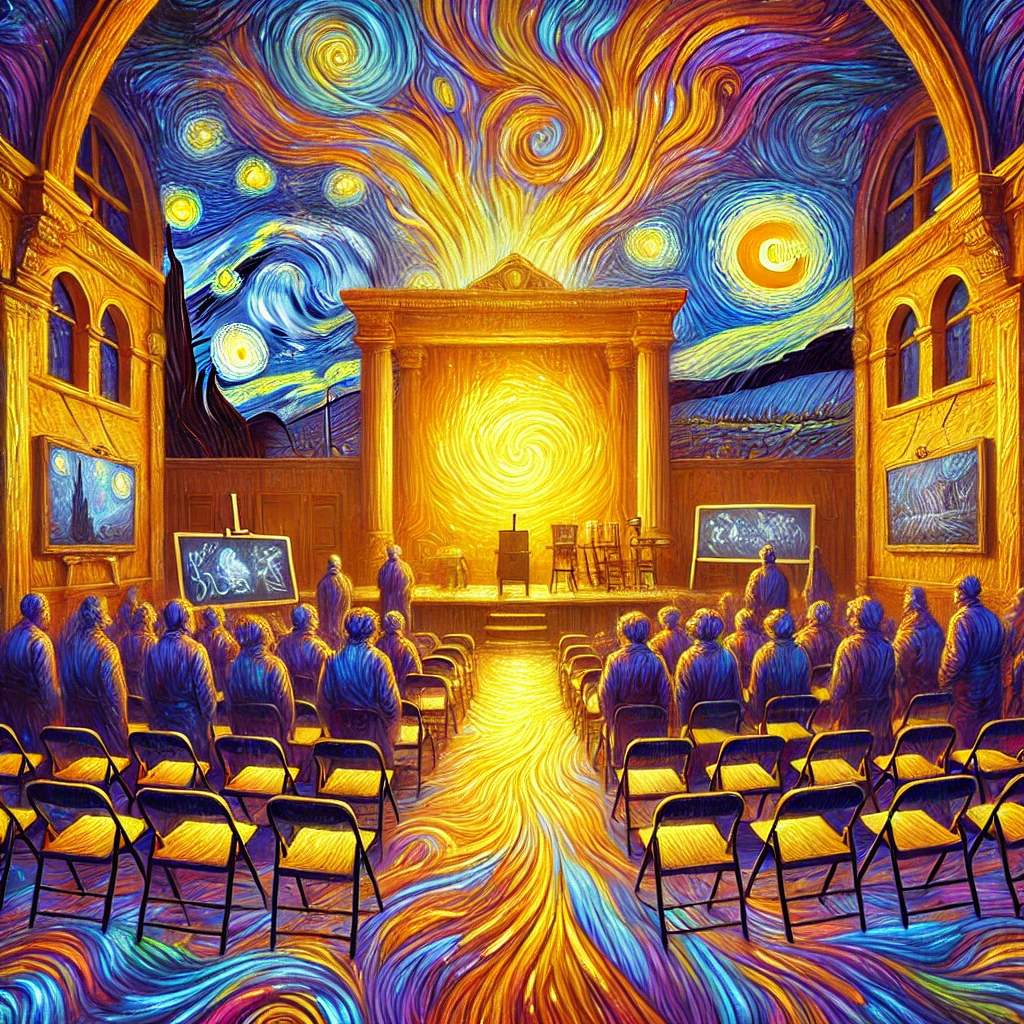
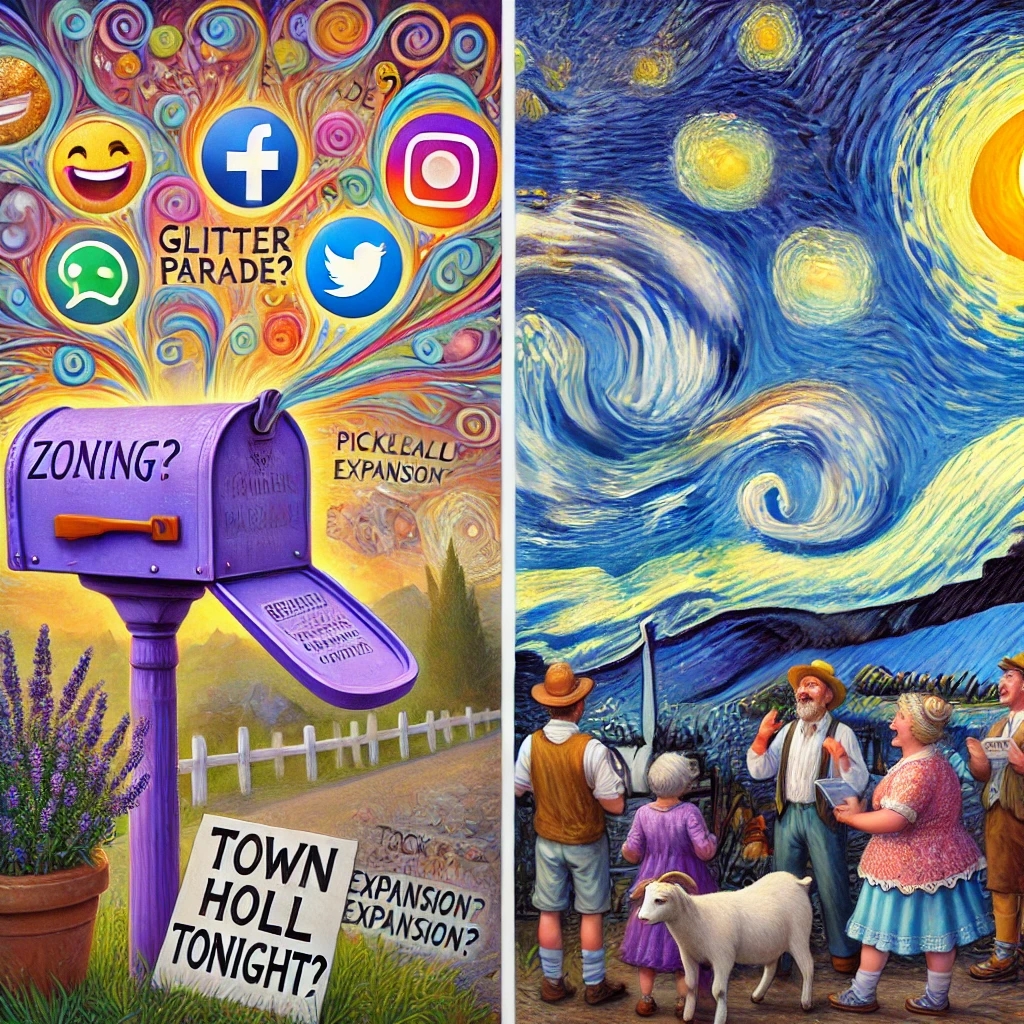
Act I – Announcing Eden
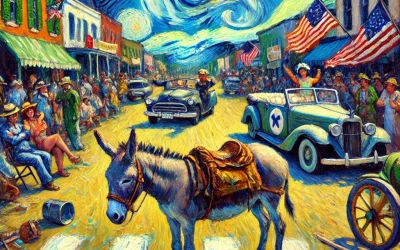
Act II — The Golden Memory Days (Main Street Opens Its Time Capsule)
Sequatchie Crossing has a way of staging a feeling. By festival morning, Main Street looked like nostalgia had hired a decorator.
Bunting in shades of Simpler Times Beige looped from storefront to storefront. Ida Ray’s string lights twinkled like fireflies that had been to charm school. The Beeler Brothers rolled in hay bales that achieved the rare aesthetic known as curated rustic. Junior ran sound checks that rattled the Methodist windows and then declared everything “tasteful.”
Ethel Mae’s marble work arrived on a flatbed draped like a bride: “Harmony on the Hill.” The lion was simultaneously noble and bashful; the lamb looked like something you’d confess your secrets to. The town gathered with a hush that felt like church.
“That’s—” someone began, then didn’t finish.
“Home,” said another.
Near the gazebo, Harold unveiled a triptych titled “Morning Before They Came.” It showed Sequatchie in permanent sunrise—dew lit like stained glass, a tractor’s gentle exhaust, the courthouse clock stuck permanently at 6:59 a.m., a minute before the work and wishes of the day might split.
Marla’s poets assembled on the bandstand, a line of folk holding notebooks like they were about to cast votes. She stepped to the mic, a shawl fluttering in self-conscious confidence.
“‘Ode to Pre-Wi-Fi,’” she announced. “By Marla Gentry. Time limit: merciful.”
Laughter. Kind. Expectant.
She read:
We used to wave across a gravel lane,
before a ping could counterfeit a friend—
before our sky was stitched with bars and blame,
and local meant a hand you couldn’t send.
The lion laid his pride beside the lamb,
and we laid grudges down like winter coats;
we knew the weather by the way we planned,
and love by casseroles, not little notes.
Say it was simpler—nostalgia always lies—
but gentle, too, in ways we still can choose:
to look a neighbor in the actual eyes,
to trade our “post” for something we won’t lose.
O Sequatchie, teach us old-made new:
the past is gone; the good in it is you.
By the third couplet, there were tears. By the rhymed quatrain, Marla was a local saint. Ethel Mae cried so hard her mascara re-tilled her cheeks.
Vendors opened their booths. Some called “Authentic Local Goods!” in voices that sounded recently purchased. There were quilts and bean ladles, pickled okra and stern pickles, lye soaps and sternly worded lye instructions. A jar labeled “AIR, CAPTURED BEFORE THE BYPASS (DO NOT OPEN)” sold for $12 with the swagger of a relic. Dottie Pearl’s table, “Welcome Wagon Wares,” offered hand-stitched potholders and a sign that read, “I Brought Banana Pudding; Please Don’t Hate Me.”
Kids chased a man in a lion suit who took his role seriously, refusing to roar because “Scripture says lie down.” The lamb—played by a second grader named Millie with an unearned sense of royalty—distributed cotton balls and absolution.
Reverend Hank emceed a mid-day dedication. “Friends,” he said, “Paradise is not where we were; it is a way we might yet be.” He gestured broadly. “The lion and the lamb are not wild guesses about zoology—they are a style guide for neighbors.”
From the steps, Boot Barnes (reigning Miss Corn Festival due to a clerical error he wore proudly) called out, “Hear, hear,” and lifted a lemonade like a verdict.
In that gentle heat, the town believed. For a shimmering stretch—between lunch and shadows, between the second and third banjo solo—the festival had the quiet electricity of a revival that didn’t ask your politics. Children chalked suns on bricks. Old-timers said names of the dead tenderly. Clovis and Mabel, sworn rivals over banner dimensions, were seen conferring like dignitaries who had discovered they could share the same stage without exploding.
Toward dusk, a breeze came down the ridge—the kind that sets flags whispering and people choosing to linger. Junior dimmed the square lights to “firefly,” and someone’s radio in a parked truck found a station that seemed to have been waiting all along for this moment: a slow waltz with the smell of kettle corn.
Harold folded his hands over his chest and stared at his own sunrise.
“Funny, isn’t it,” he said to no one, “how you can paint a thing and then walk into it.”
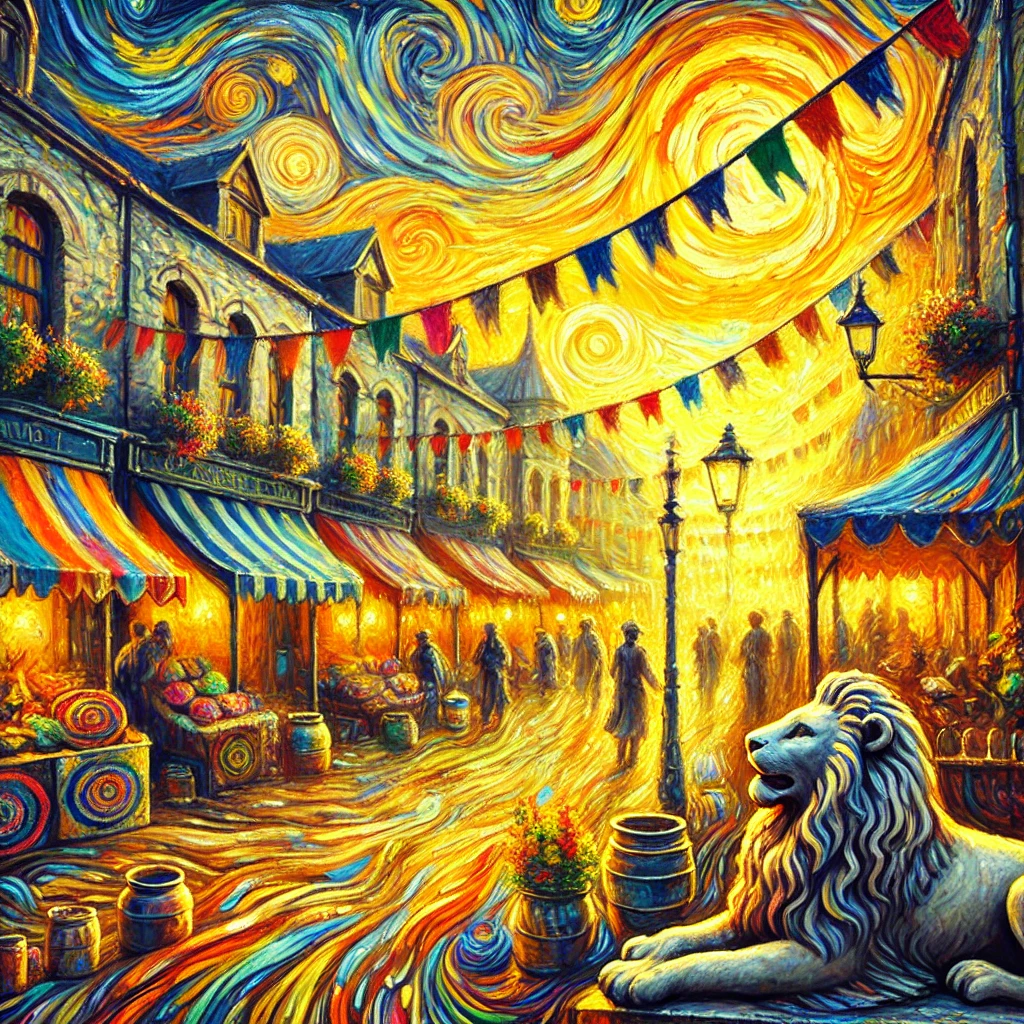
Act II – Golden Memory Days
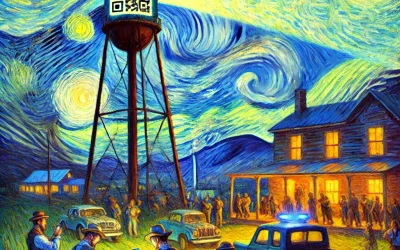
Act III — The 9:17 P.M. Incident (How Paradise Trips Over a Comment Thread)
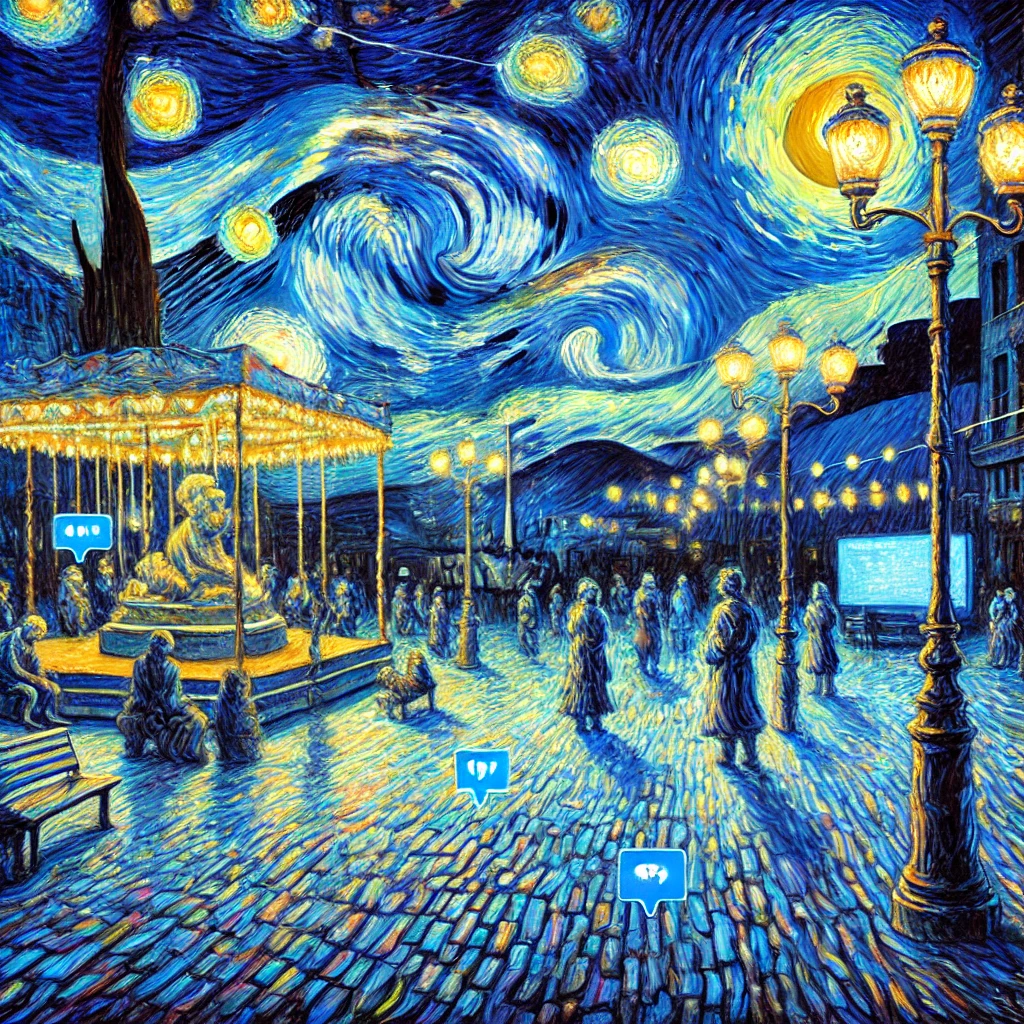
The first post landed at 9:17 p.m. at the top of the Sequatchie Crossing Community Page—that digital porch where everyone agreed to be neighborly and then reliably wasn’t.
Ida Ray:
“Look at our beautiful town! The Festival of Paradise Lost has me in my feelings. Proud to be from here. 🧡 #LionLamb #HarmonyOnTheHill”
The picture—string lights grazing the marble, barefoot kids orbiting the gazebo, elders smiling like they’d purchased sunset futures—was indisputably lovely.
At 9:19 p.m., ConcernedForSequatchie, whose profile picture was a bald eagle and a geranium, left the first reply.
“FYI that big hay bale sculpture? Sitting on lot 12B which is outsider property. THEY OWN IT. 😡 Just saying. Paradise shouldn’t be built on carpetbagger land.”
At 9:21 p.m., LocalSinceBirth, who had once moved to Florida for six years but didn’t count that, wrote:
“Also seeing soy candles at three booths. SOY. Not from cows.”
By 9:24 p.m., a thread spun up about parking behind the Methodist church, who had once tolerated a revival from Georgia (outsiders) and should have known better than to permit a Tesla (outsider car) to park anywhere near the prayer garden (insider roses).
At 9:27 p.m., Clovis Harden—in an act of rare online courage—typed a paragraph that began: “Friends, let’s all take a breath…” and ended forty-seven comments later with someone calling him a “Roundabout Loyalist” and linking to a blurry video from 2019 where he said “yield” in a tone that could be interpreted as treason.
At 9:33 p.m., NewInTownButNice (Dottie, under a pseudonym she intended as diplomatic) commented timidly:
“I loved the poems and tried my best. If I did anything wrong, I’m sorry, and also please teach me.”
At 9:34 p.m., TruthHurts replied:
“You people want our town but not our ways.”
At 9:37 p.m., ThePoetMarla:
“Hey y’all. I wrote that poem about casseroles and eye contact. Let’s not be the counterexample.”
At 9:38 p.m., FreedomOfSpeech:
“Just because it’s a festival doesn’t mean we can’t discuss SOY CANDLES. If we stop talking about soy, the soy wins.”
Junior tried to drown the rising static with music (fiddle, banjo, an apologetic harmonica) but phones glowed like campfires that tell ghost stories about the living. Across the square, you could see clusters forming not by family but by feed.
Near the sculpture, a small crowd gathered with a familiar, itchy energy. The lion and lamb looked less like symbols and more like referees.
“We should move it,” said a voice. “If it’s on outsider land.”
“It’s art,” Ethel Mae said, standing as guard with a chisel like a shepherd’s staff. “Art touches ground but belongs to air.”
“That’s not how property lines work,” someone countered.
Clovis arrived, hat in hand, a peace offering of posture.
“Neighbors,” he began. “Nobody’s soul got injured by a sculpture being two feet into Lot 12B while we figured out what kindness is called this year.”
“Easy for you to say, Roundabout Loyalist,” said a man whose chief hobby was selective memory.
“Lord, send me back to porches,” Clovis muttered.
Mabel waded in like a competent lifeguard at a pool where everyone had decided to invent drowning.
“Committee members to me,” she said. “We’re going to fix this before someone live-streams a metaphor.”
They formed a semi-circle: Mabel, Clovis, Ethel Mae, Harold, Marla, Junior, Reverend Hank. The Power Rangers of Small-Town Conflict—costumes replaced by cardigans.
“Option one,” Mabel said. “We shift the statue. Option two, we shift the mood. Option three, we declare a moratorium on phones.”
“Say more about option three,” Marla whispered.
Reverend Hank looked at the lion and lamb like they might whisper advice.
“Friends,” he said to the crowd, “the only way to lose paradise is to insist that you own more of it.”
This line would later be printed on tea towels sold at the craft fair and used to mop up further arguments.
A boy—Millie’s brother—tugged at Reverend Hank’s sleeve. “Sir,” he said. “The lamb is tired. Can she lie down?”
“Please,” said Millie from inside her fleece. “I forgot how to be symbolism.”
Reverend Hank nodded at the sculpture’s shadow, now longer than the fuss.
“Let’s adjourn,” he said softly. “To the dance. To the pie table. Let’s be neighbors for an hour.”
For a while, it worked. The music reclaimed the square. The threads slowed, then paused, like a creek after a rain. People put their phones down, some of them voluntarily. The lion looked less nervous. The lamb exhaled.
Then, at 10:04 p.m., a new post arrived from SequatchieSentinel, an account that usually shared weather updates with ominous capitalization:
“BREAKING: This ‘Festival of Paradise’ BANNED A LOCAL VETERAN from reciting his poem because it didn’t RHYME. Freedom dying in our very square. #Censorship #RealLocals”
The veteran in question had, in fact, declined to read because his poem was eight minutes long and contained an anecdote about a cat that bit a deacon. But facts and feeds met awkwardly, like cousins dancing badly at a wedding.
A fresh wave. New clusters. Old grievances strapped into new language and driven around the block until they acquired sirens.
Dottie stood at the edge of the square, near the table of stern pickles, watching a town she loved twist itself into a hot pretzel of righteousness. The string lights trembled.
She looked down. She could write a post. Or she could do something else.
She took a breath and headed toward the microphone.
Act III – The 9-17 PM Incident
Act IV — The Ironic (and Thoroughly Sequatchie) Ending
Dottie stepped onto the bandstand with careful courage. Junior, to his credit, sensed a key change and faded the waltz. The square tilted its ear.
“Hi,” she said, voice small but not breakable. “I moved here. I’m sorry if I ruined anything by existing. I brought banana pudding because it was on the signup. I still don’t know how to say ‘Sequatchie’ without my tongue tripping. I will learn. I promise.”
A soft chuckle threaded the air.
“I don’t know who owns Lot 12B,” Dottie continued, “but I was taught to ask to borrow sugar whether it was technically mine or not. I was taught that neighbors are the ones who show up, not the ones who can recite the county plat map. And I was taught—this is important—that the lion lying down with the lamb means we are supposed to try the harder thing, not defend the easier one.”
Silence. That rarest of Sequatchie commodities.
“I brought the quilt my grandmother made,” she said, lifting it from a tote. “It’s ugly. She used scraps. It doesn’t match. It kept five kids warm for twenty winters, and it did not ask whether those kids lived in Lot 12A or 12B.”
From the second row, Ethel Mae pressed both palms to her chest. Harold swallowed a lump the size of a sunrise.
“I’m new,” Dottie said. “I am also, if you’ll let me be, yours.”
A breeze ran down the ridge again, a soft hand on a crowded shoulder. Mabel’s eyes shined like she had finally found the right box on the clipboard and written YES in it.
Clovis, eyes suspiciously damp, lifted his hat. “Well, ma’am,” he said, “I was born wearing this dirt like house shoes. If you want some of it on yours, you’re welcome.”
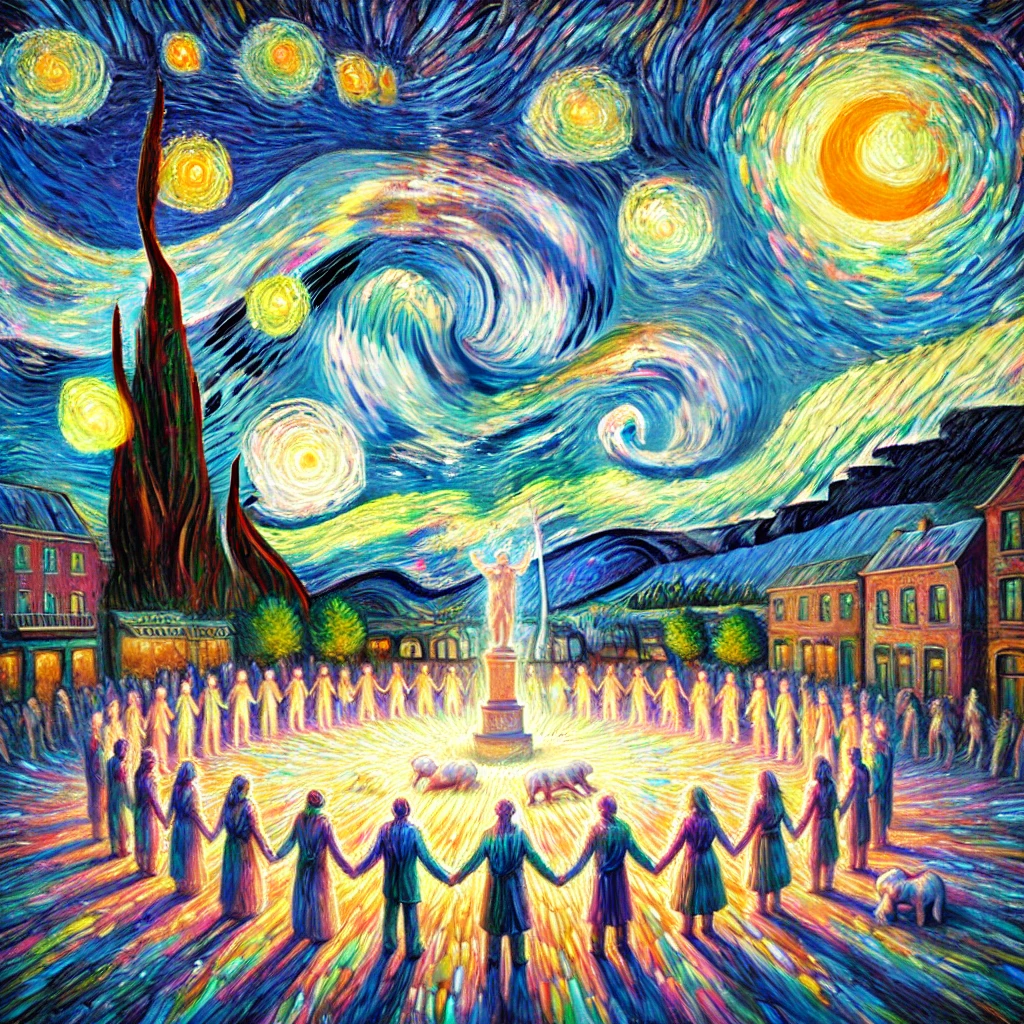
The square exhaled. Junior, with DJ instincts grown in the soil of human hope, cued a song that had taught three generations how to dance without feeling ridiculous. People found hands. The lion and the lamb—stone and costume—looked almost amused.
For a span you couldn’t measure—longer than a tweet, shorter than a feud—the town forgot its blueprint for fuss. Boots and flats shuffled together. Teenagers pretended not to enjoy themselves and then forgot to pretend. Reverend Hank laughed so hard his collar became a suggestion.
And then it happened. The festival’s official photographer, Pearlene, an artist with an eye for accidental truth, climbed a ladder to capture the square’s wide-angle joy. Her lens, searching for the embrace of the crowd, found a vantage point slightly higher than the string lights, slightly lower than the stars.
She clicked.
You’ve seen the photograph by now: the whole town—old families and new folks, boots and sneakers, a lion costume with its head tilted, a lamb with cotton in her bangs, Mabel’s clipboard angel-winging off her hip, Reverend Hank mid-laugh, Clovis mid-shrug, Dottie mid-hope—caught in a circle that looks, depending on your mood, like a hug or a halo.
Pearlene checked the preview. She smiled the private smile of someone who had caught fish without scaring the water. “Got it,” she whispered.
The next morning, the image was everywhere: printed on glossy poster board in the bakery window, taped to the gas pump, front page of the Sequatchie Crossing Dispatch with a headline that managed not to preen.
PARADISE FOUND (FOR A SONG OR TWO)
For three days, the comments were a little miracle. People tagged cousins. They wrote “This is my town” and meant it.
On the fourth day, someone noticed.
“See that circle?” wrote PatternFinder at 8:11 a.m. “That’s a cult symbol.”
“They always move in circles,” added EverVigilant. “It’s how they keep outsiders out.”
“Isn’t Dottie holding her hands in some secret way?” asked TruthHurts. “Is that…a sign?”
“Zoom in,” urged SequatchieSentinel. “Whose land is that circle centered on?”
“Can confirm,” chimed ConcernedForSequatchie at 9:02 a.m. “The exact center of the circle is Lot 12B.”
Map apps were consulted. Compasses laid upon kitchen islands. A protractor was found in a junk drawer and given its life’s purpose. Ten thousand words were written about a photograph that had originally needed none.
By afternoon, two petitions circulated:
-
PETITION A: Move the Lion & Lamb to Declared Local Ground (Keep Paradise Inside the Lines).
-
PETITION B: Keep the Sculpture Where It Accidentally Is (Paradise Everywhere or Nowhere).
By evening, a third petition appeared:
-
PETITION C: Replace the Lion with Two Lambs (Because Lions Are Problematic If You Think About It).
And thus, in a single weekend, Sequatchie Crossing named the thing it wanted most and then proved, spectacularly, that it did not want it enough to share.
The committee convened an emergency session. Mabel’s clipboard made a sound like a tiny thunderclap as it hit the table.
“We are not letting paradise be litigated by compasses,” she said.
Clovis set his hat down like a white flag. “We could move the statue twelve inches into everyone’s good graces,” he said.
Ethel Mae folded her arms. “I carved it to sit there,” she said. “Art has a destiny. Also the forklift rental is due.”
Harold stared at the photo. “If you squint,” he murmured, “it looks like a halo.”
Reverend Hank exhaled and spoke to ground and air.
“Friends,” he said, “you cannot draw a boundary around a blessing.”
Dottie, who had made a pie for the meeting because she had learned some things already, slid the dish toward the center.
“I don’t know the right answer,” she said. “But if we cut this pie by property line, no one gets enough to taste.”
Silence did tricks. Someone sniffed (possibly the pie). The lion’s marble eyes regarded them with the impunity of stone.
Finally, Mabel wrote something on the clipboard and held it up like a verdict.
LEAVE IT.
LEARN.
LOVE ANYWAY.
They voted. It passed. Not unanimously, but emphatically. The petitions kept circulating, as petitions must. The sculpture stayed, as sculptures sometimes do. The photograph multiplied, as hope will when you aren’t looking and even when you are.
Within a week, the square was ordinary again: trucks idling, coffee cooling, the news as local as a rumor and as grand as a sky. The bunting came down, folded into a church closet with the weight of many causes. The string lights slept. The hay bales went back to their lives as snacks for cows with uncomplicated politics.
And if you went to the square at dusk, you could still find a few people standing in a circle, talking about how to be better neighbors than their comments implied. From the right angle, with the river catching the last light, it looked like the lion and the lamb were listening.
The Satirical Coda (Because Sequatchie Always Has One)
A month later, the town launched a new civic initiative: The Inner Circle of the Roundabout—a weekly gathering where folks stood in a literal circle right where the future roundabout is planned, each person taking one minute to say something kind about a neighbor whose mailbox sits on the other side of a property line.
Attendance is robust. Comments are short. The Inner Circle meets every Thursday at 6:59 p.m.
Some call it performance. Some call it progress.
The lion and the lamb call it practice.
Act IV – The Ironic Ending
Disclaimer
This is a satirical work of fiction. Any resemblance to real persons, property lines, petitions, or roundabout committees is the result of living in a small town where everyone is both unique and suspiciously familiar.
Paradise Found Then Lost Again – Disclaimer
Key Takeaways
-
Nostalgia is a mood board, not a map.
-
“Outsider” and “neighbor” are often separated by a casserole.
-
Boundaries matter for land; they ruin blessings.
-
Paradise isn’t where you were; it’s how you act.
-
Sequatchie Crossing will always find the joke hiding inside the moral—and the moral hiding inside the joke.
Real Places Behind the Ruckus – From The Dunlap Directory
Real Places Behind the Ruckus – From The Dunlap Directory
Yes, this story was fictional; even the parts that weren’t true. These places? Absolutely real. Stop by, support local, and keep the Wi-Fi away from livestock:
- Grays Plumbing LLC
- Cagle Mountain Trading Post
- Wendy’s
- Greeter Falls Campground
- Andy’s Pizza and Steakhouse
- Black Bear Electrical
- Brian’s Mobile Welding
- Peto Farm
- Rallo’s Bar & Grill
- Tractor Supply
- Sequatchie Valley Low Cost Spay & Neuter
- Sequatchie County Waste Tire Recycling Station
- Coops Creek RV Campground
- Liquidambar Art Gallery
- Carolyn’s Acres Farm
Real Places Behind the Ruckus – From The Dunlap Directory
At Sequatchie Crossing, we tell the stories of Sequatchie Crossing.
Please share this post with your friends, family, or business associates who may want follow the news from Sequatchie Crossing.

0 Comments