


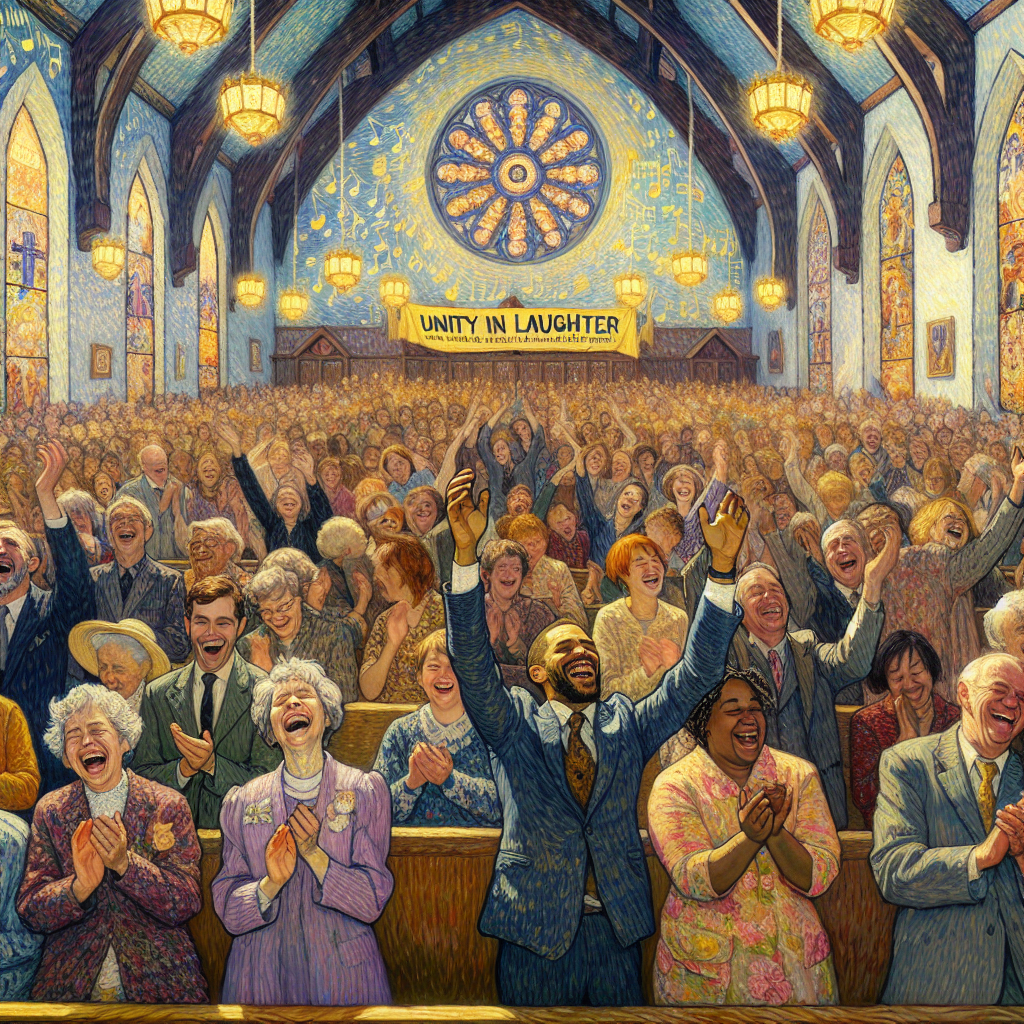
The Great Fellowship Bulletin Typo – Misprinted Hymns, Accidental Heresy, and the Uniting of Baptists and Methodists
By Tom Seest
At Sequatchie Crossing, we tell the stories of Sequatchie Crossing.
Please share this post with your friends, family, or business associates.
🎤 Audio Overview
The Great Fellowship Bulletin Typo – Misprinted Hymns, Accidental Heresy, and The Uniting Of Baptists and Methodists
It started, as most spiritual controversies do in Sequatchie Crossing, with a typo and a well-intentioned stapler.
The joint service between the First Unaffiliated Missionary Temple and the Greater Sequatchie Methodist Assembly of Light (and Occasional Waffle Suppers) had been promoted as a rare act of ecumenical peace—a coming together of casseroles and creeds to celebrate unity, humility, and mid-range alto harmony.
The potluck planning committee had worked overtime. Pastor Peeler had agreed to tone down the fire-and-brimstone. Pastor Darlene Walker of the Methodists had agreed to wear shoes instead of her “freedom sandals.” Mabel Dean Ashcroft had reluctantly declared a temporary flag of truce with the Methodist Quilting Circle, provided they “kept their appliqué work modest.”
But peace was a fragile casserole, and Boot Barnes had been tasked with printing the bulletins.
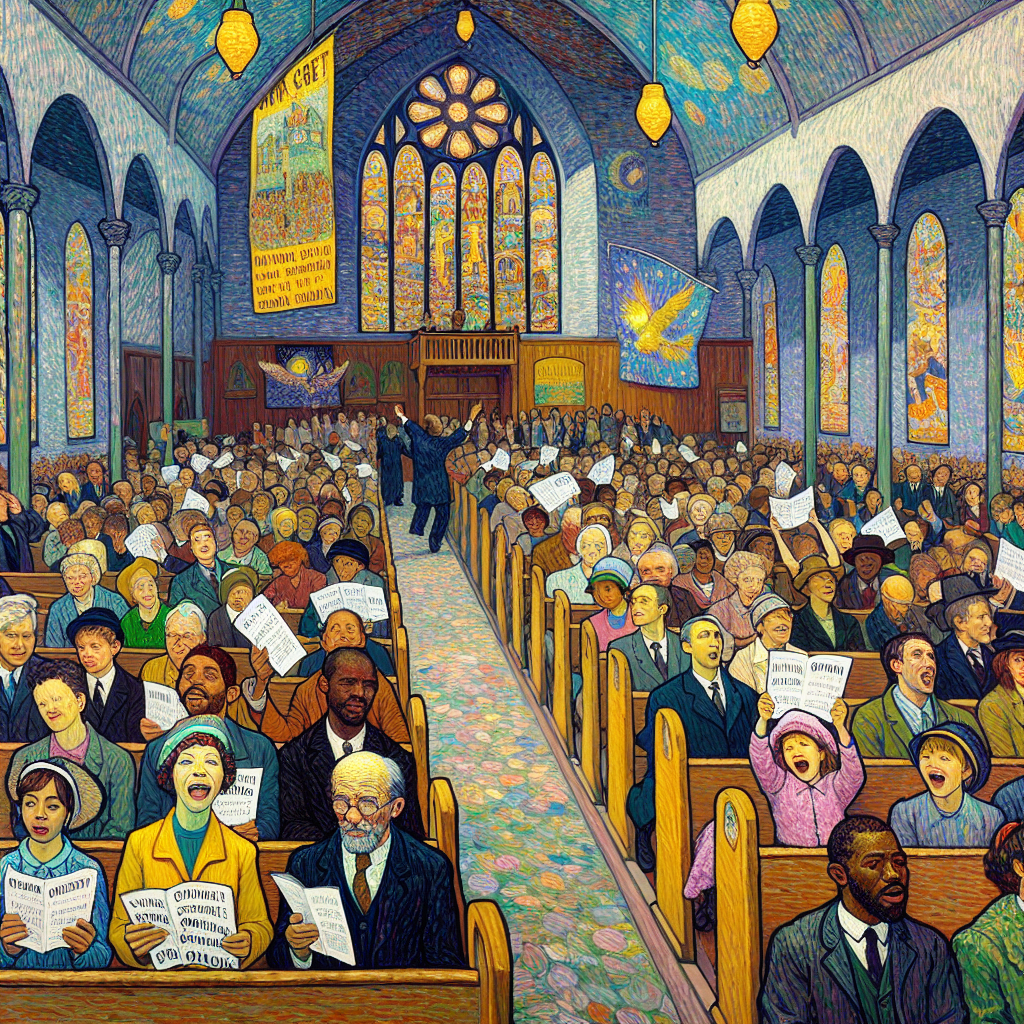
The Great Fellowship Bulletin Typo – Misprinted Hymns, Accidental Heresy, and The Uniting Of Baptists and Methodists
Boot—former postmaster, current church printer operator, and unlicensed user of Comic Sans—had recently switched to a new toner. He claimed it was “anointed by discount.”
The bulletin cover read:
“Order of Worship – The Body Is Weak, But the Gravy Is Eternal.”
That wasn’t the issue. That was the theme.
The issue was Hymn #242, meant to be “All Creatures of Our God and King.”
What the congregation received was:
“All Creditors of Our God and King.”
This might have been brushed off as a funny typo, except that the accompanying lyrics had also been mangled during a late-night cut-and-paste session that Boot swore “got hacked by the copier or a Methodist.”
Instead of:
“Lift up your voice and with us sing, Alleluia!”
The page read:
“Lift up your invoice and with us cling, Appalachia!”
Confused but devout, the congregation sang the lyrics without question—Methodists in precise thirds, Baptists with full-volume improvisation.
Pastor Peeler squinted. Pastor Darlene coughed into a linen handkerchief.
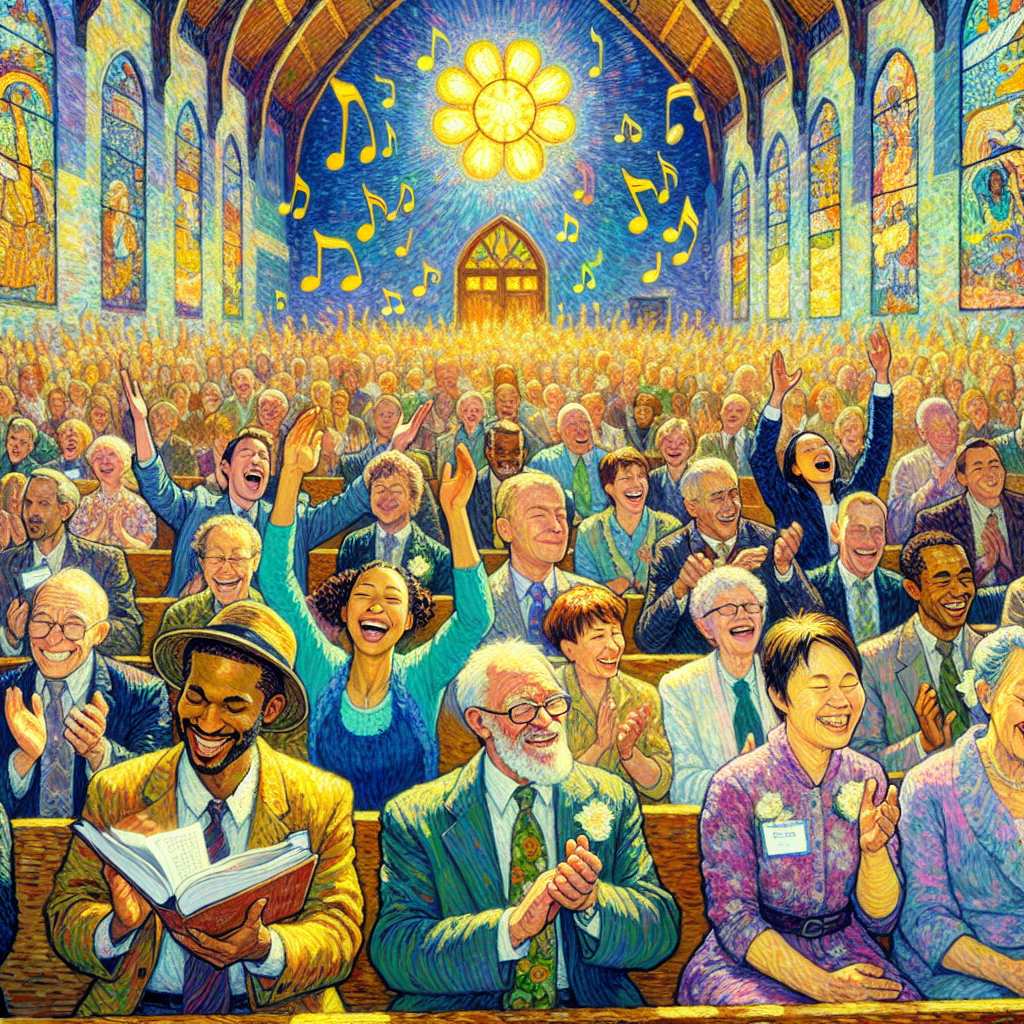
By verse three, one parishioner had waved a tithing envelope in the air like a spiritual tax document. Evelyn Grace Tipton began weeping softly, convinced she had missed a stewardship meeting and possibly the Rapture.
When the children’s choir stood to perform their medley of “He’s Got the Whole World In His Hands,” their page contained a different misprint:
“He’s Got the Whole World in His Hams”
Shelley Wexler gasped audibly. Lurleen Davenport demanded the immediate confiscation of all pork-themed sheet music.
Meanwhile, Clovis Strickland stood near the sound booth distributing a one-page manifesto titled Typographical Tyranny: How the Papists Control Your Punctuation. He’d highlighted the hyphens in “Christ-centered” as “coded papal signaling.” Only Boot took one, but folded it immediately to balance a teetering coffee urn.
It wasn’t until the offering was taken and Pastor Darlene attempted to deliver the sermon, based on Luke 15:11–32, that the situation turned divine.
Instead of The Prodigal Son, the bulletin listed the reading as Luke 51:11–32—a passage which does not exist.
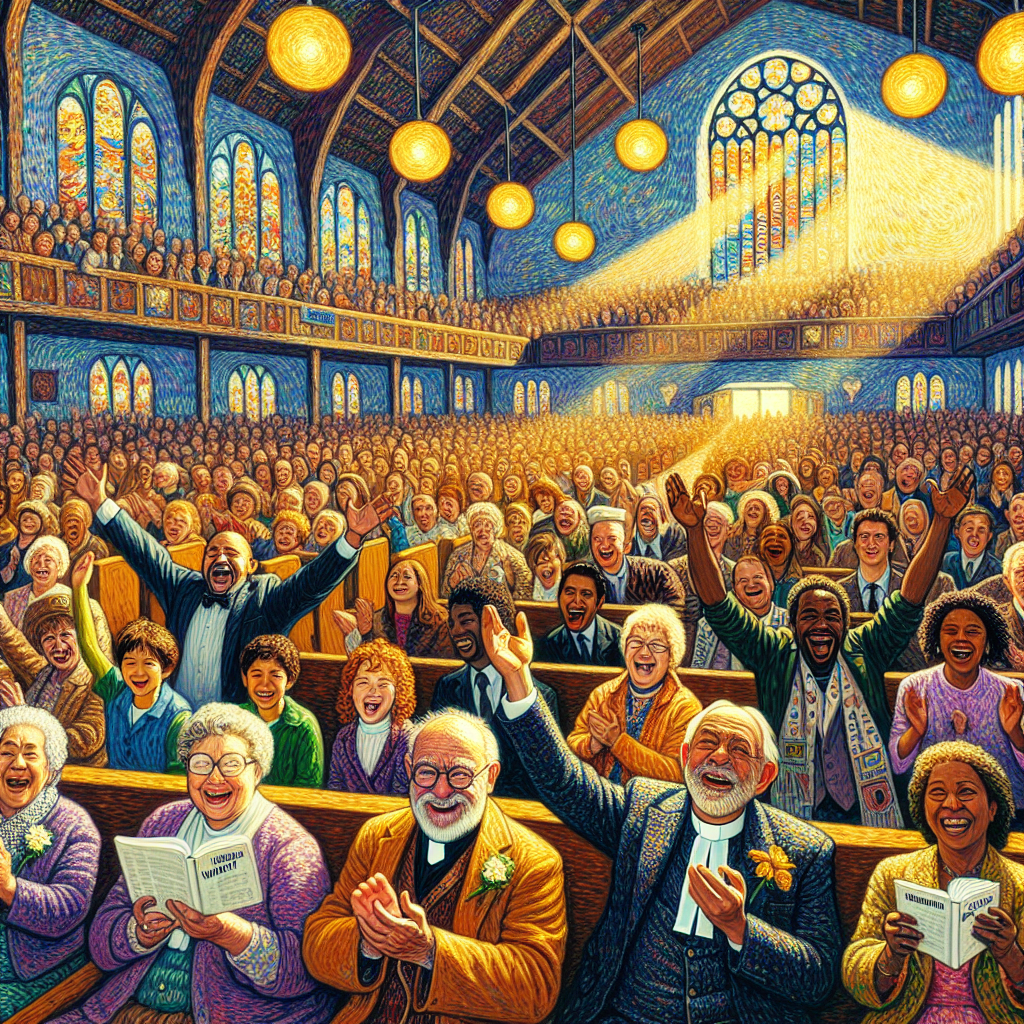
Pastor Peeler took this as a sign of end-times misprinting and led an improvised altar call. Half the congregation came forward, some weeping, some laughing, and at least one (Trixie Jo) filming a TikTok she later titled “Rapture Watch: Bulletin Edition.”
The climax came during the benediction when, after an emotionally confusing service, both pastors accidentally blessed the same side of the sanctuary at the same time, causing the Methodists and Baptists seated on that side to instinctively shake hands and say “Amen” in unison.
There was a brief silence.
Then applause.
Then, suspiciously… joy.
Boot declared it “a typographical miracle.”
Clovis called it “a controlled lexical collapse.”
Pastor Peeler called it “not ideal, but productive.”
By the end of the day:
-
Three new Bible study groups were formed.
-
The Methodist choir agreed to join the Baptists for a spring cantata.
-
And a new sign-up sheet was posted for an “Interdenominational Bulletin Quality Assurance Committee,” led by none other than Evelyn Grace Tipton (who now proofreads in triplicate).
The churches decided to hold a second joint service—“so long as Boot’s not allowed to format anything larger than a name tag.”
The bulletin for that upcoming event simply reads:
“Come as you are. Read at your own risk.”
At Sequatchie Crossing, we tell the stories of Sequatchie Crossing.
Please share this post with your friends, family, or business associates.
Disclaimer:
This story is entirely fictional. Any resemblance to real people, living or just stubborn, is purely accidental—but also maybe a little flattering. Sequatchie Crossing exists only in the minds of those brave enough to imagine a town where zoning laws, casseroles, and conspiracy cassettes collide in glorious disarray.

0 Comments