


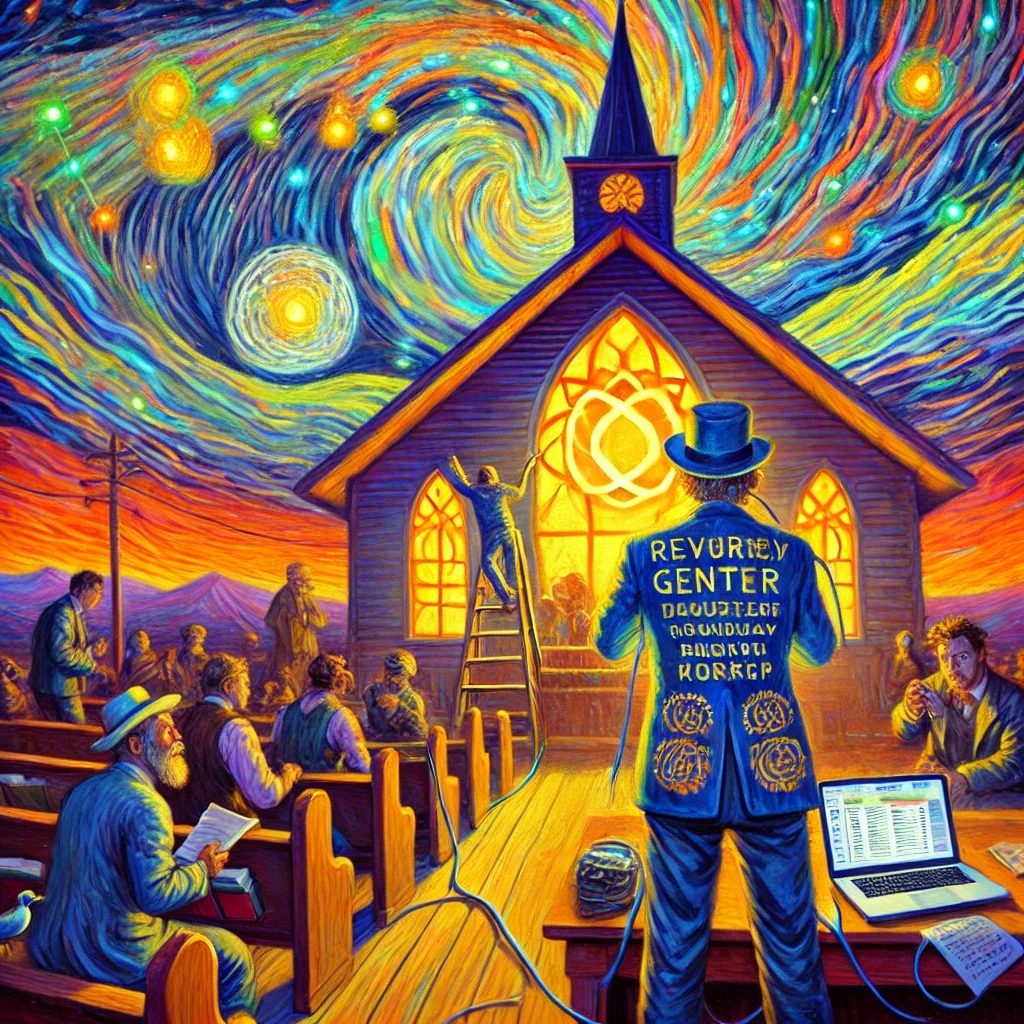
Grandma Ethel Won Twice – Once on the Card, Once In the Polls
By Tom Seest
At Sequatchie Crossing, we tell the stories of Sequatchie Crossing.
Please share this post with your friends, family, or business associates who may want follow the news from Sequatchie Crossing.
🎤 Audio Overview
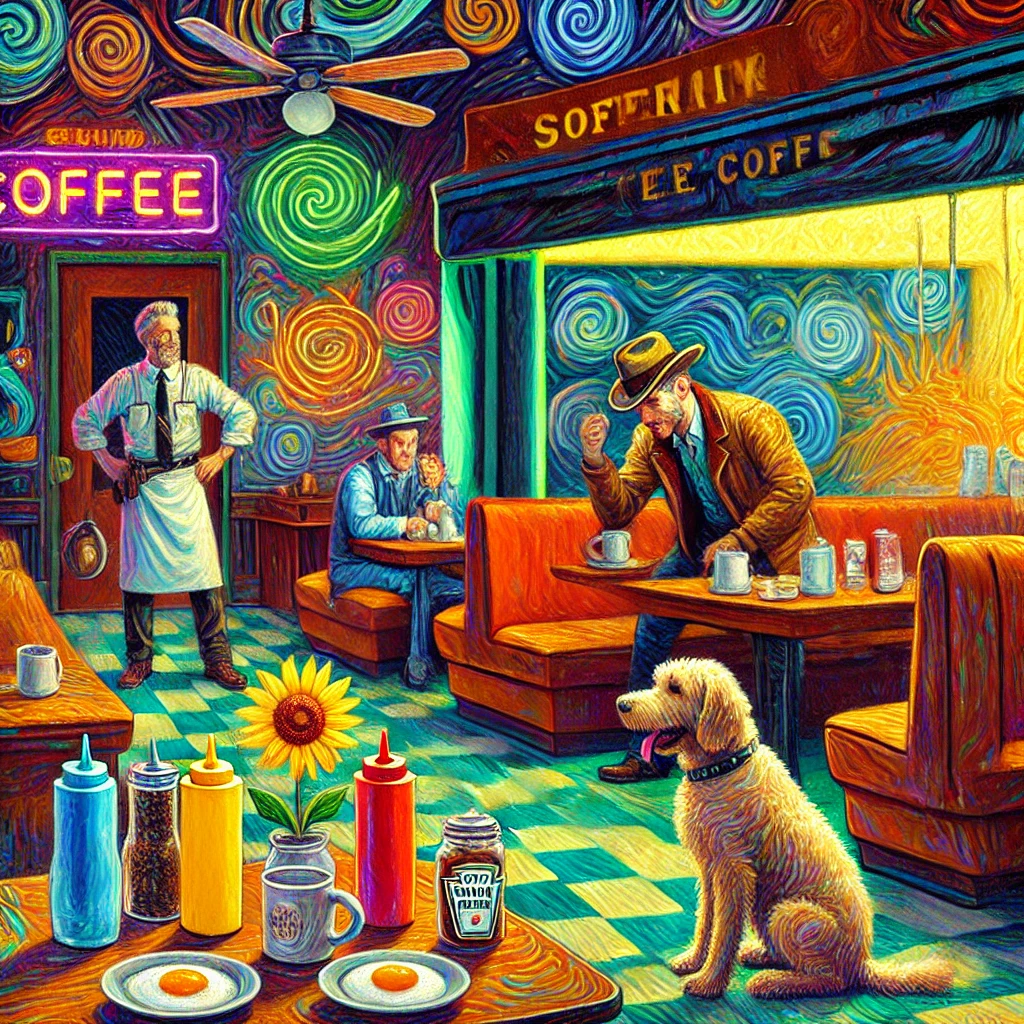
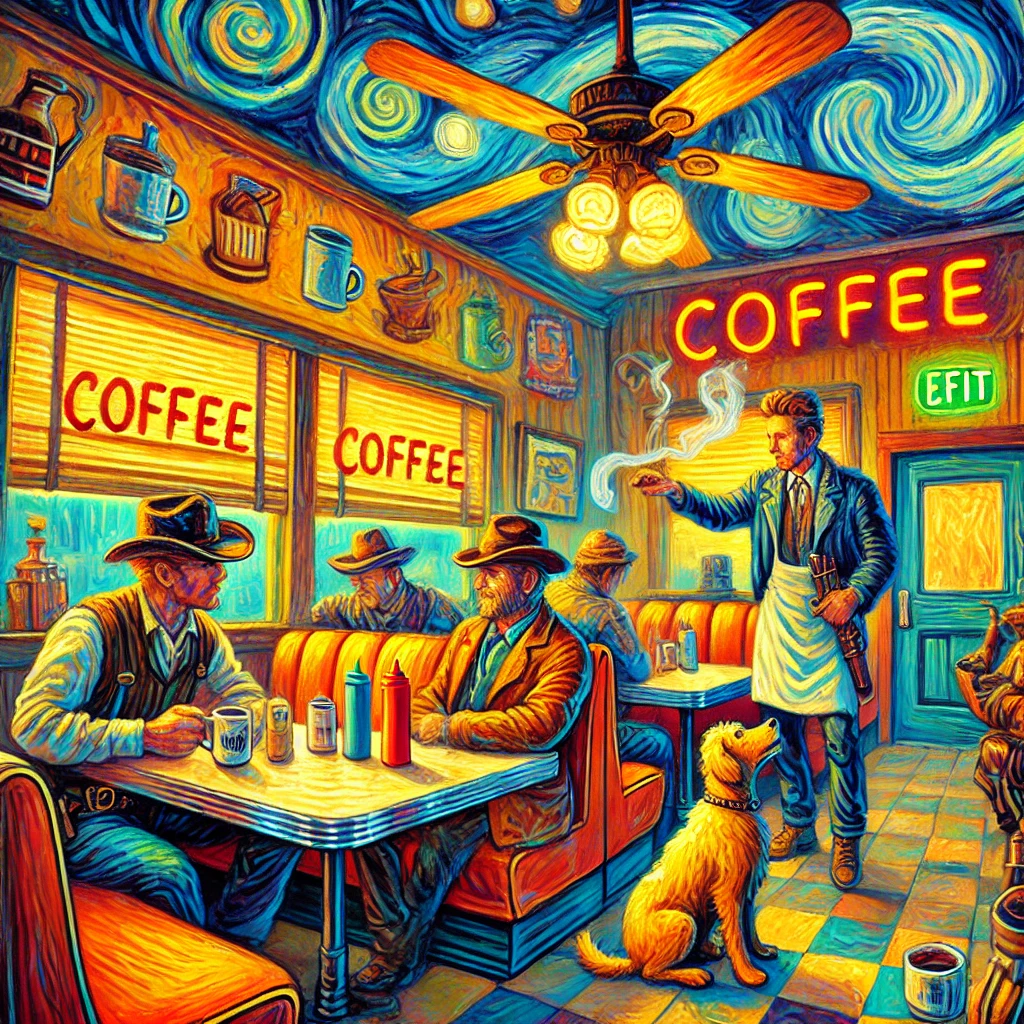
Cold Open: Dot’s Diner, 6:03 a.m.
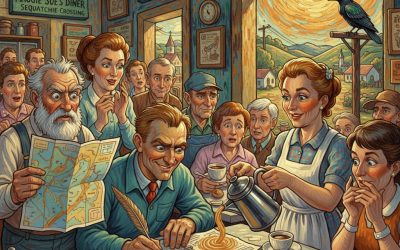
The morning it all began, Dot’s Diner smelled like coffee, fryer oil, and destiny. Boot Barnes was explaining the Electoral College to whoever would listen—namely Clovis Strickland, who had a notepad labeled “Sky Defense” and was sketching arrows pointing at a hand-drawn cloud.
“Look,” Boot said, tapping a salt shaker he’d labeled ‘Delaware.’ “If Delaware gets two senators, so should Sequatchie Crossing. We’ve got just as many people named Ethel as they do.”
Dot slid a plate of eggs between them. “That’s not how senators work, Boot.”
“Maybe not in Delaware,” Boot said, “but we’re a pragmatic people. We adjust.”
Clovis nodded solemnly. “I can adjust air defenses to include ballot trajectories.”
From a corner booth, Mabel Dean Ashcroft lifted her glasses and peered over the frames. “Y’all are about to build a procedural piñata and expect candy to fall out.”
“Exactly,” Boot said, entirely missing the warning. “We’ll declare Sequatchie Crossing a swing state. Problem solved.”
“Swing states aren’t declared,” Dot said. “They’re—what’s the word—argued over.”
Boot grinned. “We can argue. We do that recreationally.”
Across the room, Reverend Gentry closed his devotional and patted the Bible. “When the spirit moves, it moves. Besides, the Fellowship Hall already has the long folding tables.”
“Tables?” asked Clovis, alert.
“For ballots,” the Reverend said. “And casseroles. Sometimes both.”
Sheriff Peeler came in with Daisy, the honorary deputy dog, whose primary skill set included wagging, staring at pepperoni, and burying contraband chew toys in neutral ground. “Whatever you’re planning,” the Sheriff said, “don’t involve electricity. The last time y’all did civic innovation, the car wash became a contemporary art installation.”
“It was an accident,” Boot said. “And also an artistic statement about capitalism and hoses.”
“Still,” Sheriff Peeler said, “let’s keep today’s statements verbal.”
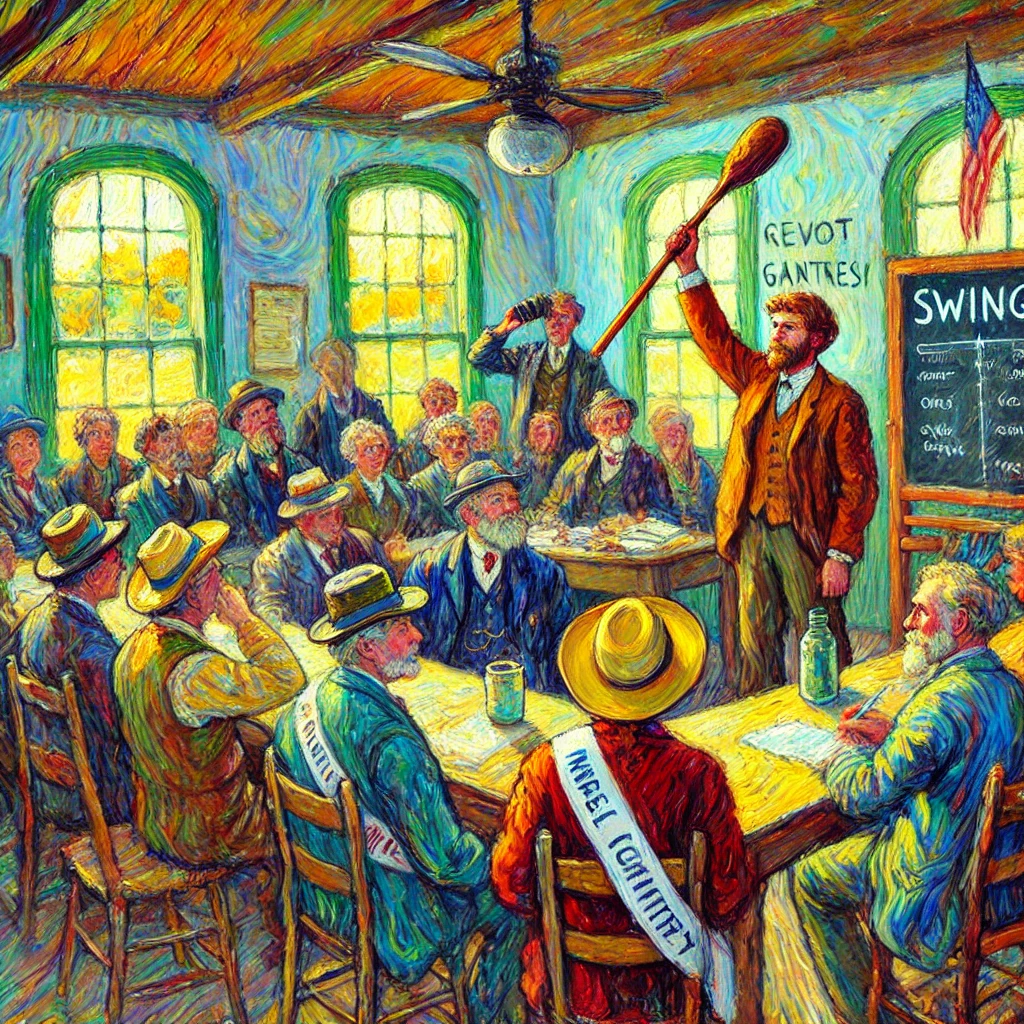
Scene 1: How to Become a Swing State (By Lunch)
By noon, an “Election Committee” had formed. In Sequatchie Crossing, committees form like summer storms: fast, loud, and full of unpredictable lightning.
-
Chair: Mabel Dean, because she had the spoon you didn’t argue with.
-
Security: Sheriff Peeler (official), Daisy (morale), and Trixie Jo Bartlett (social media escalation).
-
Logistics: Reverend Gentry, because the Fellowship Hall could be secured with the promise of stacking chairs afterward.
-
Aerial Oversight: Clovis, who had rebranded the Sky Defense Committee to include “electoral hazards.”
-
Public Affairs: Boot Barnes, recently crowned Miss Corn Festival due to a clerical error; he still wore the sash on formal occasions and near anything creamed-corn adjacent.
“What we need,” Reverend Gentry said, “is a calm, orderly vote that proves we are swing-y.”
“Swingy?” Mabel Dean repeated, eyebrow arched.
“Spiritually swingy,” the Reverend clarified. “Capable of going either way with grace.”
Boot snapped his fingers. “Do it at Bingo night! Everyone shows up. Low friction, high participation, plenty of dabbers.”
“I’m hearing… ballots and bingo cards,” Trixie Jo said, thumbs already drafting a “Sequatchie Votes” graphic with confetti GIFs. “I’ll make a hashtag people can argue about later.”
Sheriff Peeler sighed. “You realize this will require actual rules?”
Mabel Dean clanged her spoon on the table. “Rule One: Don’t argue with me. Rule Two: We count once. Rule Three: If Daisy eats a ballot, it’s abstained by act of dog.”
“Very bipartisan,” Boot said.
“Very casserole-proof,” Mabel said. “Sauces get on everything.”
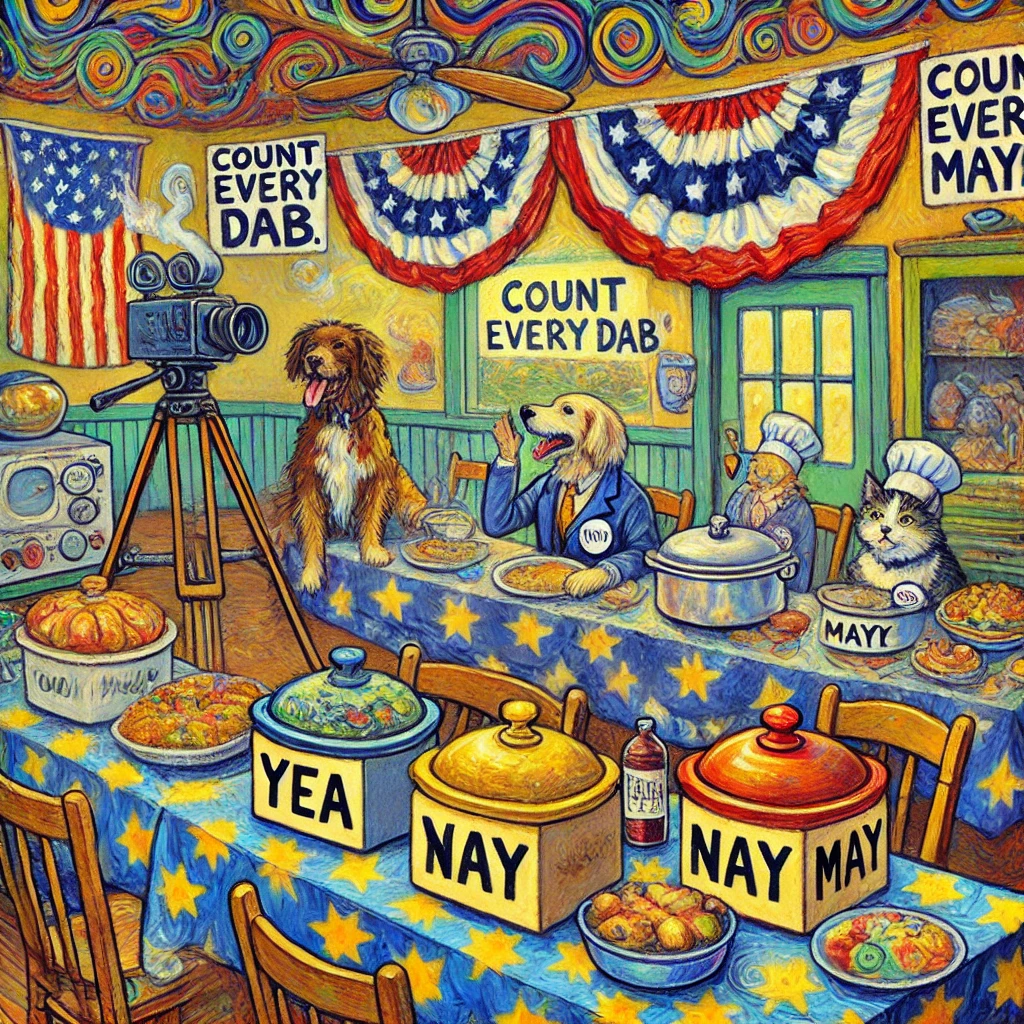
Scene 2: Preparations, or, Democracy by Crock-Pot
Wednesday afternoon at the Fellowship Hall looked like equal parts church supper and municipal fever dream. Long tables were draped in vinyl tablecloths featuring cornucopias, because Mabel Dean bought them in bulk after Thanksgiving five years ago.
-
Ballot Boxes: Two clean shoe boxes from Fredonia Builders, taped and labeled “Yea” and “Nay.” (A third, unlabeled, quickly appeared. Trixie Jo wrote “Maybe.”)
-
Check-in Table: Dorothea Blevins with a spiral notebook of everyone she’d ever met, plus a column labeled “Recognition?” with sub-options (Yes/Maybe/Claims to be cousin).
-
Security Perimeter: Sheriff Peeler set up two folding chairs in a V-formation and instructed Daisy to sit in the vertex. Daisy interpreted this as an invitation to sunbathe.
-
Sky Defense: Clovis affixed binoculars to a camera tripod and aimed it out the Fellowship Hall window, where an unfortunate squirrel became the first documented victim of “election surveillance glare.”
Boot Barnes ushered in a cart covered with glossy yard signs: “SEQUATCHIE SWING STATE ’25,” “NEUTRAL LIKE SWISS (CHEESE),” and “COUNT EVERY DAB.” A smaller stack read “MISS CORN STILL COUNTS,” which he distributed with the quiet dignity of a man reliving a ribboned triumph.
Reverend Gentry taped up a poster: “Vote Calmly. No Standing On Chairs. Dab Responsibly.”
“Now,” Mabel Dean said, “how, precisely, are we translating bingo to ballots?”
Reverend Gentry cleared his throat. “During the first round, if you dab an even number, that’s a vote for swing-statehood. Odd, against.”
“Counting cards that way is how we landed a possessed PowerPoint in the pulpit,” Mabel said.
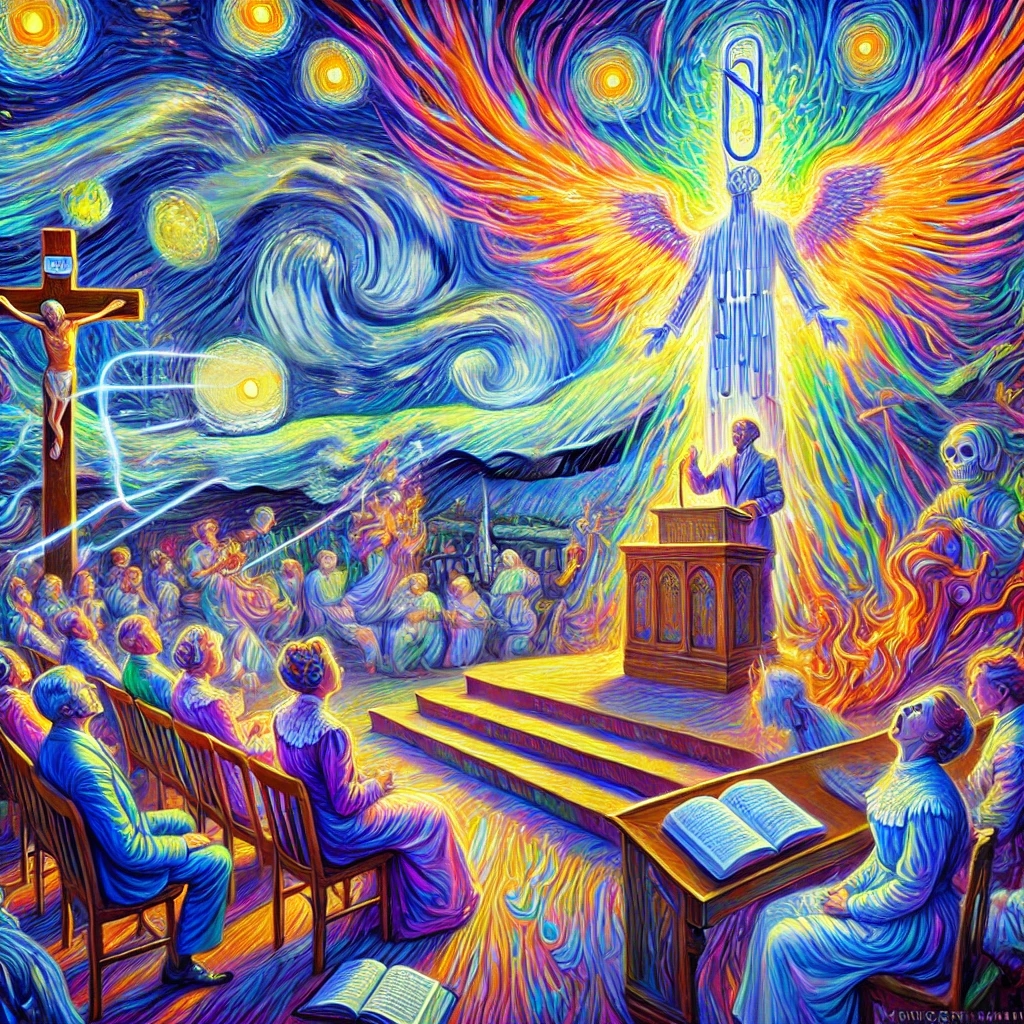
“That was a Clippy issue,” the Reverend said. “We rebuked it.”
Trixie Jo raised a hand. “Do we need poll watchers?”
Boot: “We have Daisy.”
Daisy sneezed gently and thumped her tail against the nearest ballot box. Everyone took it as assent.
Scene 3: Bingo Night, Ballot Night
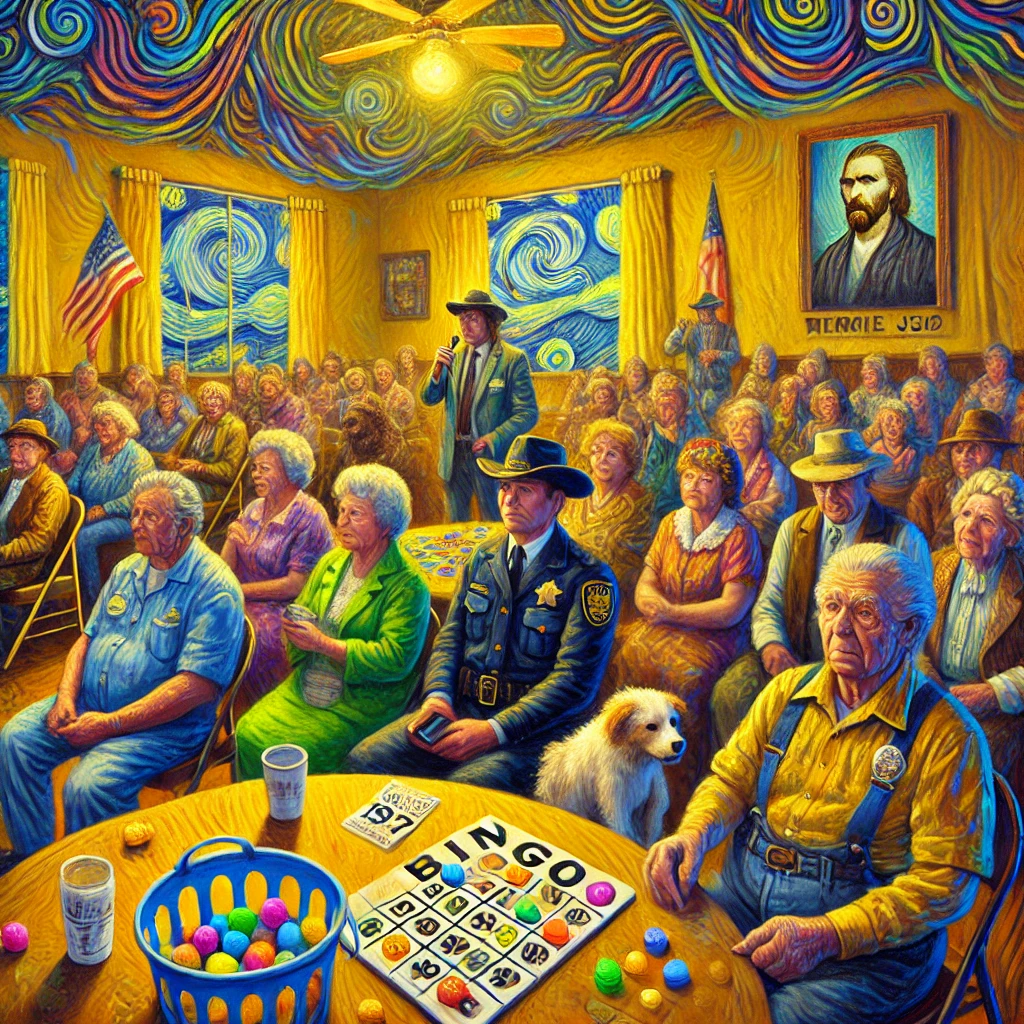
By seven, the Fellowship Hall hummed with bodies and casseroles. The bake table groaned like a conscience. The sound system from the 127 Yard Sale Fundraiser was plugged in and mostly functional if you kicked the cord just right.
“Welcome, citizens,” Reverend Gentry said into the microphone that whistled like a kettle. “Please retrieve your dabbers, your good manners, and your reading glasses. Tonight we demonstrate the kind of democracy that fits on a folding table.”
“Pretty sure that’s how Athens did it,” Boot muttered, handing out signs.
Grandma Ethel arrived last, as she always did, having learned the spiritual advantage of being expected. She took her usual seat under the framed portrait of the 1987 Youth Choir and set two items on the table: a blue coin purse and a jar of pickled okra. “Insurance,” she said to no one in particular.
Mabel Dean called the first game. “B-4.”
“That’s prophetic,” Clovis whispered. “B-4 the vote. Get it?”
“Don’t help,” Mabel said.
The numbers rolled out like coins down a pew. G-52. O-74. N-33.
Trixie Jo livestreamed in selfie mode. “Here we are live at Sequatchie Crossing Democracy Night—drop a corncob emoji if you’re excited.”
Dorothea Blevins asked everyone’s middle names for the ledger. Sheriff Peeler slid quietly around the room, eyes peeled for ballot-related felonies, which—under Tennessee statute and small-town practicality—could include throwing shade too violently.
Clovis stood at the window with binoculars, convinced the distant glow near the old fly-in site was “foreign interference or possibly Chattanooga.” He radioed an update into a walkie-talkie that squealed outrage. “Sky Defense to Ground: there’s movement over the ridge.”
“Probably deer,” Sheriff Peeler said, not looking.
“Deer don’t flash morse code.”
“That’s fireflies, Clovis.”
Clovis narrowed his eyes. “They’re organized.”
Back at the tables, Mabel called, “N-39,” and Trixie Jo accused Boot of double-dabbing.
“It’s legal,” Boot said. “I’m ambi-dabberous.”
“Ambidextrous,” Mabel corrected. “And it isn’t.”
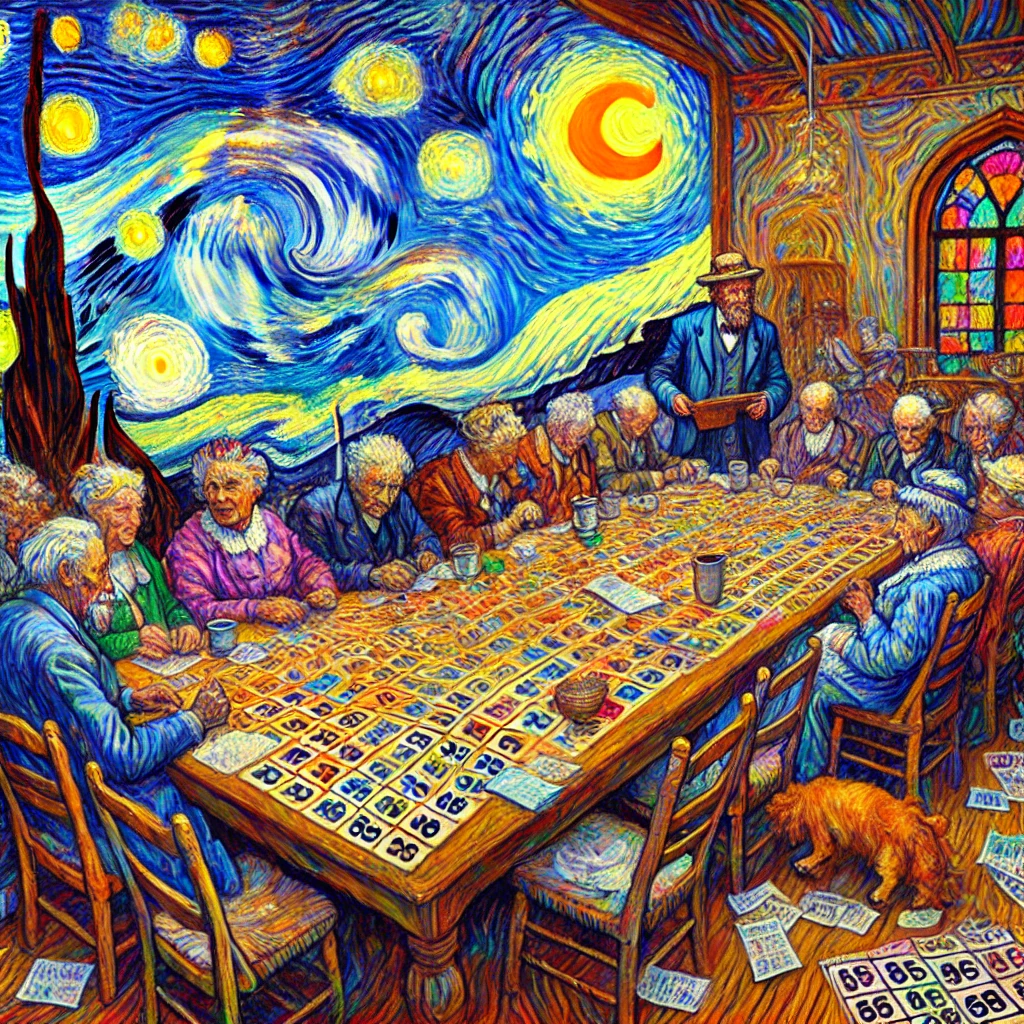
“—Bingo,” Grandma Ethel announced, the word unfurling like a quilt. Her card was a patchwork of patience. She lifted it gently, as if revealing a family secret.
Applause took the shape of relief. Ethel’s prize: a ham wrapped in twine, plus, per tonight’s rules, the right to ring the bell and declare the voting round closed.
She rang the bell with the confidence of someone who’d been ringing bells all her life, and somewhere a Methodist felt it in their kneecaps.
“Ballots,” Mabel declared, “go in the boxes. Even dabs for, odd dabs against, abstain if distracted by something shiny or Daisy.”
Right on cue, Daisy trotted past with a plastic Easter egg from somewhere under the stage. Sheriff Peeler sighed. “Abstention by egg.”
Scene 4: Counting (and Re-Counting) by Spoon
Counting commenced. Mabel Dean lined up cards, Reverend Gentry recited a prayer that was statistically neutral, and Boot Barnes made a graph on a napkin.
Numbers:
-
For swing-statehood: 17
-
Against: 14
-
Abstentions: 3 (Daisy ate the corner of one, which under the hard-won rules counted as “chewed into neutrality.”)
-
Write-ins: 1 (“Corn,” written in crayon with a confident hand.)
Boot immediately lodged a procedural challenge. “I move we treat ‘Corn’ as binding given last year’s Miss Corn adjudication produced a sash and precedent.”
Mabel Dean looked up. “Binding on what?”
“Everything,” Boot said, grandly. “In perpetuity.”
“Denied,” Mabel said. “On account of you’re not a judge and also because I say so.”
Trixie Jo swung the phone to capture her spoon gavel. “A true queen.”
Reverend Gentry, diplomacy incarnate, suggested a brief intermission for banana pudding and reconciliation. Sheriff Peeler used the break to follow Daisy around the building where she had freshly buried one index card and a spatula stolen from the bake table.
“Evidence?” the Sheriff asked.
Daisy wagged. The spatula was released under a good-neighbor clause.
Inside, Clovis burst in with urgency. “There’s a plane over the fly-in site! I saw a light! It’s signaling!”
Reverend Gentry shaded his eyes. “That’s the Rotary Club’s banner plane practicing for the county fair.”
“Could be a false flag,” Clovis said. “Or a literal banner.”
“Did the banner say ‘Vote Here’?” Trixie Jo asked, eyes glittering at the engagement numbers.
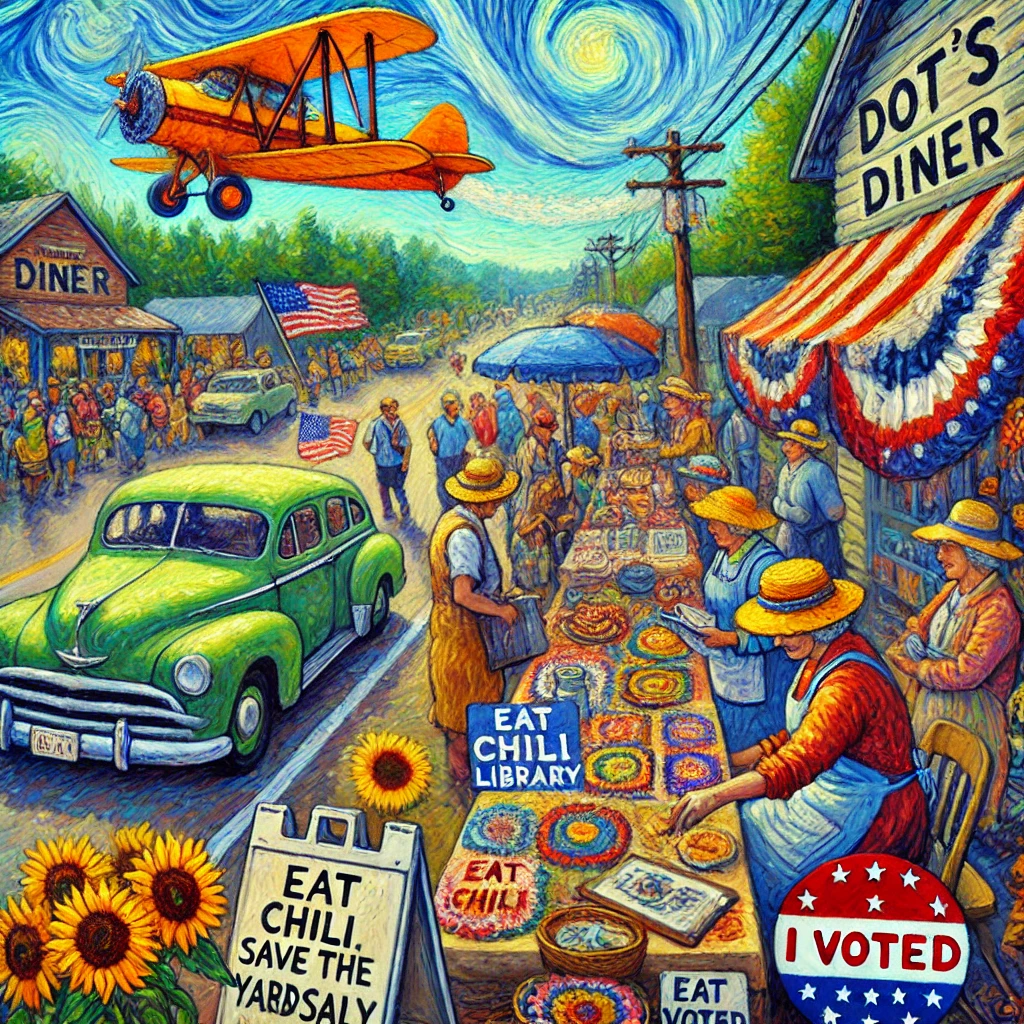
“Looked like ‘EAT CHILI, SAVE THE LIBRARY.’”
“That’s my fundraiser,” Mabel Dean said, both proud and distracted. “Two birds, one banner.”
The second round of Bingo began—this time with a rule that if you yelled “Bingo!” you had to first recite your address to Dorothea Blevins for verification. You would think this would suppress enthusiasm. You would be wrong.
Grandma Ethel—disciplined, unhurried—won again. Another ham. Another bell. Another avalanche of good cheer.
“Providence,” Reverend Gentry intoned.
“Trend line,” Boot said, adding a second line to his napkin chart labeled “Ethel.”
“Two hams is a coalition,” Trixie Jo posted.
Scene 5: Morning After, Signs Everywhere
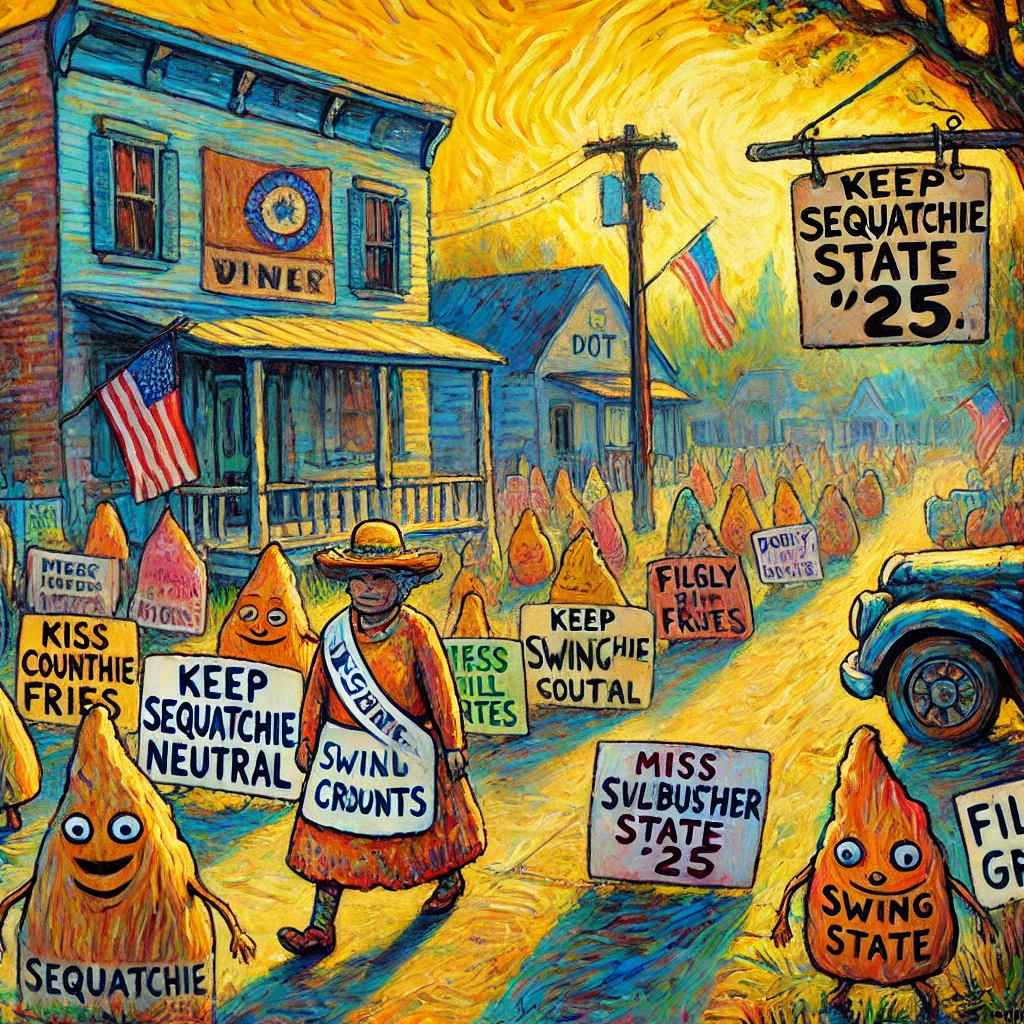
By dawn the next day, Sequatchie Crossing had turned itself into a living yard-sign museum:
-
“SEQUATCHIE SWING STATE ’25”
-
“KEEP SEQUATCHIE NEUTRAL (BUY SWISS CHEESE)”
-
“COUNT EVERY DAB”
-
“I BRAKE FOR CORN”
-
“MISS CORN STILL COUNTS” (Boot’s handiwork, now with glitter)
Dot’s Diner rolled out a “Filibuster Fries” special where the waitress kept talking until you surrendered and said, “fine, surprise me.” The menu added “Gerry-mandarin Oranges” to the fruit cup and a “Recount Omelet” with extra onions to make you cry and get it out of your system.
Radio station WSEQ ran wall-to-wall coverage narrated by a man named Lyle who’d done six months of community college and considered himself “an analyst of tendencies.” He announced, repeatedly, that Sequatchie Crossing had “signaled intention to swing,” which made three retirees call in worried about moral fiber.
At the Piggly Wiggly, Grandma Ethel wore a sash her grandchildren had crafted from a bedsheet. In glitter glue: MADAM SWING STATE. When the automatic doors whooshed open, the produce clerk spontaneously applauded and knocked over a pyramid of sweet potatoes, which rolled like confetti across the linoleum.
An aisle over, Clovis handed out “Sky Defense Election Observation Badges,” which were stickers that said “OBSERVING” with an arrow you could point at anything.
Scene 6: The Hearings (Because You Have to Have Hearings)
Sequatchie Crossing does hearings like some people do karaoke—earnest, loud, and occasionally in the wrong key.
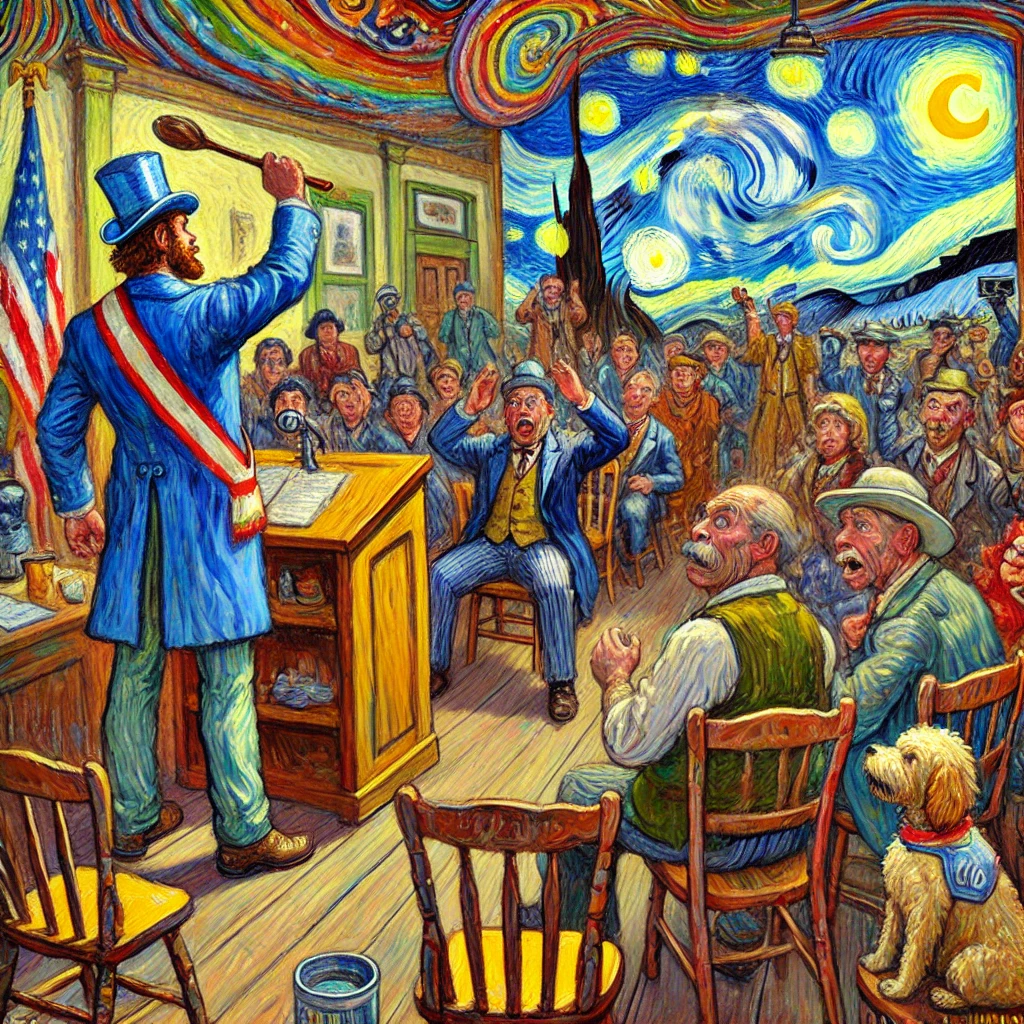
They convened at Town Hall. Mabel Dean presided from behind a folding table draped with a tablecloth that said HOPE. Underneath, someone had scribbled, “and napkins.”
Boot Barnes stood at the lectern and cleared his throat. “Madam Chair and fellow dignitaries, pursuant to my sash—”
“Denied,” Mabel said.
Boot blinked. “You didn’t hear the motion.”
“I heard the sash,” Mabel said, and all present nodded, recognizing an old conflict.
Trixie Jo presented exhibits: screenshots of her livestream, a heat map of reactions (🔥 clustered around the word “DAB”), and a petition signed by 312 internet strangers and three people who claimed to live “adjacent” to Sequatchie Crossing “in spirit.”
Dorothea Blevins read aloud a stack of envelopes marked “Public Comment,” including one from a homebound resident who wrote, “I will agree to swing so long as it doesn’t interfere with Wheel of Fortune.”
Clovis proposed an addendum: “We install an early warning system for banner planes bearing aggressive fonts.”
Sheriff Peeler said, “No.”
Norm—rumored to have once outrun a thunderstorm in his 1963 Blue Oldsmobile—stood and introduced a filibuster disguised as a story. “It was the summer of ’79 or maybe ’80 depending on whether you count the heat index, and I’m on the ridge with Tom and Eric and we’re arguing whether a gully can be patriotic. And that’s when the bear—”
“Norm,” Mabel said, not unkindly, “you have the floor for three minutes unless a bear enters.”
“Well,” Norm said, “that’s the thing about bears—”
Mabel tapped the spoon. “Three minutes, dear.”
He wrapped it up by saying that a “swing state” should “swing like a porch swing and not like a wrecking ball,” which sounded reasonable enough to be written down in the unofficial minutes by whoever was pretending to take them.
In the back, the Ring camera Mabel had installed over the Fellowship Hall kitchen door pinged. The feed auto-saved a clip of a smudgy shape pressing the doorbell with spectral courtesy.
“That’s the muffin ghost,” someone whispered.
“Is it voting?” someone else asked.
“We have no policy on apparitions,” Sheriff Peeler said, eyeing Daisy, who was under a chair delicately gnawing a campaign ribbon.
Result of the hearing: The vote stands. Sequatchie Crossing would henceforth describe itself as “a swing-state-in-spirit,” pending recognition from any authority higher than Mabel’s spoon.
Scene 7: The Mega Stop, the Yard Sale, and Other Interested Parties
Nothing draws attention like attention. By midweek, the proposed Mega Stop—the truck stop project that had everybody mad at everybody in the measured, artisanal way Sequatchie Crossing perfected—issued a press release offering to sponsor “civic refreshments.” Dot declined, citing “culinary separation of power.”
The 127 Yard Sale vendors, many of whom maintain personal jurisdictions along Highway 127, declared themselves “international observers” and brought clipboards decorated with sunflowers. They formed a loose caravan of observation that, like many caravans, ended at Dot’s for pie.
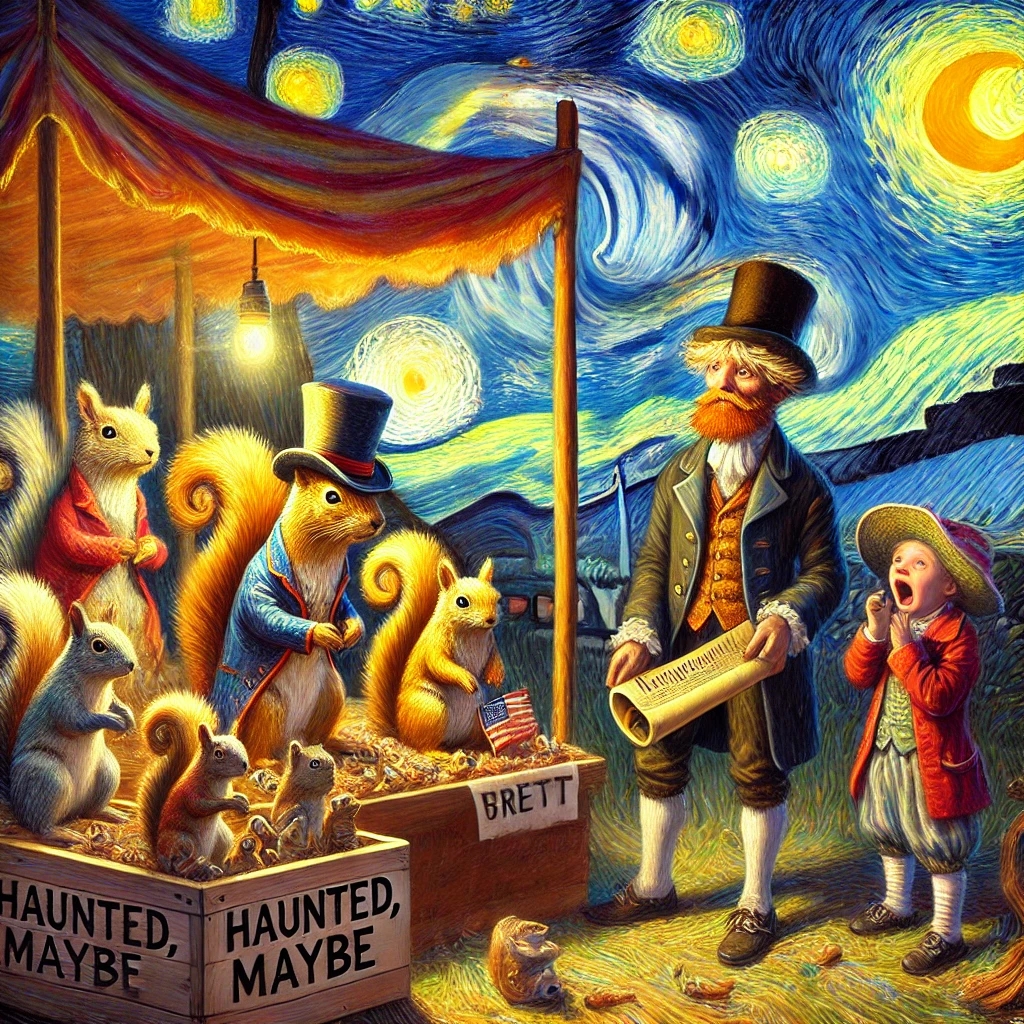
One enterprising vendor sold crocheted “I VOTED” doilies in six colors. Another peddled corn-shaped erasers under the slogan “Rub Out Fraud.” A third offered discount yard-sign stakes and, when asked whether he took votes as payment, said he preferred cash and good gossip.
The abandoned car wash—still considered an accidental statement piece—was briefly suggested as a polling place annex. It was rejected when a gust of wind sent soap bubbles into the street, which Dot declared “too festive for solemn democratic duties.”
Scene 8: Petition Drafting, or, The Bureaucracy of Hope
If you want to see democracy produced in the wild, watch a small town write a letter to the state. It involves twelve people, two dictionaries, three disagreements about commas, and one fight about whether to use “Regards” or “Respectfully.”
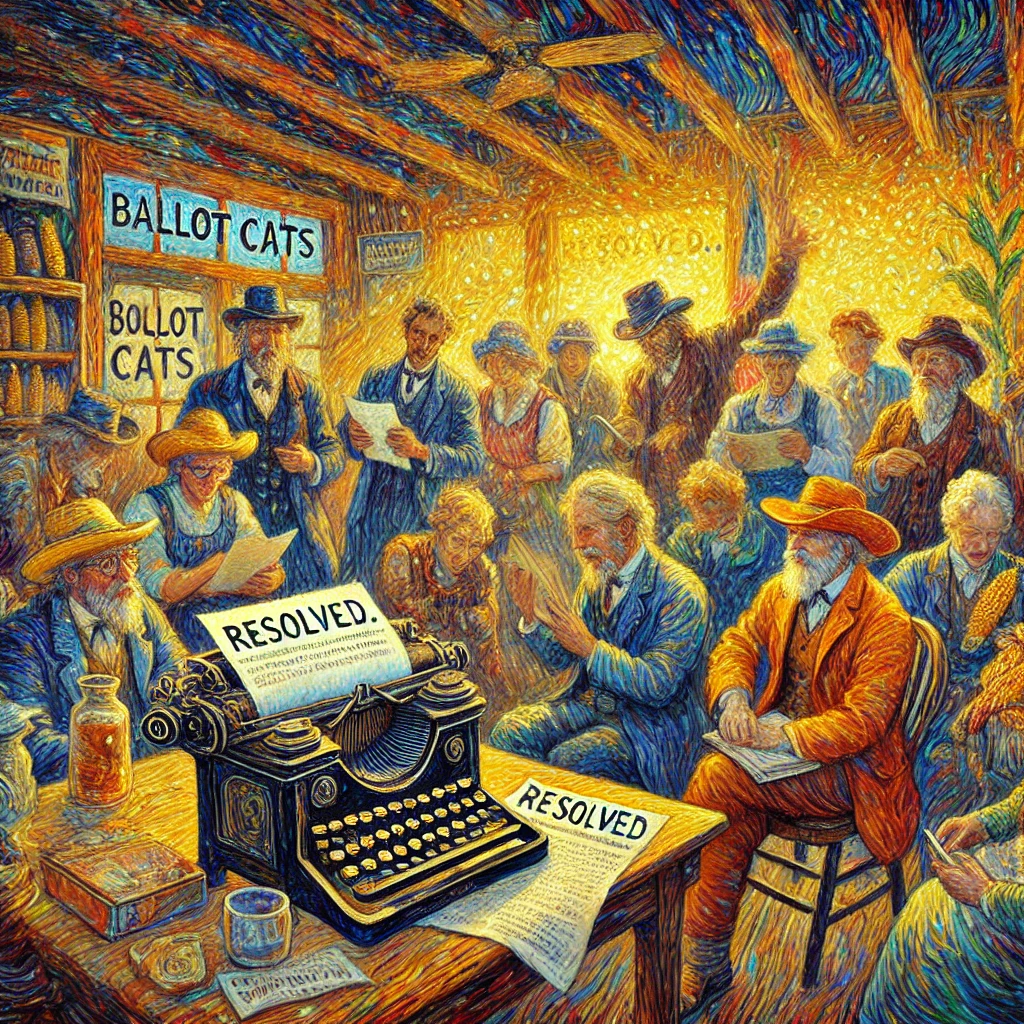
They met in the library’s back room beneath a corkboard that still had a “VOLUNTEER FOR THE FLY-IN COMMITTEE” flyer tacked up with hope and two rusting thumbtacks.
“Resolved,” Reverend Gentry said, writing on the whiteboard, “that Sequatchie Crossing, being of sound mind and casserole, requests recognition as a swing-state-in-spirit and asks for a ceremonial electoral vote possibly shaped like a ham.”
“Strike the ham,” Mabel said.
“Noted,” the Reverend replied, though he drew a small ham in the margin as a private mercy.
Clovis suggested a line requesting air support during ballot drops, which everyone pretended not to hear.
Dorothea Blevins brought out an address directory so comprehensive it contained the name of a boy who’d moved away in 1972 and become a dentist in Omaha. They settled on sending letters to Nashville, Washington, and the local paper in Dunlap, which is functionally more dangerous.
Norm delivered his typewriter, which he kept in a case lined with an old flannel shirt. “Computers soften your consonants,” he said, setting the carriage like a man planting a flag.
Boot provided stationery printed with a watermark that looked like a cornstalk if you squinted. Trixie Jo printed the petition header in a font that made Mabel Dean say, “No,” and then an entirely different font that made Mabel say, “Less no. Proceed.”
Salutation debates ran long:
-
“To Whom It May Swing,” (no)
-
“Dear Keepers of the Republic and/or Ham,” (no)
-
“Dear Sirs, Madams, and Anyone With a Stamp,” (progress)
-
“Dear Powers That Be and the Office of Whatever You Call Swing-Related Designations,” (too windy)
-
“Dear Nashville and Beyond,” (acceptable)
They included footnotes:
-
On Counting: Bingo cards were used in good faith; dabbers were acquired at retail; Daisy interfered only marginally.
-
On Precedent: The Miss Corn Festival clerical error remains unresolved but instructive.
-
On Infrastructure: The town is willing to install a literal swing set at the park as a symbolic compliance gesture.
The petition concluded with a quote from Grandma Ethel, who’d been asked for a statement and, after sipping sweet tea, said, “I’ll stand where you tell me and vote for what’s right so long as someone takes this ham out of my trunk.”
This, too, was paraphrased respectfully.
Scene 9: Local TV, Global Stakes (in Our Heads)
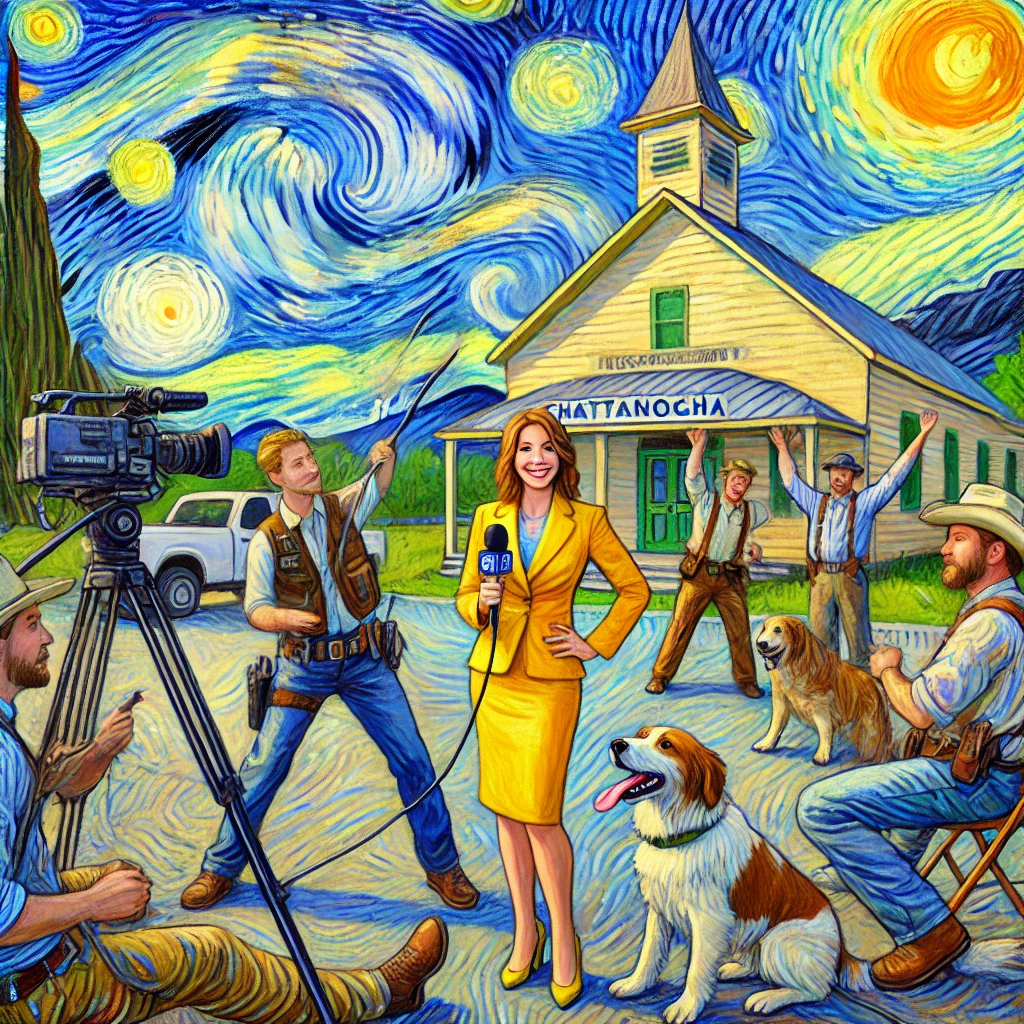
A camera crew from the Chattanooga station arrived with an anchor whose teeth looked unionized. They set up by the Fellowship Hall’s double doors, where the light was forgiving and the background offered a nice cross of small-town charm and parking lot.
“Sequatchie Crossing claims swing-state status,” the anchor began, “and if they can’t have it, they’ll at least have a good time trying.”
Boot appeared behind her shoulder with his sash. Clovis, wearing his “Observing” sticker, pointed earnestly at the sky. Trixie Jo held up a QR code that linked to a petition page, and Sheriff Peeler herded Daisy away from the tripod, which Daisy considered an unguarded leg begging for friendship.
Grandma Ethel, coaxed into a brief interview, stared evenly into the camera and said, “We’re not trying to tell the whole country what to do. We’re just trying to tell ourselves what to do and make it feel important.”
The anchor blinked, as if the ground had shifted under her heels. “That’s—actually—beautiful.”
Ethel shrugged. “I’m mostly here for Bingo.”
Scene 10: Sunday Comes, With Sermons and Sash
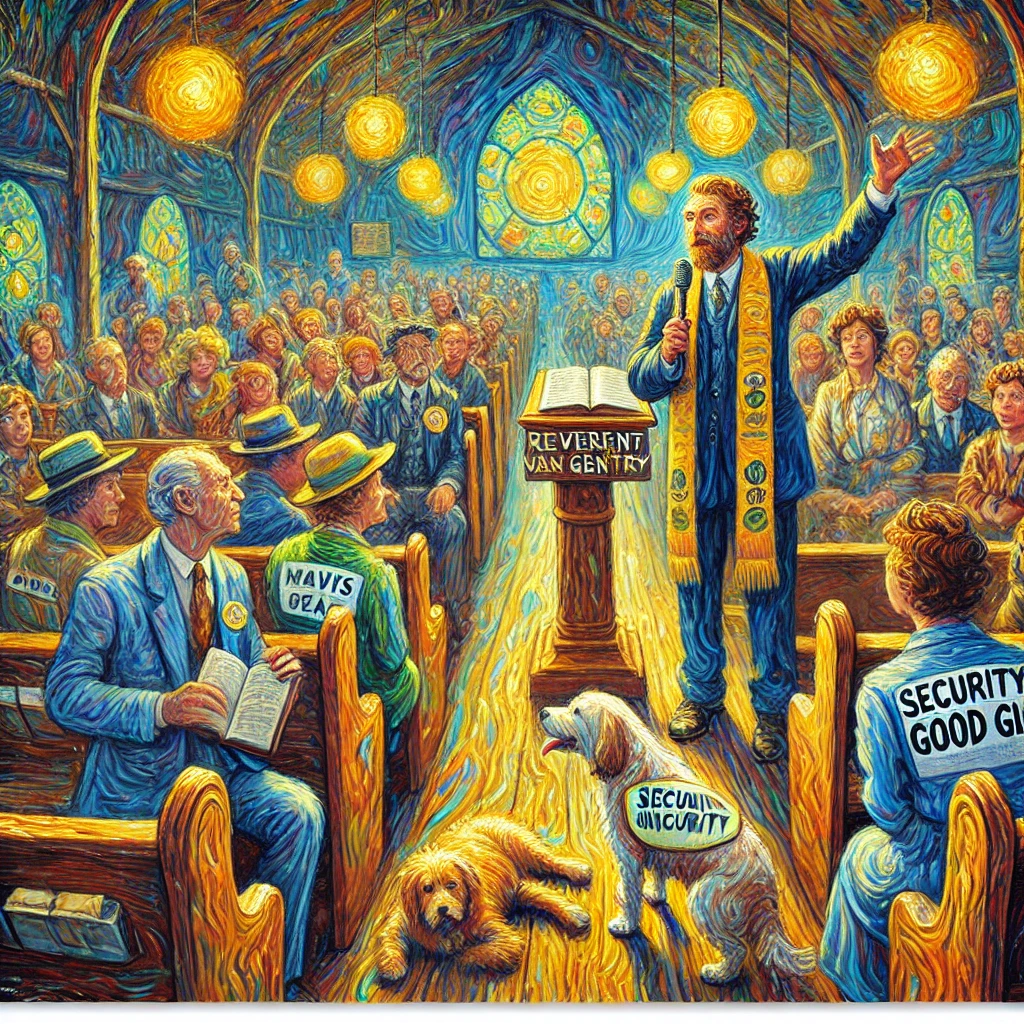
On Sunday, Reverend Gentry preached from Ecclesiastes—times and seasons, sowing and reaping—and snuck in a parable about porch swings. “They stay in one place,” he said, “but they move. Sometimes that’s enough.”
He yielded the pulpit for three minutes of “civic housekeeping.” Mabel Dean announced a community information meeting: the petition, the yard signs, the Swiss cheese contingency plan. Boot announced a Miss Corn retrospective (free corn pudding with admission). Clovis handed out pamphlets titled “LOOK UP: A Citizen’s Guide to Ballots That Might Fall Out of a Plane But Probably Won’t.”
Sheriff Peeler gave Daisy a badge sticker reading “SECURITY (good girl).” Daisy slept through the benediction, belly toward heaven, paws twitching as if voting in a dream.
After the service, in the Fellowship Hall, the muffin ghost was reportedly observed again on Mabel’s Ring camera. The clip, viewed in a semicircle by the church women, showed a smudge moving toward the doorbell and then stopping, perhaps reconsidering eternal matters of participation.
“What do we do if the ghost insists on voting?” someone asked.
“We count it,” Mabel Dean said. “And if it wins, we schedule a potluck.”
“That’s our policy?” Reverend Gentry asked.
“It is now,” Mabel said.
Scene 11: Quiet Visits, Loud Thoughts
Sequatchie Crossing altered its gait for a week or so, the way a town does when it’s rehearsed a new story and is trying it on in the mirror.
-
Dot’s Diner ran out of Filibuster Fries twice.
-
The Piggly Wiggly set up a display of Swiss cheese that made the dairy aisle look diplomatically complicated.
-
Kids on bikes shouted “I motion!” at each other instead of “tag,” which led to a fourth-grade coup that was resolved by ice cream.
-
The library’s suggestion box overflowed with petitions requesting a book club on “books where small towns are right.”
-
The abandoned fly-in site acquired a chalk outline of a runway in case “air voting” suddenly took off.
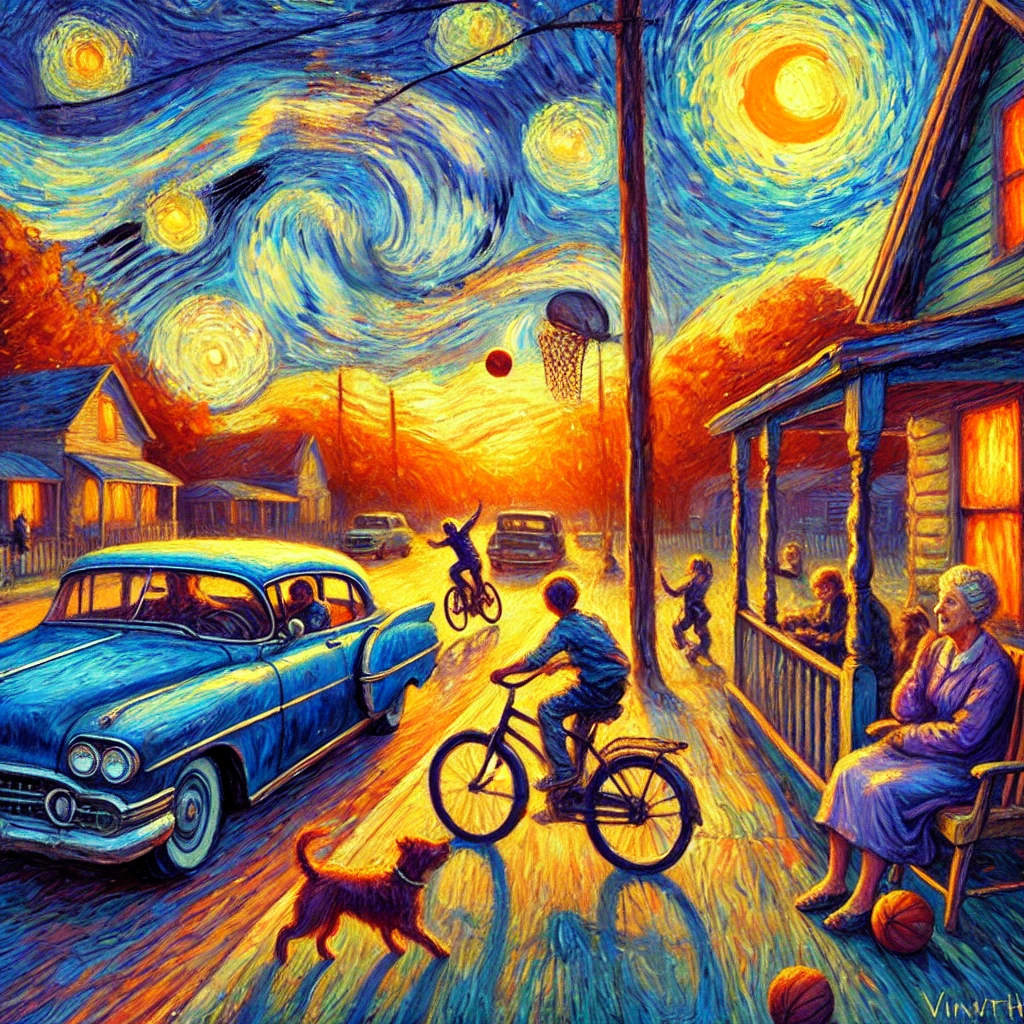
Norm took his Blue Oldsmobile for a spin at sunset and found Grandma Ethel in her front yard, bench-sitting in the slow-moving evening.
“You did all right,” Norm said.
“I sat still and dabbed when told,” Ethel replied. “That’s half of life.”
“Other half’s not making a fuss when someone else dabs different,” Norm said.
They watched a neighbor boy practice free throws into a hoop with a bent rim. The ball thunked, thunked, and then for reasons nobody could explain, slipped through exactly once like a thing remembering itself.
“Town’s going to be fine,” Ethel said.
Norm nodded. “Always is.”
Scene 12: The Envelope Arrives (Sort Of)
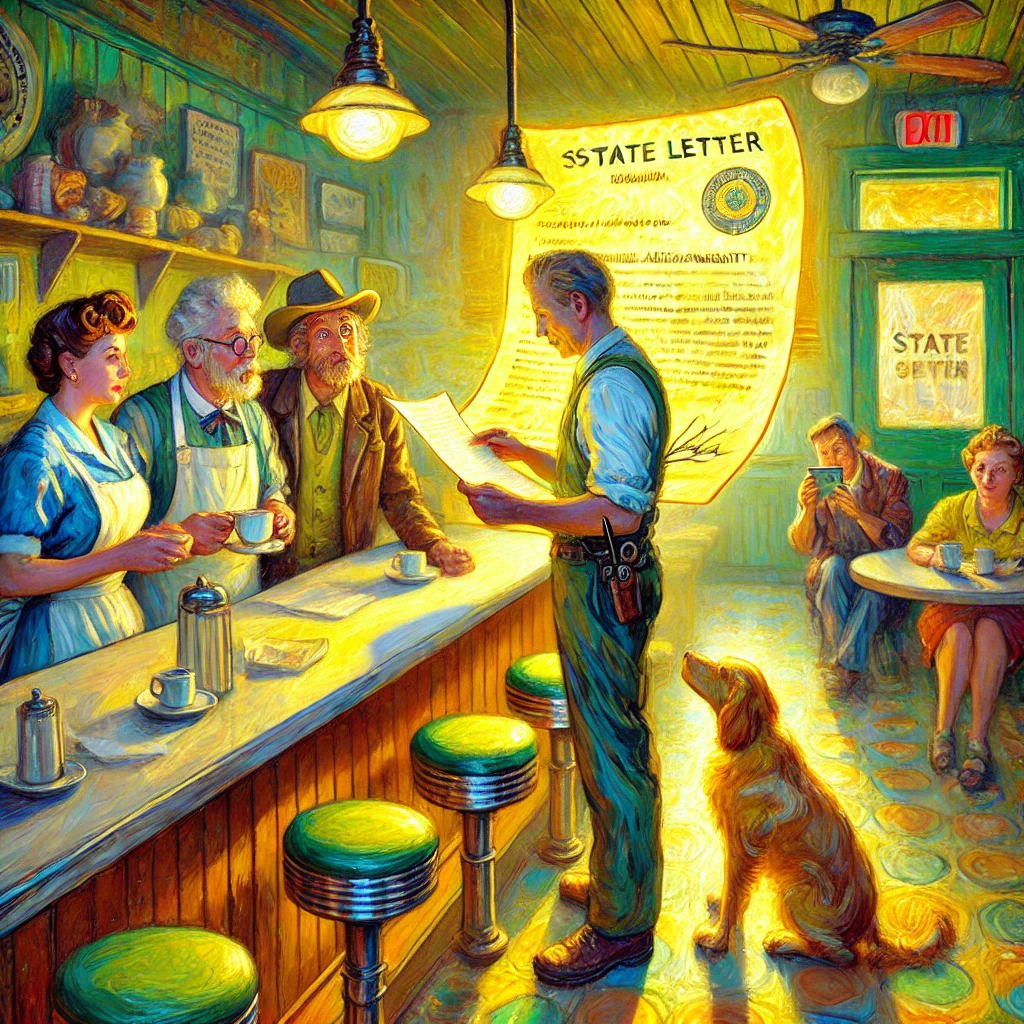
A week later, an envelope from Nashville arrived addressed to “Sequatchie Crossing, Attn: Whoever Is in Charge of Swing Sets.” It was delivered to Dot’s, because most things were, and Dot opened it with the scissors she kept in the register drawer for coupon emergencies.
The letter was printed on polite paper:
Dear Sequatchie Crossing,
Thank you for your spirited correspondence. While we cannot confer swing-state status, we applaud your civic engagement and encourage you to continue participating in all elections. Please note: installing playground equipment does not confer electoral authority (though it may confer joy).
Regards,
Office of Community Affairs
“Joy’s in scope,” Reverend Gentry said, reading over Dot’s shoulder.
Mabel Dean exhaled through her nose. “We weren’t denied. We were… redirected.”
“Which is government for ‘do what you want and don’t ask us to notarize it,’” Dot said.
Boot felt the letter for a watermark. “No ham,” he said, a little disappointed.
Trixie Jo snapped a photo (no faces, just the letter and a saucer of mints) and posted: “Nashville affirms Sequatchie’s right to swing its own way.” Which was true in the way that matters.
Clovis updated the Sky Defense charter to include a clause about playground perimeters “in case of ballot cats.”
“Ballot cats?” Sheriff Peeler asked.
“Cats that knock ballots off tables,” Clovis said. “They exist. I saw a video.”
Scene 13: The Swing Set
Because there are some promises you keep even when nobody’s keeping score, a week later Sequatchie Crossing installed a swing set at the park.
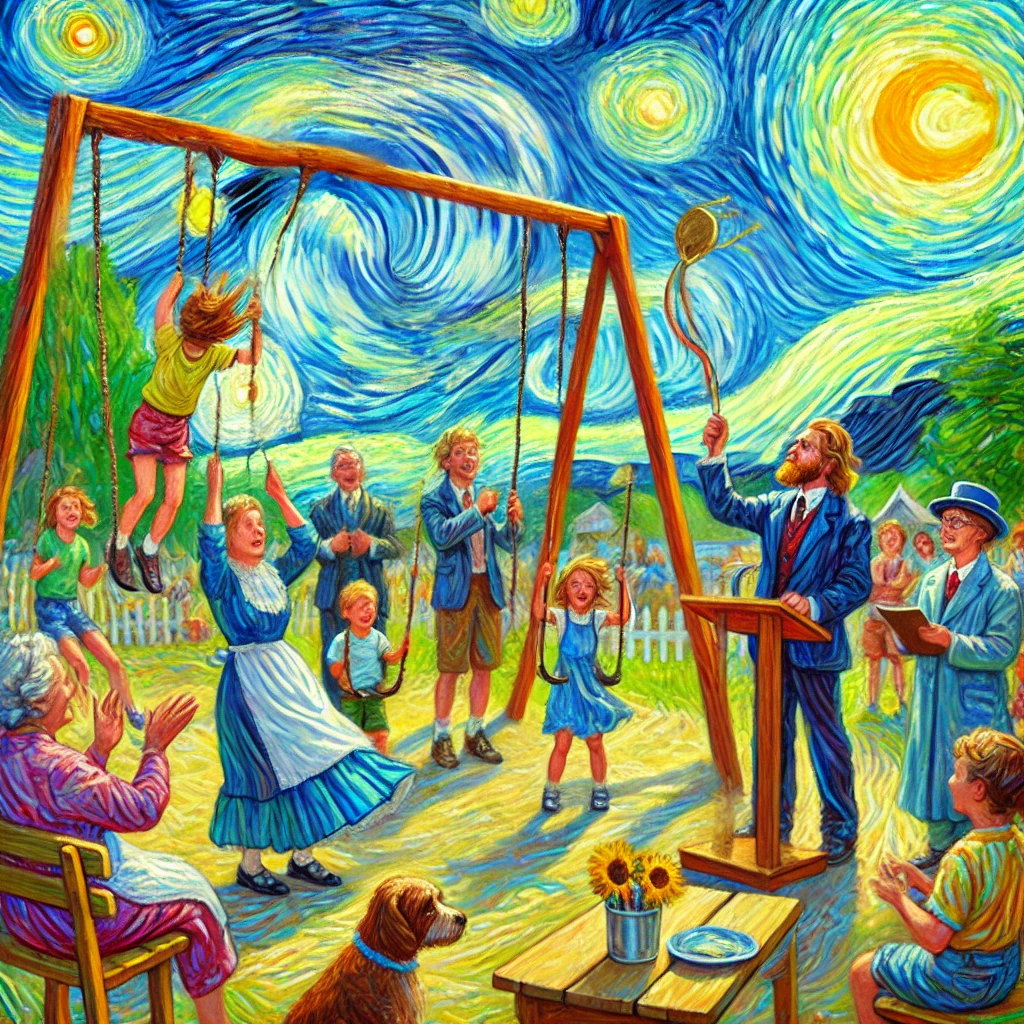
The men argued about post-hole depth, the women argued about mulch, the children argued about who got the first swing, and Daisy discovered joy in the shade. Boot read an inaugural poem that rhymed “motion” with “notion” and “commotion.” Clovis checked wind shear. Reverend Gentry said a blessing about gentle arcs and sturdy chains.
Grandma Ethel, invited to cut the ribbon with a pair of golden scissors, snipped and said, “May we swing without falling, and may we stop without getting queasy.”
The children cheered and surged toward the swings in a small stampede of kinetic democracy. Ethel watched them pump their legs, lean back, and feel the air catch them: a motion both inside and out, proof that change can happen with no ground gained and no ground lost.
“Swing enough,” she said softly, “and you remember what moving’s for.”
Epilogue: Daisy’s Dig, Spring 2026
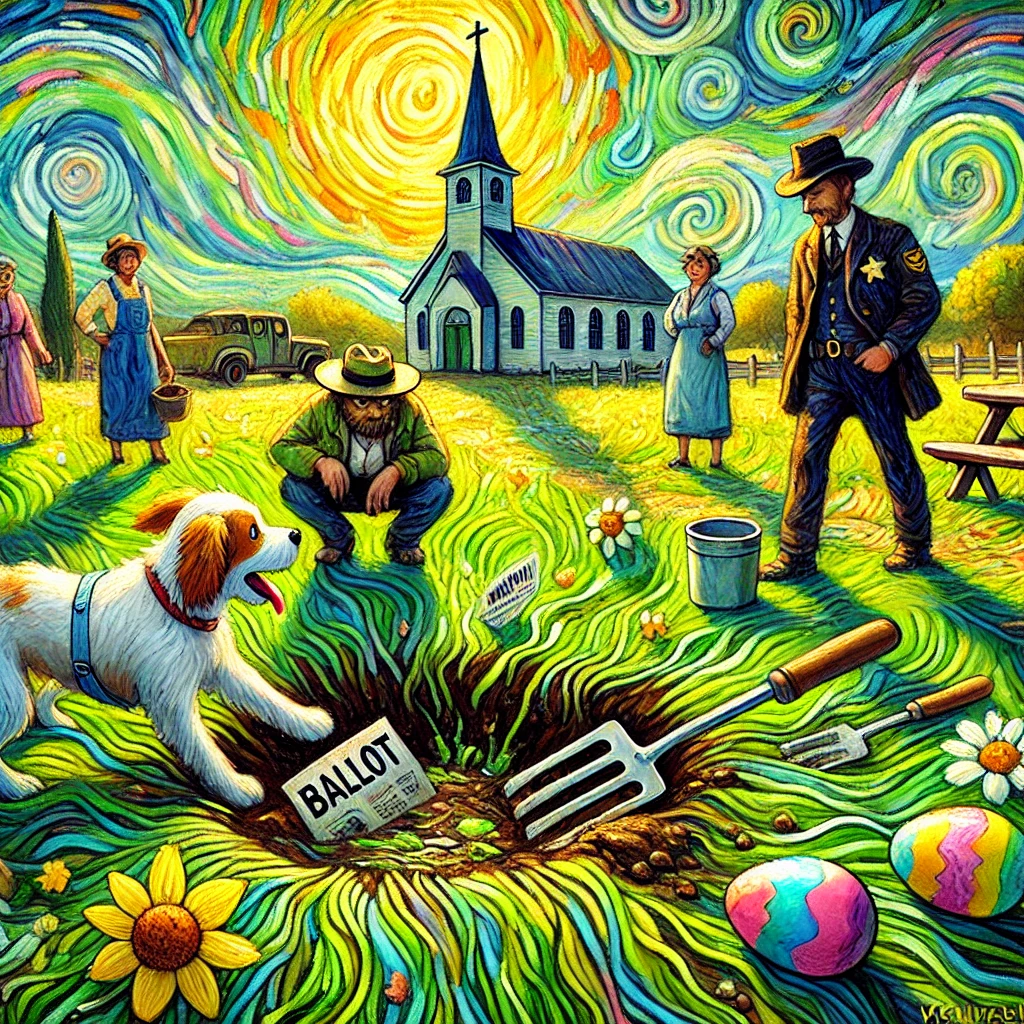
Months later, after winter left the ground reasonable again, Daisy dug up a field of treasures near the churchyard: two damp index cards, a spatula, and the Easter egg she’d once considered a matter of state. Sheriff Peeler held up the soggy card and squinted.
“What’s it say?” Boot asked, leaning in.
“Looks like…” the Sheriff said, “…‘Corn.’”
Mabel Dean, standing with hands in her cardigan pockets, smiled into the sun. “Let the record show,” she said, spoon tucked like a baton at her elbow, “that in Sequatchie Crossing, nothing truly gets lost. It only waits underground until we’re ready to laugh about it.”
Grandma Ethel passed by on her daily walk, paused, and patted Daisy on the head. “Good girl. Always did know where things were buried.”
Ethel continued on toward Dot’s Diner, where there was coffee, and conversation, and the general understanding that even if Sequatchie Crossing never appears on a map painted red or blue, it has learned the valuable middle art of swinging without breaking, of counting without dividing, and of winning in ways that fit inside a grocery bag—ham included.
Key Takeaways
-
Bingo as Ballots: The town used Bingo night as a low-friction, high-participation way to “vote,” complete with dabber-based rules and Daisy’s limited interference.
-
Grandma Ethel’s Twin Wins: Ethel’s calm competence carried the night—she won both the game and the town’s informal poll, becoming the moral center of the story.
-
Mabel’s Spoon is Law: Procedural sanity came from Mabel Dean’s spoon-gavel; her denials were swift, her approvals finite, and her humor dry.
-
Clovis Expands the Mandate: Sky Defense broadened into electoral oversight with binoculars, banner-plane anxieties, and a pamphlet no one asked for but everyone kept.
-
Sheriff Peeler & Daisy: Soft power and a sticker badge. Daisy buried some democracy and later returned it, as Sequatchie Crossing dogs do.
-
Boot’s Corn Precedent: The Miss Corn Festival remains unofficial law in Boot’s heart; the town accepts this as color commentary on the process.
-
Petitioning as Community Theater: Drafting the letter to Nashville became its own civic rite—dictionaries, fonts, footnotes, and a quote from Ethel that said everything.
-
Outcome: No official swing-state status, but a swing set installed—and with it, a shared metaphor the whole town can sit in.
This is a fictional, satirical Dispatch from Sequatchie Crossing. Any resemblance to real ballot procedures is entirely accidental, often casserole-adjacent, and always resolved over coffee at Dot’s.
Real Places Behind the Ruckus – From The Dunlap Directory
Real Places Behind the Ruckus – From The Dunlap Directory
Yes, this story was fictional; even the parts that weren’t true. These places? Absolutely real. Stop by, support local, and keep the Wi-Fi away from livestock:
- Waldemar Design & Machine
- Stocker Tire & Services Center
- Animal Sitting by Chloe Holloway
- Lookout Mountain Incline Railway
- Creative Discovery Museum
- Raccoon Mountain Caverns and Campground
- Results Physiotherapy Dunlap Clinic?
- RJ’s Garage
- Ms. Teresa’s Gymnastics
- Pudge’s Excavating & Landscaping
- Sequatchie Farmers Co-Op
- Reynolds Seal Coating Company
- Dunlap Farmers Market
Real Places Behind the Ruckus – From The Dunlap Directory
At Sequatchie Crossing, we tell the stories of Sequatchie Crossing.
Please share this post with your friends, family, or business associates who may want follow the news from Sequatchie Crossing.

0 Comments