


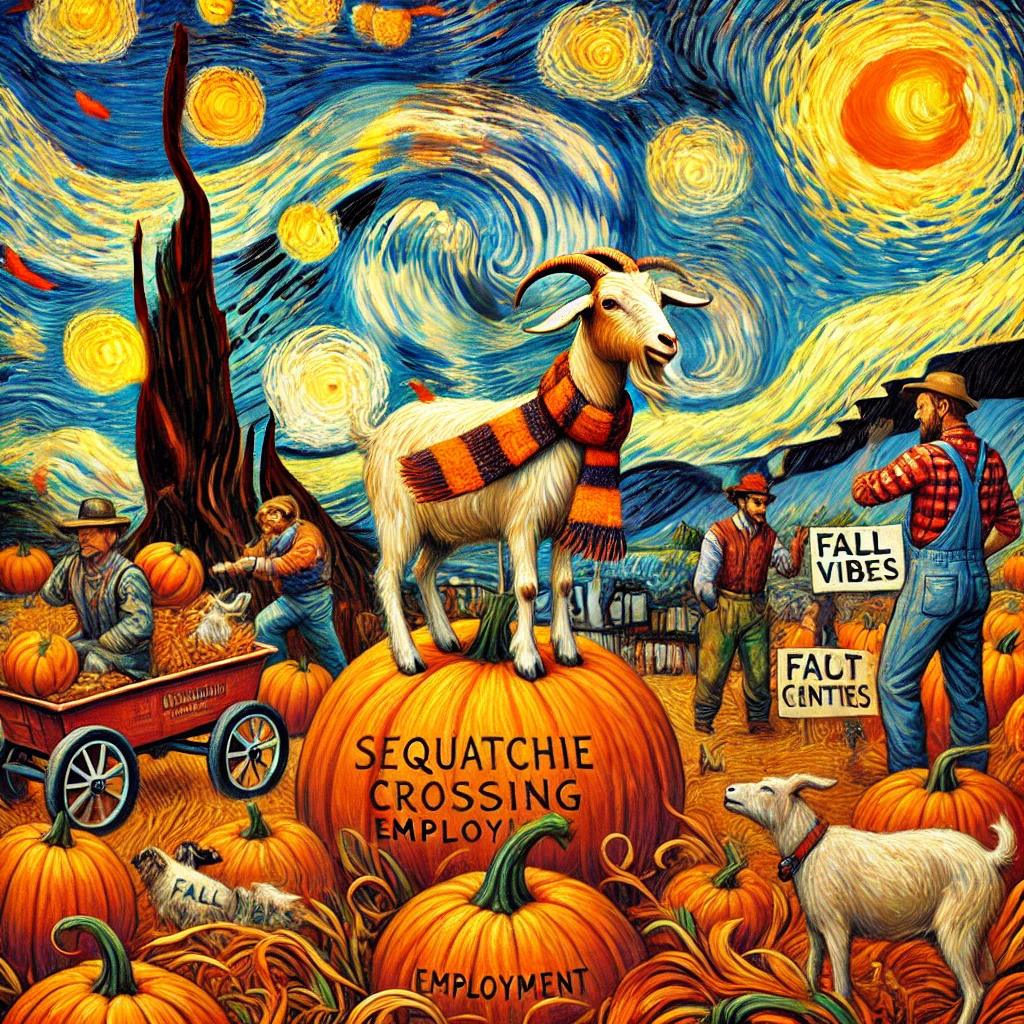
Autumn Jobs, Family Feuds, and a Unexpected Goat
By Tom Seest
At Sequatchie Crossing, we tell the stories of Sequatchie Crossing.
Please share this post with your friends, family, or business associates who may want follow the news from Sequatchie Crossing.
🎤 Audio Overview
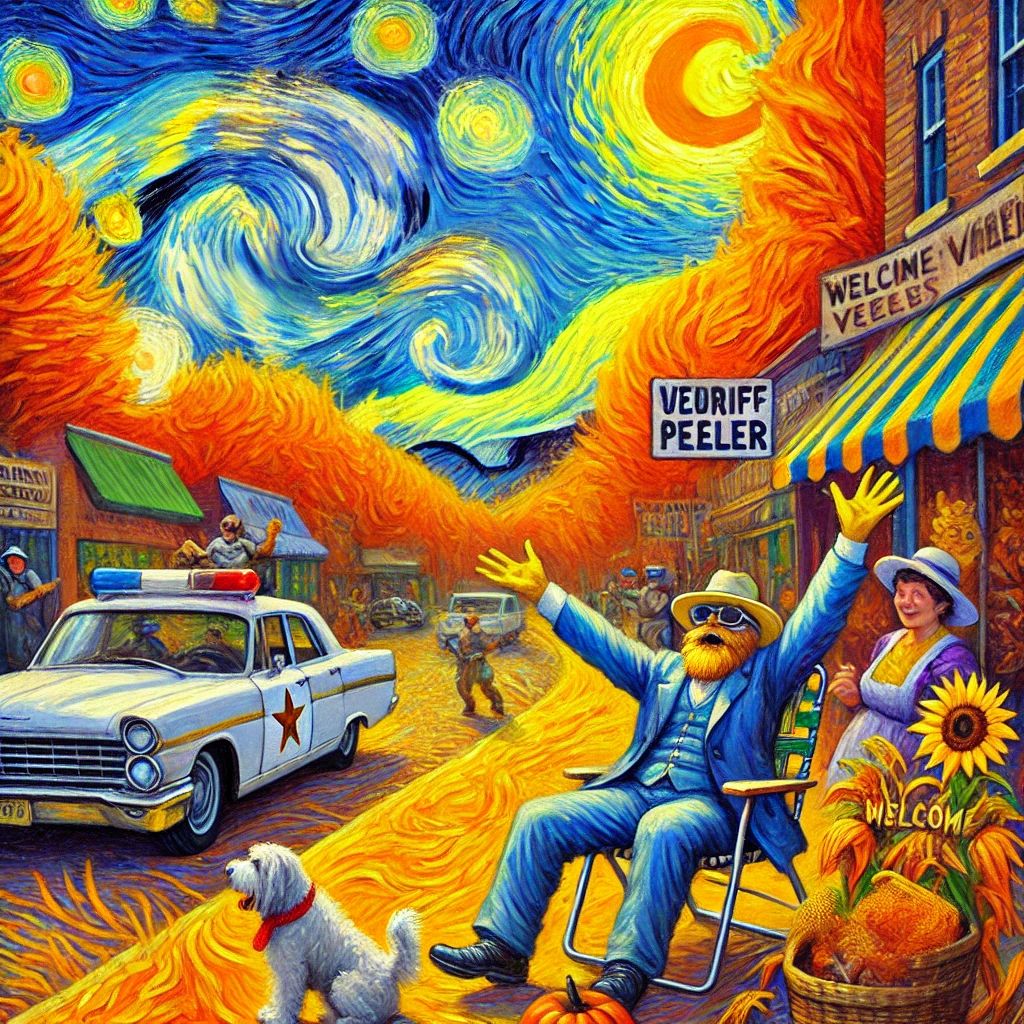
Act I: When the Leaves Turn—and So Do the Cousins
Autumn arrived in Sequatchie Crossing not with a whisper but with the thud of Cousin Cletus’s suitcase hitting the sidewalk outside Mabel Dean Ashcroft’s house. That’s where he always showed up first, like a migrating duck with poor aim. This time, he claimed he’d “accidentally bartered his RV in a crypto-lottery,” and had hitched a ride home on the back of a carpet cleaner’s trailer headed for Whitwell.
Sequatchie County was used to economic slumps after Labor Day. The tourists pack up, the creek tubes get deflated, and the seasonal jobs at roadside BBQ stands, antique shops, and the infamous Sasquatch Zipline Park vanish faster than last week’s peach cobbler.
Cletus, like many of Sequatchie’s free-range relatives, had impeccable timing for these downturns.
He wasn’t alone.
Soon, Clovis’s cousin Buck showed up with a drone he said was “mostly legal” and a pitch for “precision pumpkin delivery.” A third cousin, Jeannie Sue, announced she was starting a “fall vibes consultancy” and offered to analyze people’s front porch décor for a small fee or a jar of pickles.
Even the mayor’s own sister, Sheila, returned unannounced with a five-gallon tub of glitter and a mysterious plan to “turn pumpkins into profits and passive income.”
The town was full of people again. Just not the kind that helped pay taxes.
Act II: Gig Work and Gourds
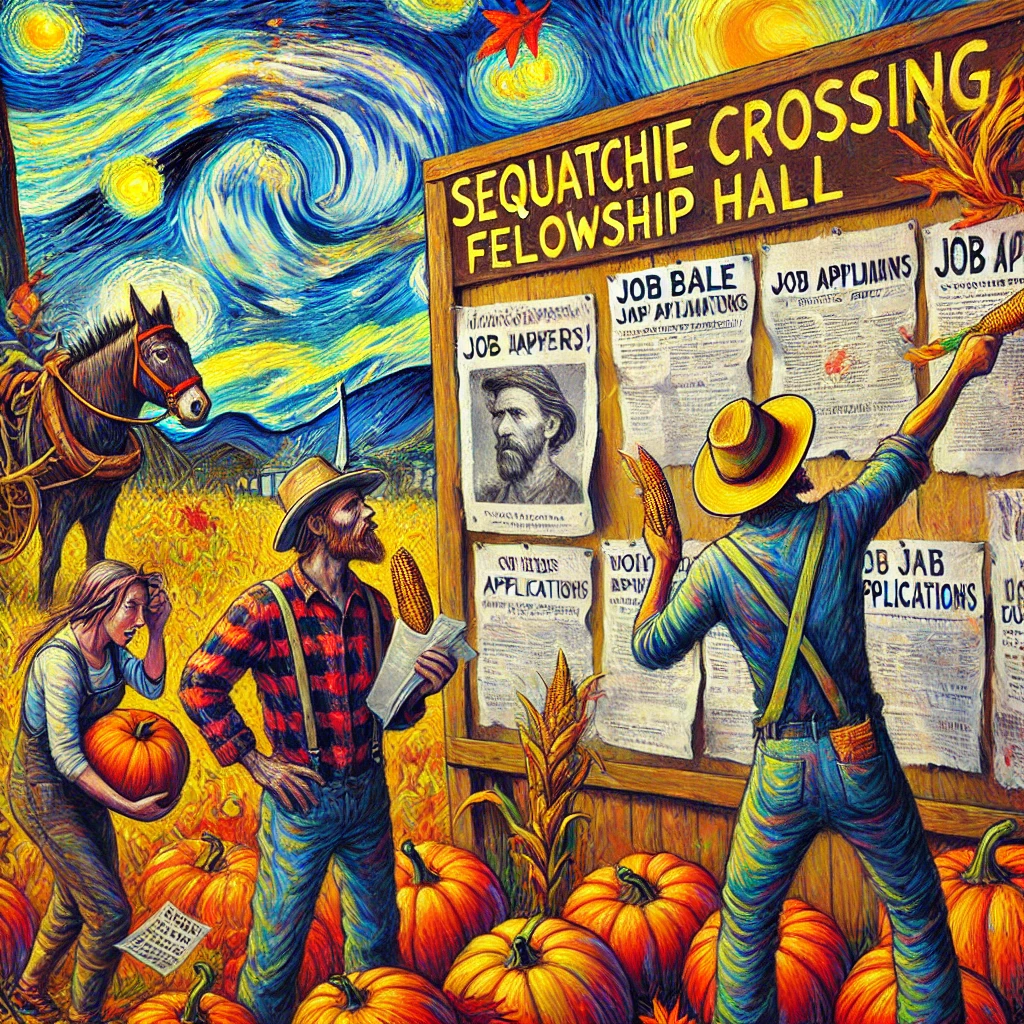
To stem the financial panic, Mabel Dean Ashcroft formed the Autumn Employment & Vibes Council, which was just the back room of the Fellowship Hall with a whiteboard and several stacks of unsolicited resumes, most of which were sticky from cider spills.
The official Job Board listed the following:
-
Pumpkin Patch Influencer – Bring your own boots. Must be “festively photogenic” and own a phone with portrait mode.
-
Hayride Narrator – Experience in ghost stories and/or farm equipment a plus.
-
Corn Maze “Mood Guide” – Must be comfortable giving unsolicited advice and handling crying toddlers.
Boot Barnes applied to be every one of them. When asked for his qualifications, he said, “I got enthusiasm, a fog machine, and zero shame.”
Cletus, meanwhile, started a makeshift rickshaw service using a broken wheelbarrow and a borrowed mule named Brenda. He charged $3 for rides and $5 to not talk during them.
“I’m solving transportation and mental health in one go,” he claimed.
Sheriff Peeler issued five citations in one morning—three for “unlicensed fall transport” and two for “mule impersonating public official” (Brenda had a borrowed sheriff’s hat on).
Act III: Enter Sandra Day O’Bleat
Chaos found purpose when Clovis’s Uncle Jasper’s goat escaped again.
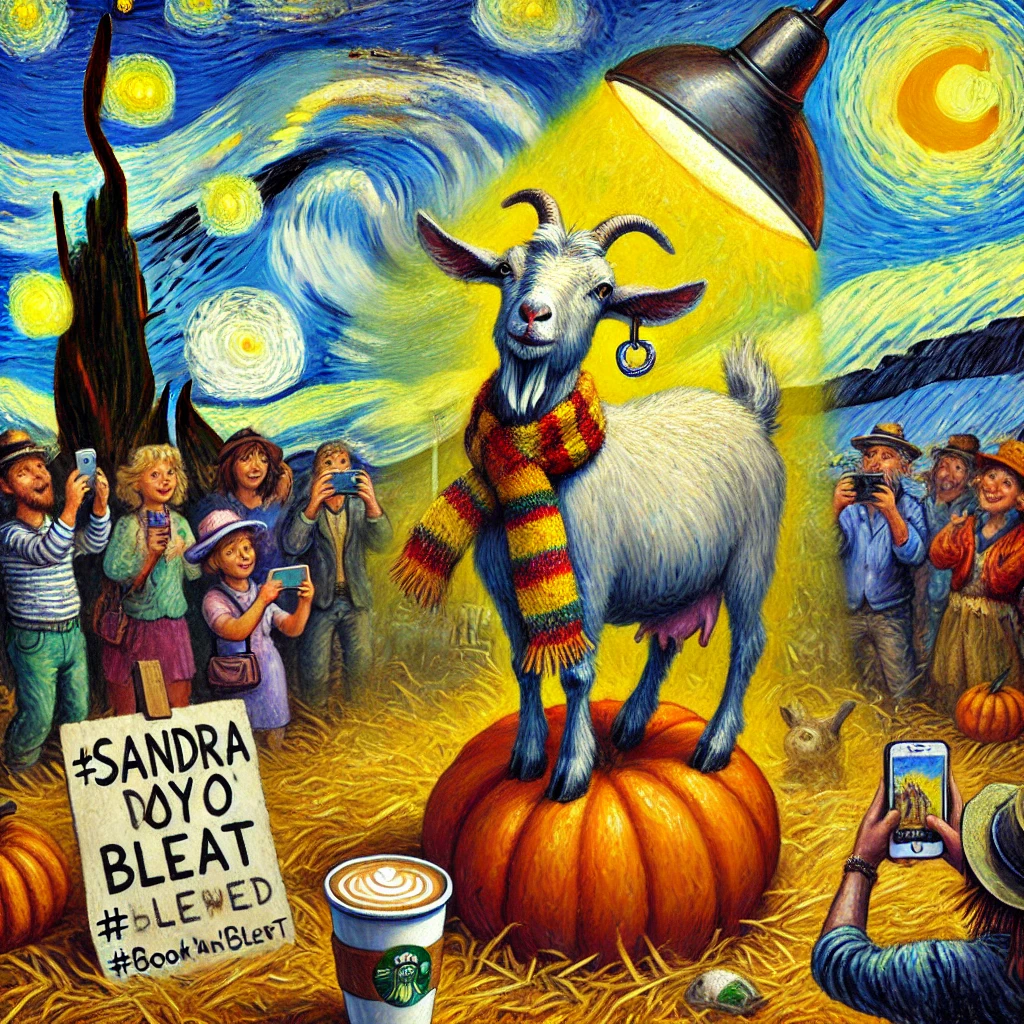
Sandra Day O’Bleat had wandered through town before, usually in search of cracker crumbs and mild judgment. But this time, she stepped onto the church lawn during the Fall Fellowship Craft Bazaar, stopped beside the homemade fudge table, and photobombed Mabel Dean’s latest “Harvest Harmony” social post.
The image—a goat with a latte balanced on its back in front of a scarecrow holding a peace sign—was uploaded with the tag #BlessedAndBleating.
Overnight, it went viral.
Within hours:
-
Sandra had her own Instagram account.
-
A TikTok of her chewing hay to Dolly Parton remixes reached 48,000 views.
-
A travel blogger from Nashville DM’d Mabel Dean offering $250 for a photo shoot with “the pumpkin goat.”
By day three, Sandra was being booked for weddings, school field trips, and influencer fall pics—$5 for one photo, $8 for a “motivational headbutt,” and $10 for a “Premium Goat Experience” (which mostly meant holding a tiny woven scarf she refused to wear).
Cletus tried to claim managerial rights, but Clovis tackled him into the Fellowship Hall’s leaf pile before it could escalate.
Act IV: Profits, Protests, and Pumpkin Drama
With Sandra’s fame skyrocketing, so too did the arguments.
Boot Barnes launched a rival goat enterprise, complete with a papier-mâché goat on wheels he dubbed “Baaa-rt the Brand Ambassador.” It did not catch on. He blamed cancel culture.
Pastor Gentry gave a sermon titled “Thou Shalt Not Monetize the Meekest Among You: Especially If It’s a Goat,” which Clovis misinterpreted as explicit theological endorsement.
Meanwhile, Sheila (the mayor’s sister) organized a Fall Entrepreneurial Expo where she offered “Goatfluencer Mentorship Packages” for $39.95, including glitter templates and digital bleating sound effects.
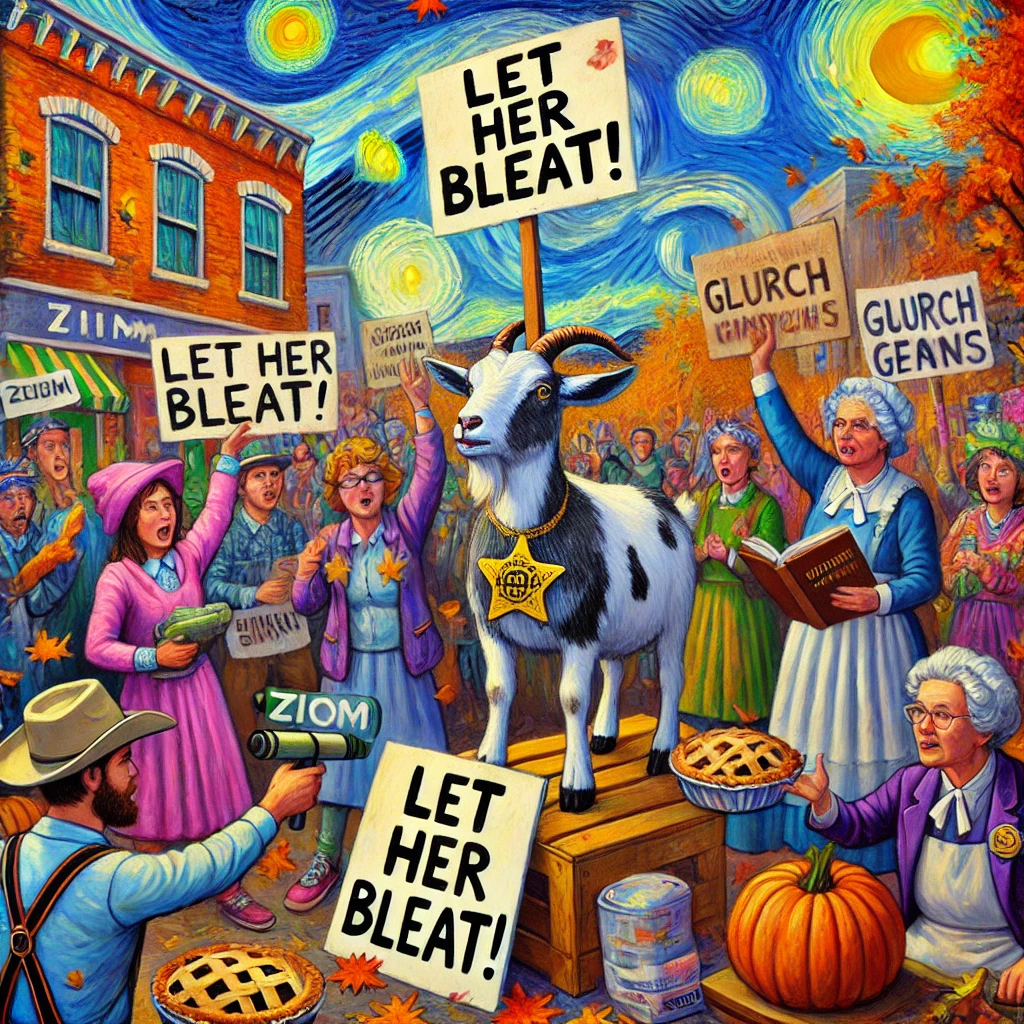
Things came to a head during the town’s annual “Harvest Harmony Bake-Off,” when a rival church group accused Sandra’s fans of “idolizing livestock.” In response, a group of high school students staged a protest called “Let Her Bleat,” waving signs that read “She Works for Peanuts (and Hay!)” and “Equal Pay for Hooved Workers.”
Sheriff Peeler tried to deescalate by offering hot cider and letting Sandra wear a sheriff badge sticker. It didn’t help.
Act V: The Fall of the Goat Empire (And Its Peaceful Rise)
Just as lawsuits were whispered and Brenda the Mule developed a jealousy tic, Sequatchie Crossing found its compromise.
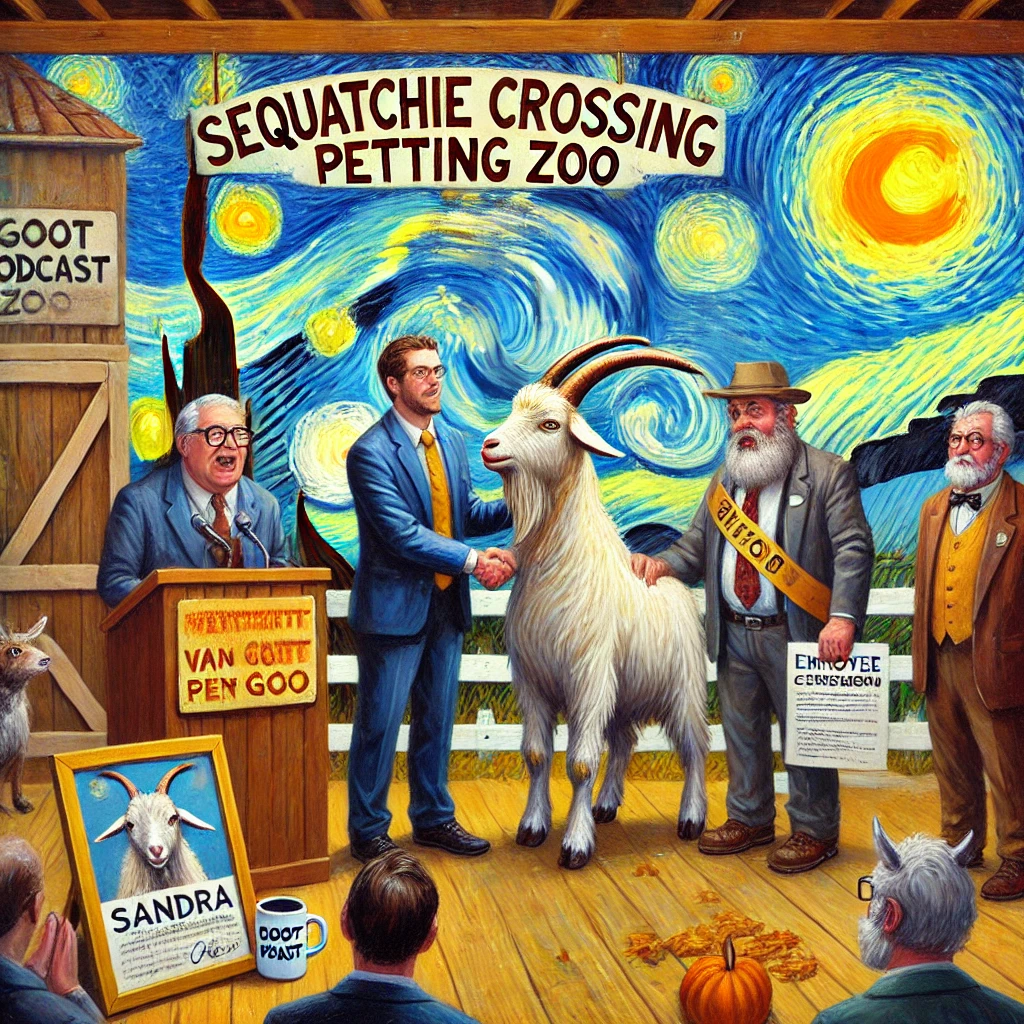
At a hastily called emergency Town Council meeting (hosted in the courthouse parking lot because the Fellowship Hall was hosting a goat-themed poetry slam), Mayor Vennero proposed a formal retirement for Sandra Day O’Bleat.
The terms:
-
Sandra would reside permanently at the newly designated Sequatchie Crossing Petting Zoo, behind the old tractor museum.
-
She would make three seasonal appearances per year, under contract.
-
20% of merchandise profits would go toward the Local Autumn Jobs Initiative—aimed at retraining residents for non-goat-centric roles.
Cletus tried to unionize the “livestock content creators” on the spot but was distracted by a passing corn dog.
Sandra bleated once, stood on a bale of hay, and licked Boot Barnes’ motivational pumpkin poster.
It was, the mayor said, a clear sign of approval.
Epilogue: Sequatchie Settles In (For Now)
By November, the frenzy died down.
The pumpkin patch now had a sign reading “Sandra Slept Here”, and tourists still visited, albeit mostly for the cider.
The cousins left again—except for Cletus, who was now teaching a community class titled “Fall Hustle 101: Turning Leaves Into Leads”. Attendance: two confused ducks and a homeschooled fourth grader named Tanner.
Mabel Dean began writing a devotional series called The Goat, the Gourd, and the Glory.
Boot Barnes got a podcast.
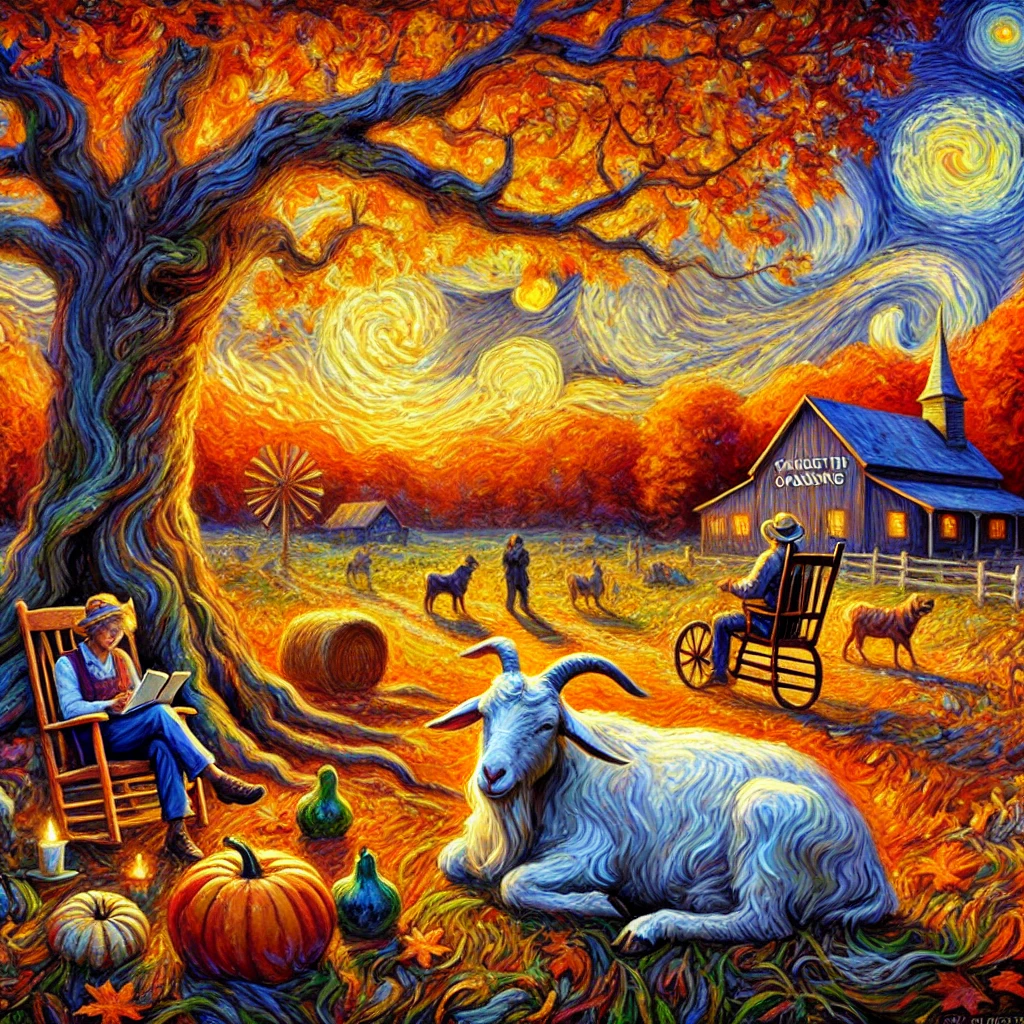
And Sandra? She spent most of her days under an oak tree, chewing calmly, her legacy secure in stickers, hashtags, and a town forever changed by one small act of wanderlust.
Disclaimer (fine print, Fellowship-approved):
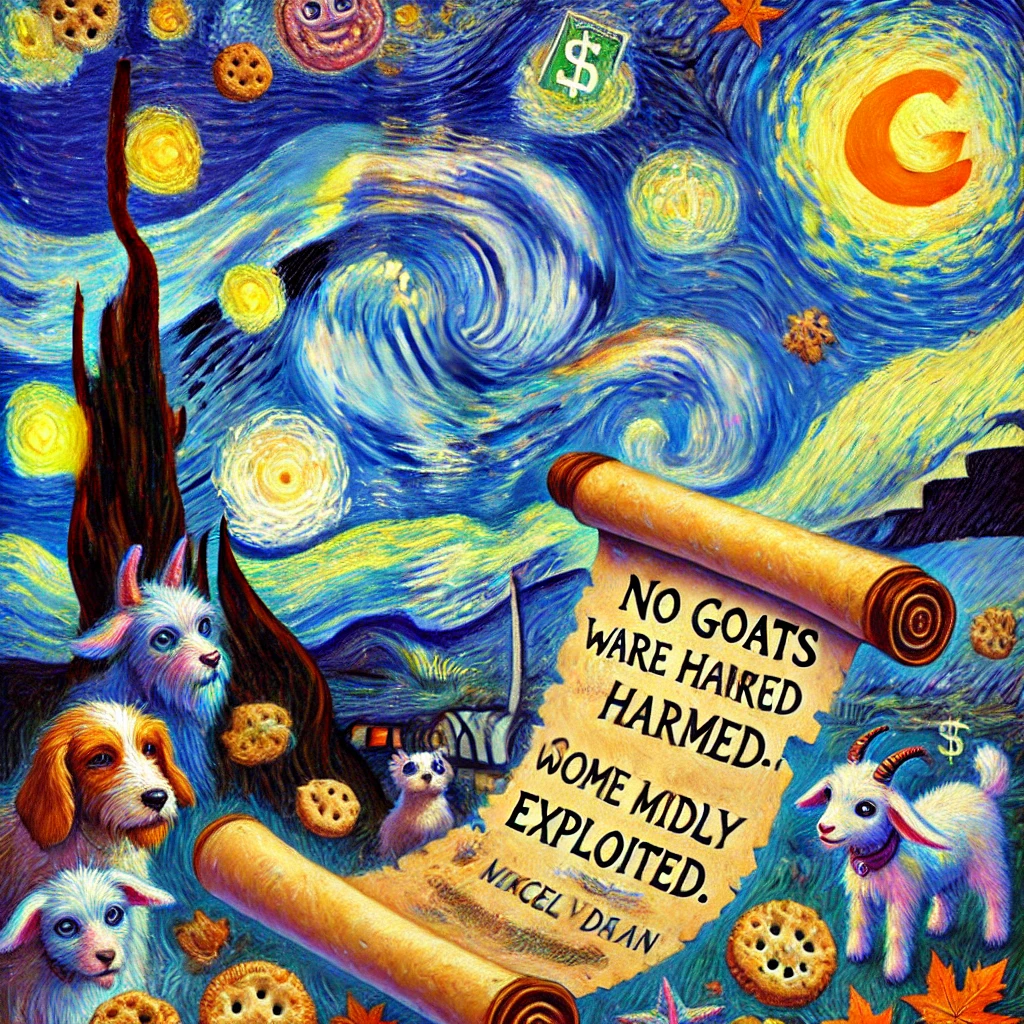
The Sequatchie Crossing Dispatch does not condone the unauthorized employment of livestock, although it applauds creative entrepreneurship. All goats featured in this article were volunteers and have since been offered full dental and veterinary benefits. Side effects of goat fame may include public bleating, hay dependency, and existential fall reflection. If you see a cousin returning uninvited, offer cider, not employment.
Real Places Behind the Ruckus – From The Dunlap Directory
Real Places Behind the Ruckus – From The Dunlap Directory
Yes, this story was fictional; even the parts that weren’t true. These places? Absolutely real. Stop by, support local, and keep the Wi-Fi away from livestock:
- Citizens Tri-County Bank
- Miller’s Bread
- Chimneys State Natural Area
- Dunlap Plumbing Company
- Walker’s Dirt Work LLC
- Tennessee Southern Properties
- Sequatchie Valley Insurance LLC
- Unlocking Potential Educational Services
- Coast Home & Auto Center
- Cascade Inn at Fall Creek Falls
- Jeff Harrell – United Real Estate
- Colonial Cabins & RV Park
- Music Makers
- Beau Brown Of Jason Lewis Dunlap Supercenter
- Happy Bottom Office Services
- Dunlap Farmers Market
- HumBug Pest Control
- American Trust Cash Advance
Real Places Behind the Ruckus – From The Dunlap Directory
At Sequatchie Crossing, we tell the stories of Sequatchie Crossing.
Please share this post with your friends, family, or business associates who may want follow the news from Sequatchie Crossing.

0 Comments