


A Short History Of Civic Engagement In Sequatchie Crossing
By Tom Seest
At Sequatchie Crossing, we tell the stories of Sequatchie Crossing.
Please share this post with your friends, family, or business associates who may want follow the news from Sequatchie Crossing.
🎤 Audio Overview
Attendance Was the Problem Until Attendance Became the Problem
Attendance Was the Problem Until Attendance Became the Problem
There was a time – longer than anyone could remember precisely – when the greatest fear in Sequatchie Crossing was that no one cared anymore.
This concern was raised frequently.
Usually by people who had not attended a town meeting since the Carter administration.
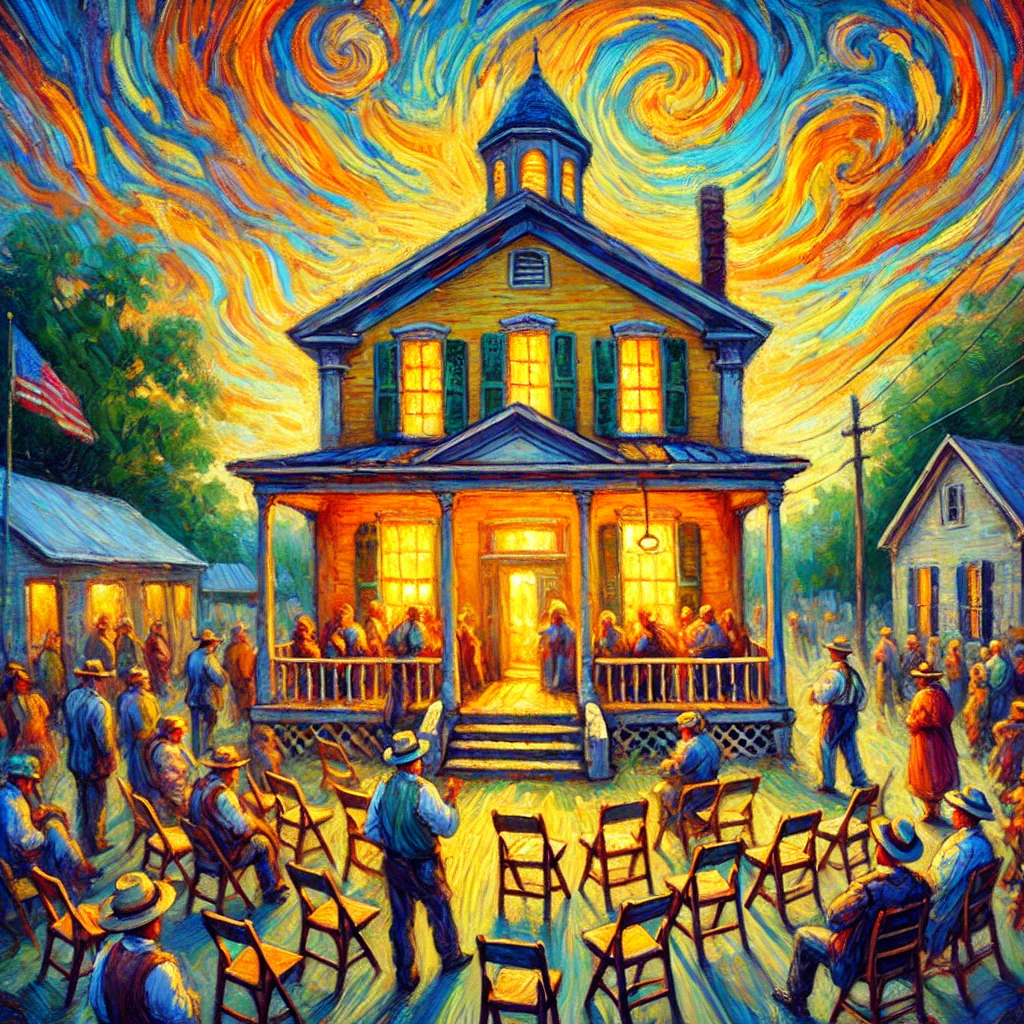
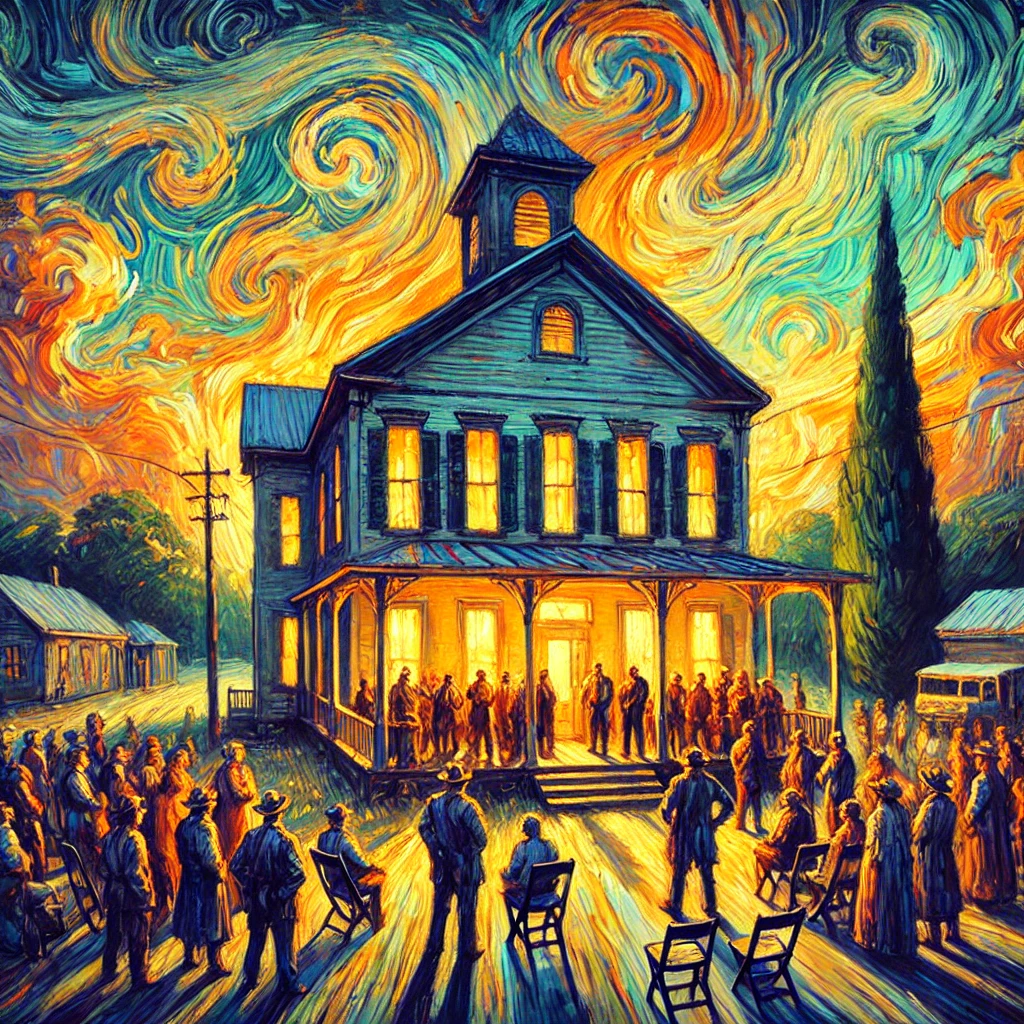
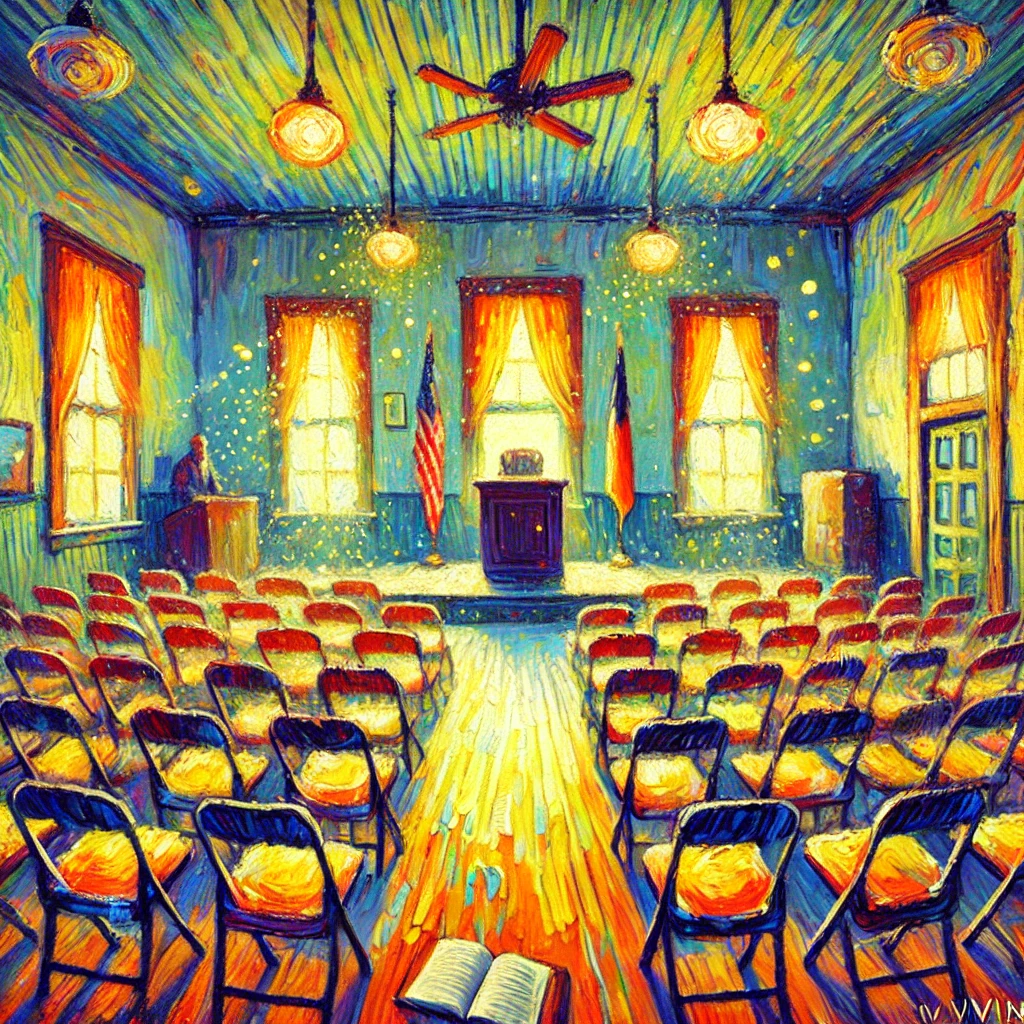
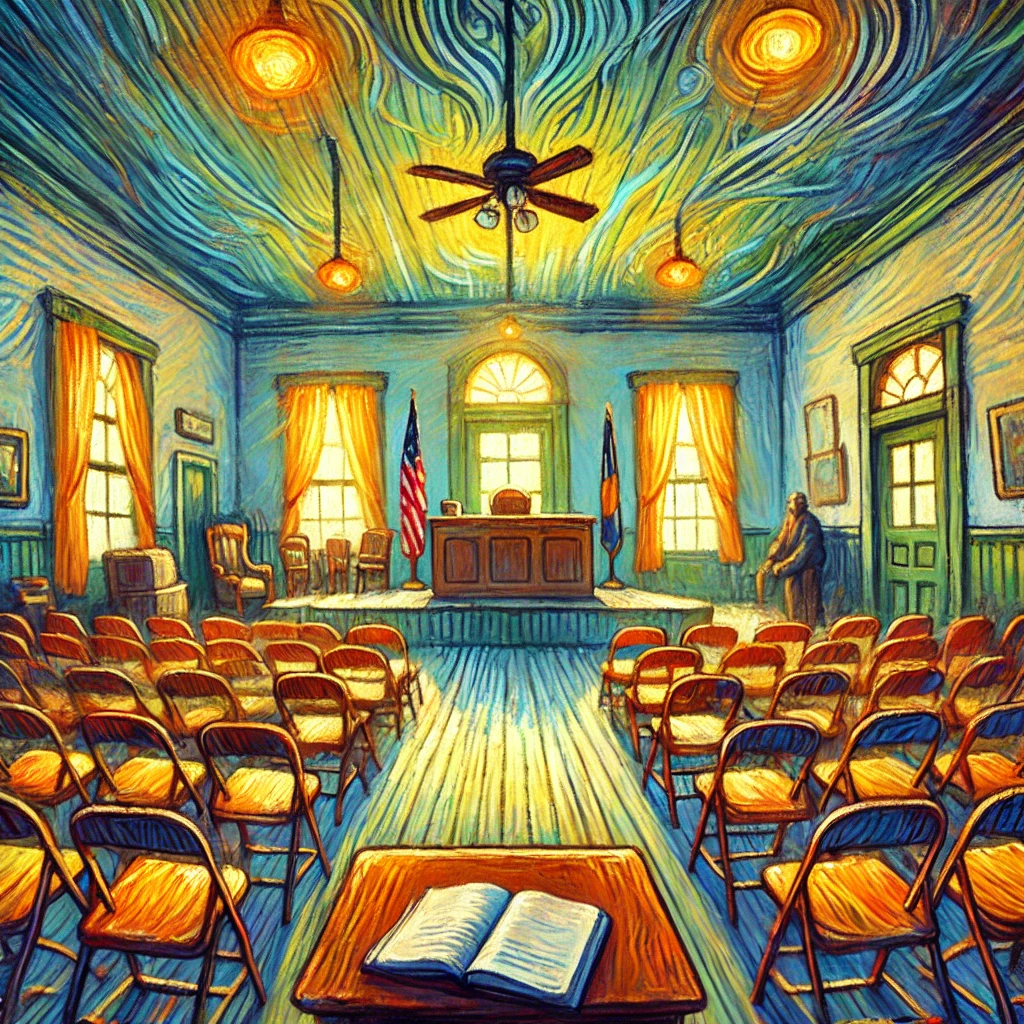
Town Hall itself sat politely at the edge of the square, brick-faced and modest, like a building that understood it was not the main character in anyone’s life. On meeting nights, its lights came on automatically at six-thirty, illuminating rows of folding chairs arranged with hope rather than expectation.
Most nights, the chairs outnumbered the people by a factor that made counting awkward.
Clovis Strickland attended anyway.
He attended out of habit, not urgency. He arrived early, nodded to no one in particular, and chose the same chair every time – third row from the back, aisle seat, near the outlet no one knew worked. He brought a yellow legal pad, a pen that clicked softly, and a belief – unspoken but firm – that someone ought to bear witness.
The meetings themselves were models of efficiency.
Act I – The Era of Noble Silence
The mayor called them to order.
The clerk read the agenda.
The floor was opened for public comment.
Nothing happened.
Silence filled the room – not an uncomfortable silence, but a practiced one. The kind of silence that knew where the exits were and planned to leave soon.
Outside, though, the silence was anything but quiet.
At the gas station.
At the diner.
At church potlucks and hardware store aisles.
People talked endlessly about the silence.
“No one shows up anymore.”
“Folks just don’t care like they used to.”
“This town’s asleep at the wheel.”
These statements were delivered with gravity, usually while leaning on a counter, nodding slowly, and making no plans whatsoever to attend the next meeting.
Silence, in Sequatchie Crossing, was not the absence of opinion.
It was the absence of witnesses.
Act I – The Era of Noble Silence
Act II – The Moment Someone Decided This Would Not Stand
No one ever claimed responsibility for what happened next.
That was the first sign it was going to be trouble.
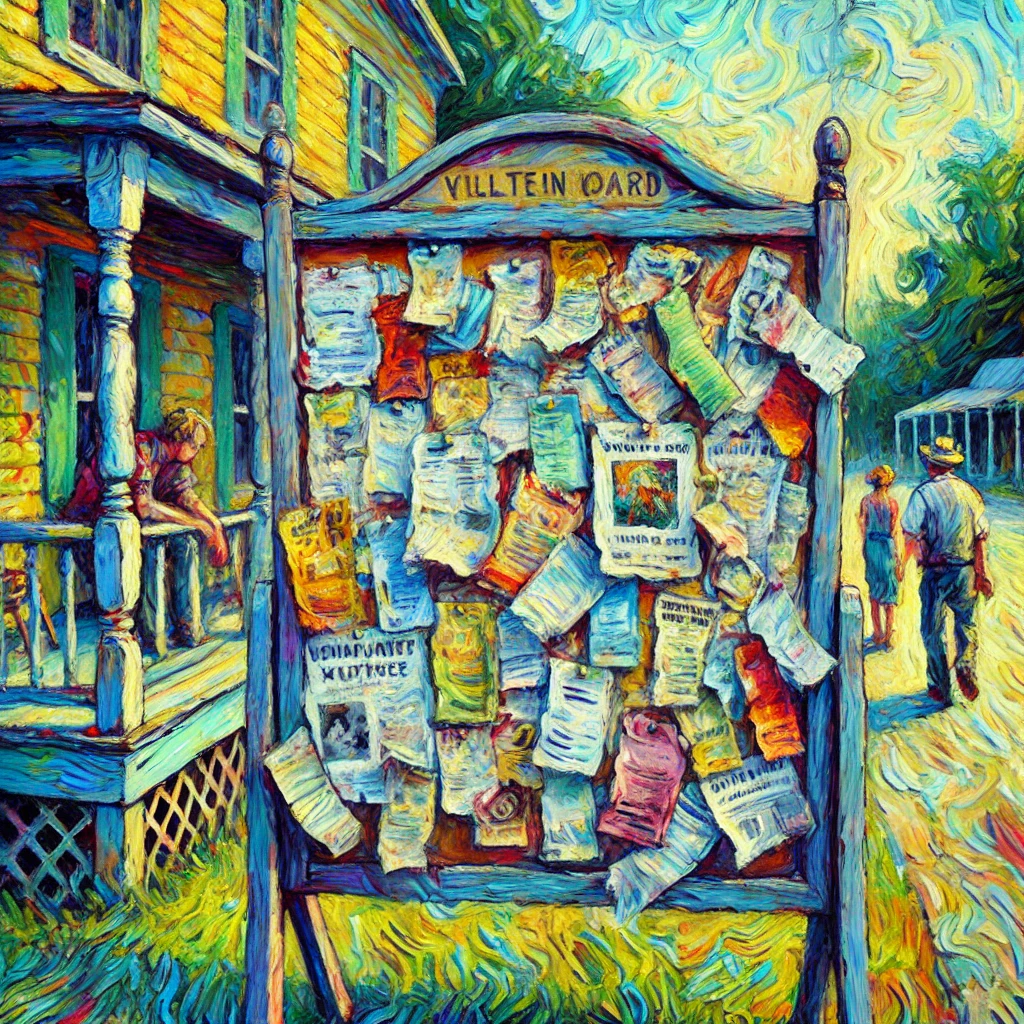
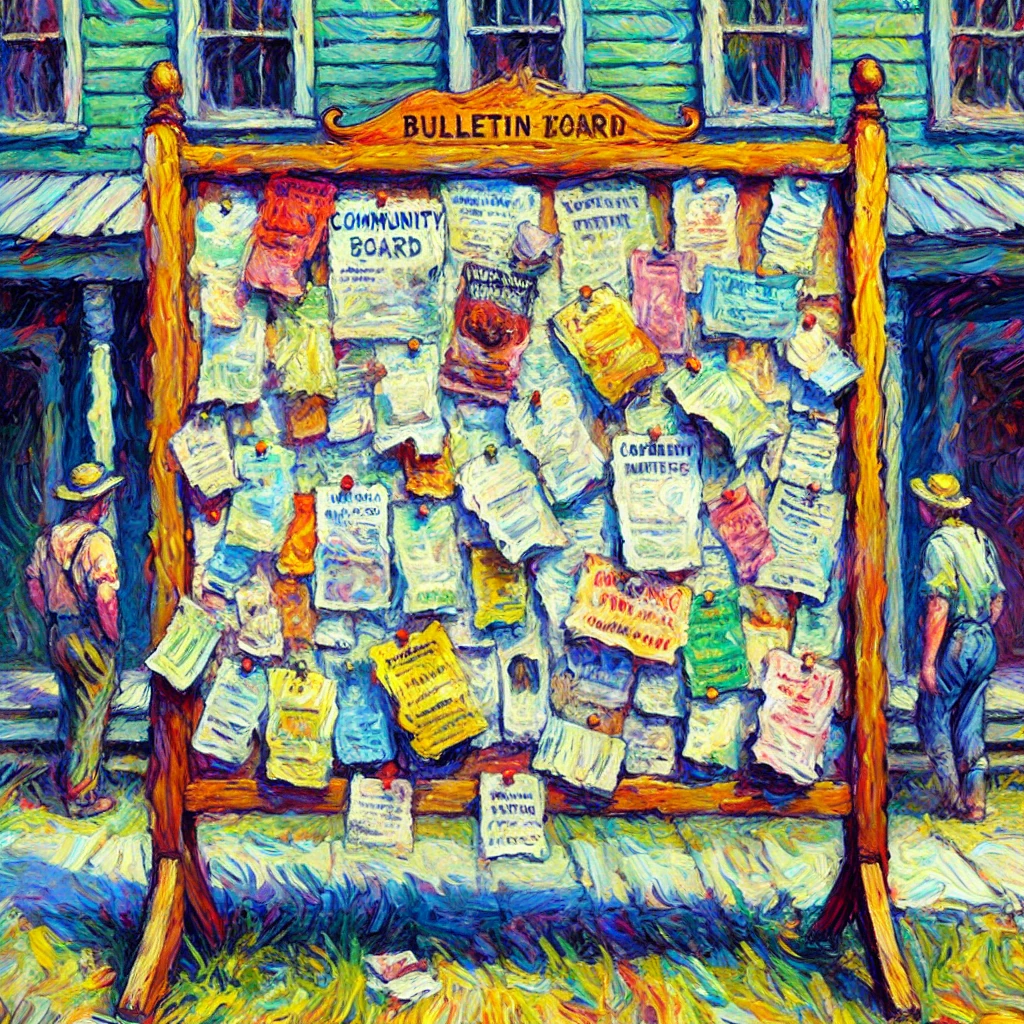
Flyers appeared on corkboards and doors.
Emails circulated.
A post – no one remembers where it started – declared that “local participation is at historic lows.”
That phrase alone stirred something deep and suspicious.
Historic lows implied charts.
Charts implied blame.
Soon, Town Hall was decorated with encouragement:
YOUR VOICE MATTERS
Even if you think it doesn’t.
Act II – The Moment Someone Decided This Would Not Stand
Another flyer read:
THIS IS YOUR TOWN
Someone has to say something.
People began to feel, vaguely, that perhaps someone was talking about them.
The first meeting after the campaign was… different.
Not crowded.
But noticed.
Five new people showed up.
Then three more.
A couple sat together and whispered like they were attending a recital.
The mayor smiled.
The clerk sat up straighter.
The water pitcher sweated with unused anticipation.
Public comment lasted almost six minutes.
Someone asked about road maintenance.
Another asked about signage.
A third prefaced their question with, “I’m not trying to start anything, but – ”
The meeting adjourned late.
Outside, someone said, “Well. That felt productive.”
And for the first time in years, no one contradicted them.
Act II – The Moment Someone Decided This Would Not Stand
Act III – Momentum Finds a Chair
By the second meeting, people came prepared.
Not overly prepared.
But prepared enough to suggest intent.
One man brought handwritten notes folded carefully into his shirt pocket.
A woman brought a binder with color-coded tabs.
Someone brought a folding chair from home “just in case.”
The mayor mentioned transparency.
The clerk mentioned process.
The phrase “healthy dialogue” entered circulation.
Public comment stretched.
People introduced themselves.
They explained their concerns.
They referenced past meetings they had not attended but had heard about.
Clovis’s pen moved faster.
He noted phrases like:
-
“For the record”
-
“Historically speaking”
-
“Respectfully”
These were the warning signs.
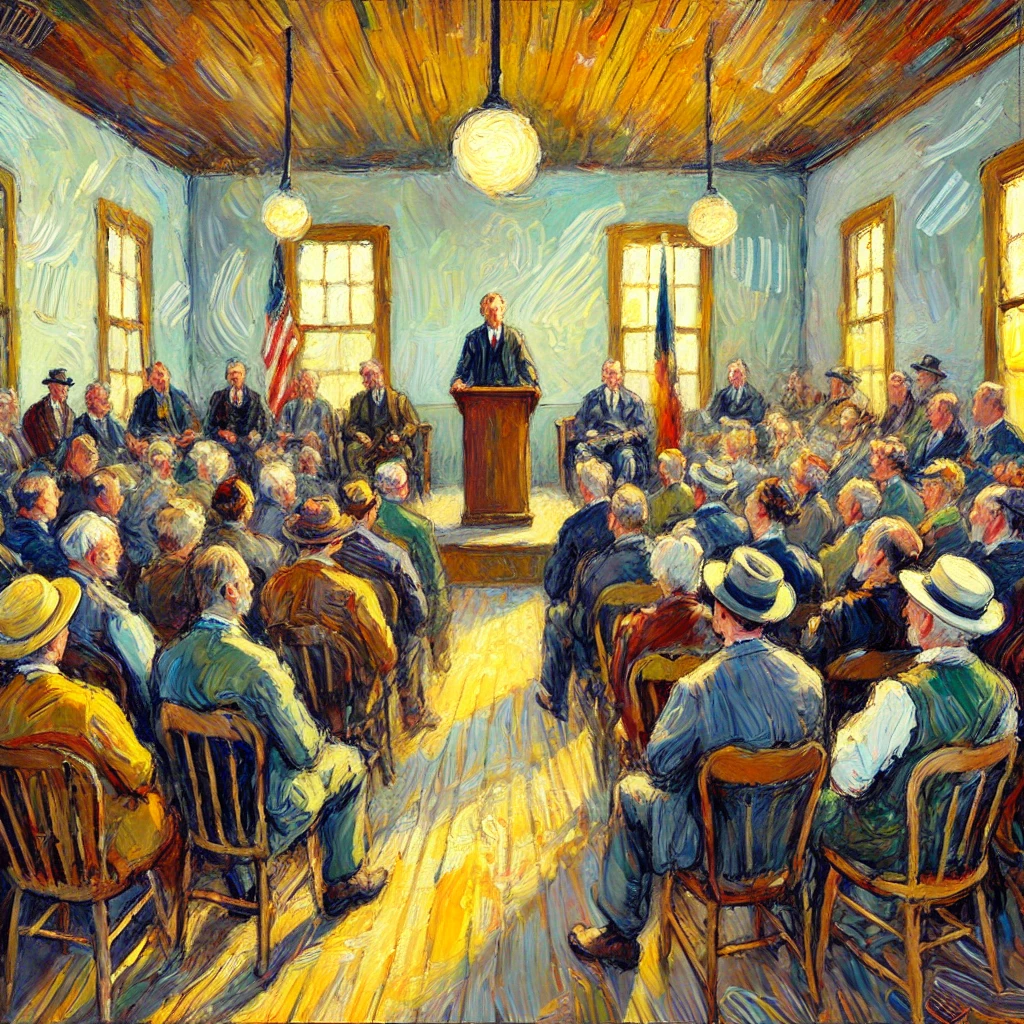
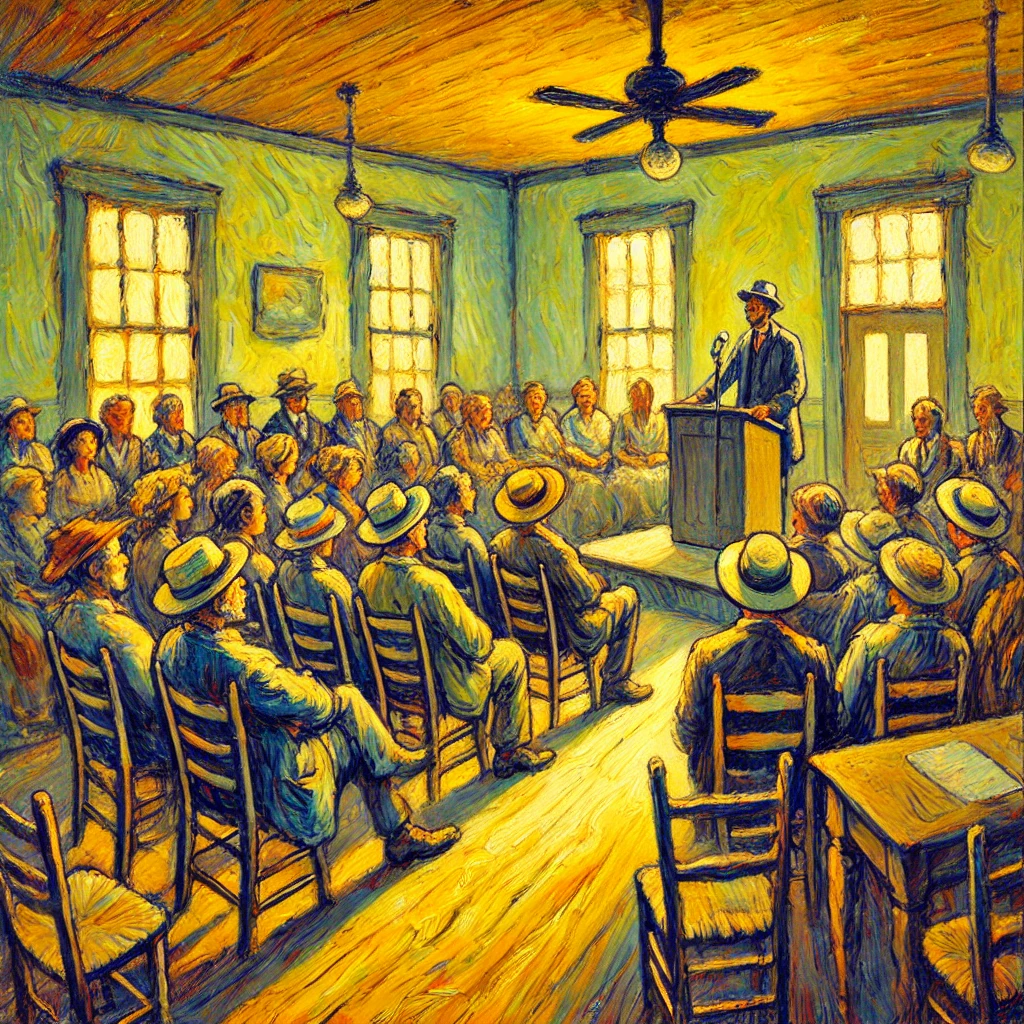
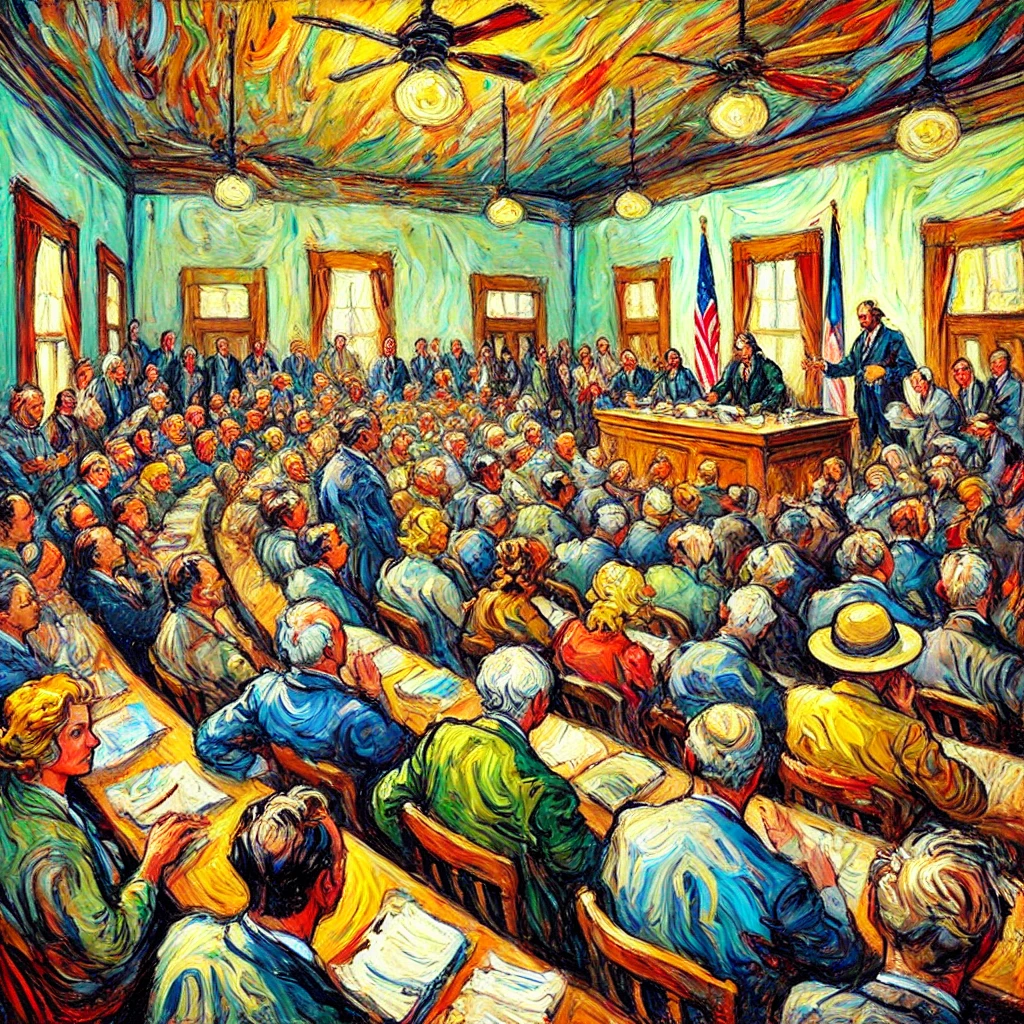
By the third meeting, the chairs were full.
Act III – Momentum Finds a Chair
The extra chairs were deployed.
The back wall acquired an audience.
Someone stood near the thermostat and adjusted nothing.
Public comment required organization.
Names were written down.
Time was suggested.
A gentle reminder was issued.
Ignored gently, then not at all.
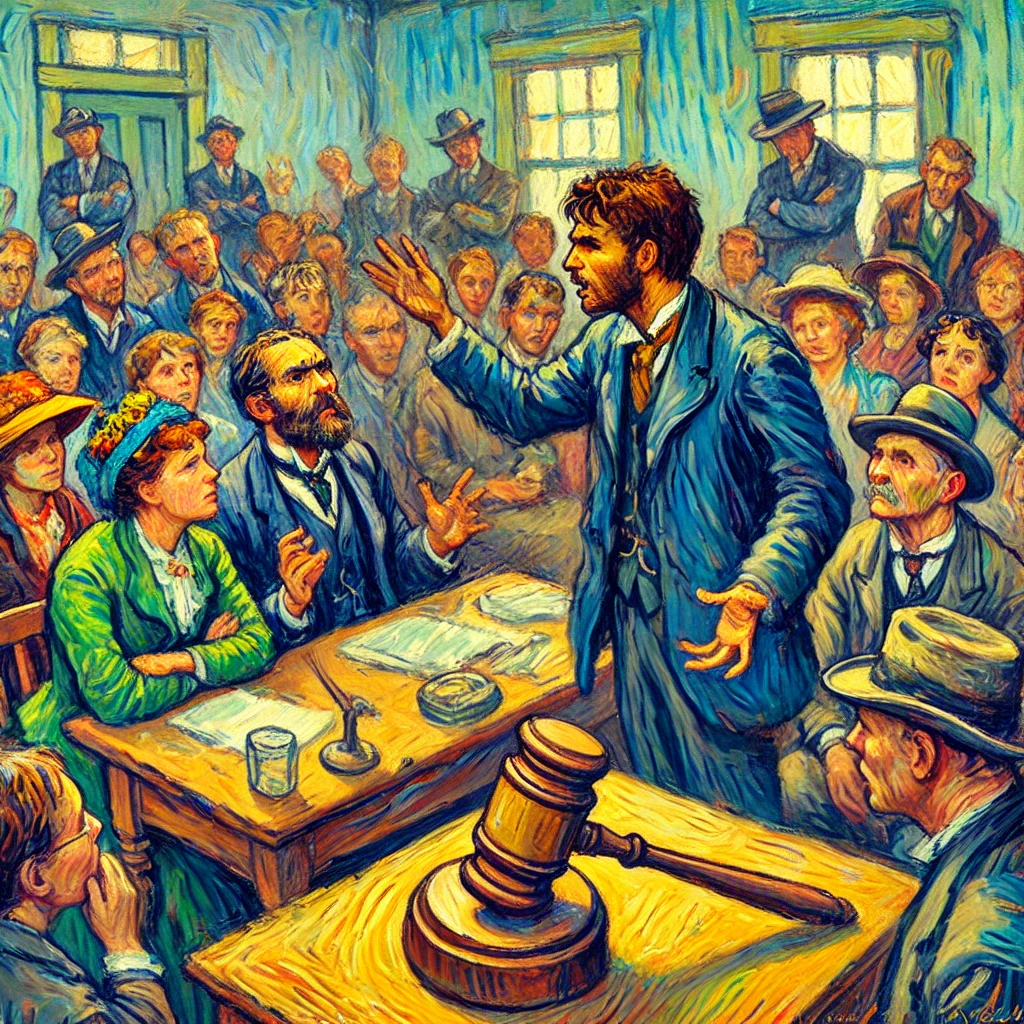
One man spoke about drainage for twelve uninterrupted minutes.
Another corrected him.
A third objected to the correction.
A fourth asked whether objections required seconds.
Applause broke out.
It was immediately criticized.
“This isn’t a rally,” someone said.
“No one’s campaigning,” someone else replied.
“I just clapped,” said the first person, defensively.
The gavel made its debut.
It was ceremonial at first.
A tap.
Then a firmer tap.
Then an ambitious tap that suggested a desire for authority it had not yet earned.
Act III – Momentum Finds a Chair
Act IV – When Engagement Becomes a Lifestyle
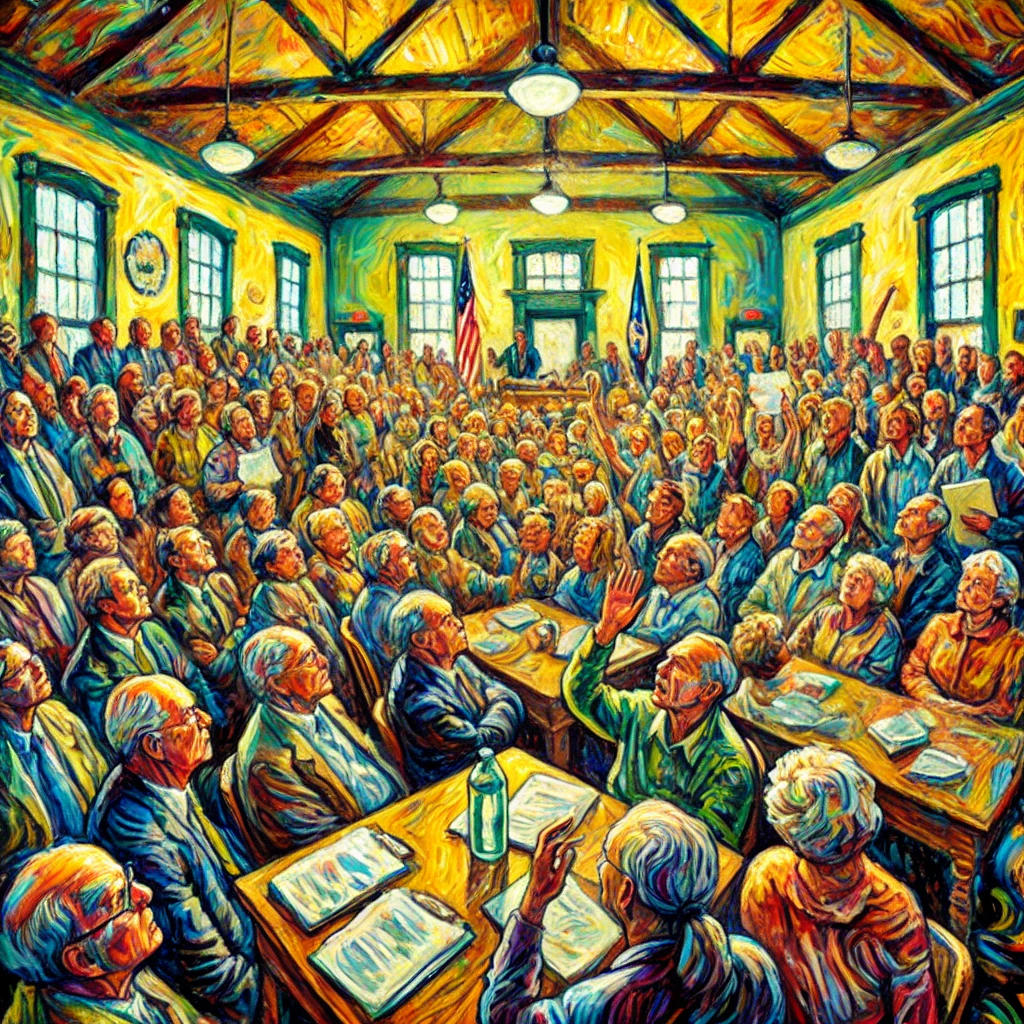
The town adjusted.
Sign-up sheets appeared.
Time limits were announced.
A clock was referenced openly.
People responded by becoming more efficient with their outrage.
Speakers learned to condense.
To stack grievances.
To speak quickly, urgently, and in clusters.
Topics multiplied.
It was no longer just roads.
It was how roads made people feel.
Act IV – When Engagement Becomes a Lifestyle
It was no longer signage.
It was who decided the font.
Someone questioned an ordinance no one could remember passing.
Someone else insisted they remembered it vividly.
A third asked whether memory was admissible evidence.
Clovis stopped drawing boxes and started underlining.
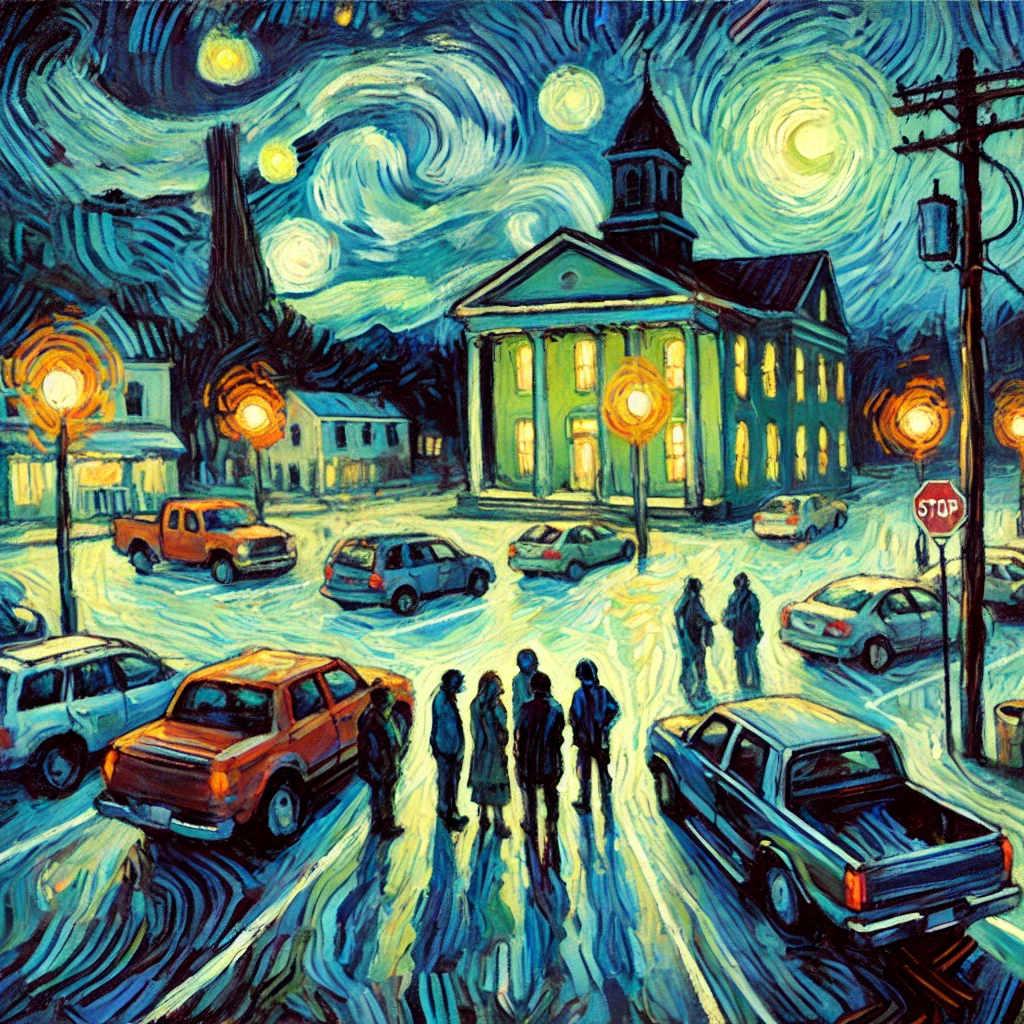
Outside, the parking lot became a second meeting.
People lingered.
Debriefed.
Re-argued.
Someone said, “This town’s really awake now.”
Someone else said, “A little too awake.”
Act IV – When Engagement Becomes a Lifestyle
Act V – The Complaint Mutates
It happened quietly, the way all great reversals do.
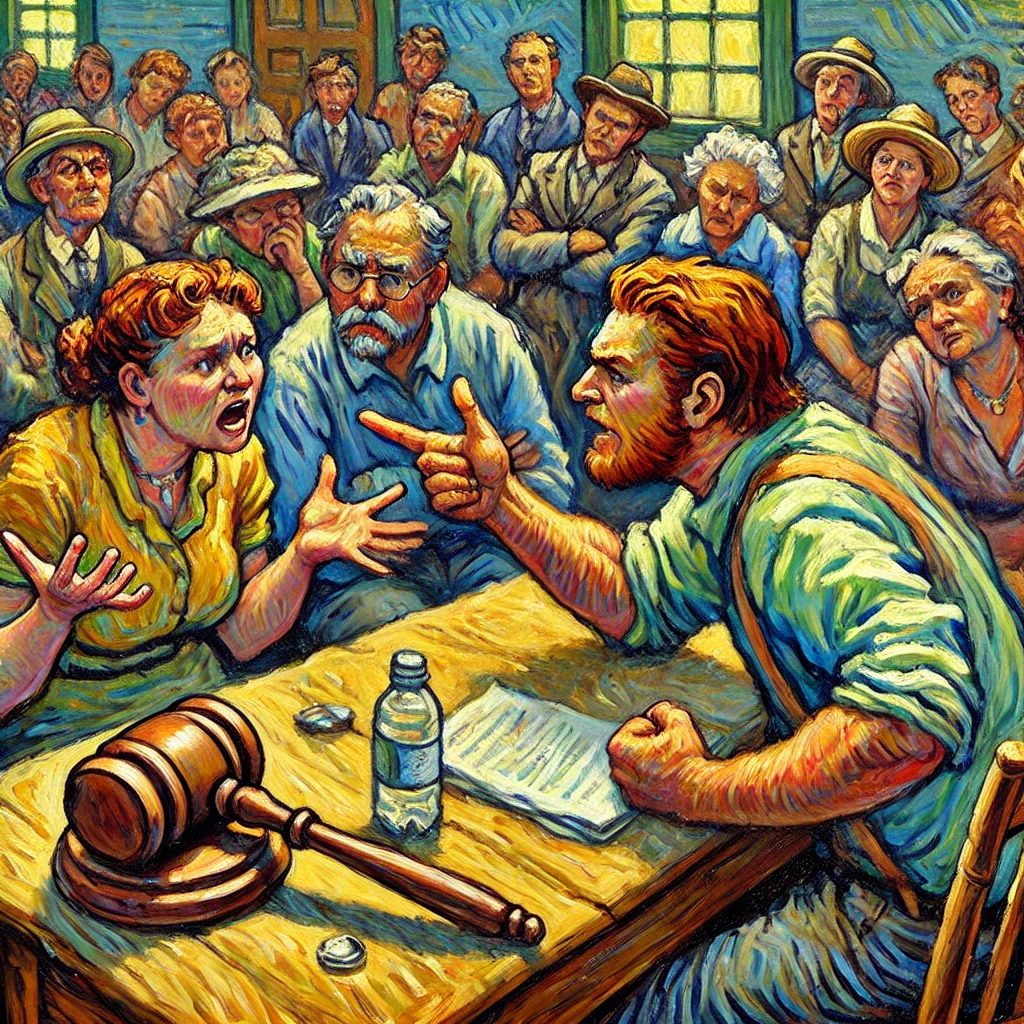
Someone – again, no one remembers who – said, “You know, meetings used to be faster.”
No one objected.
Another said, “Not everyone needs to speak.”
That one landed.
Act V – The Complaint Mutates
A third added, “Some folks just like the sound of their own concern.”
Nods followed.
The same voices that once lamented silence now lamented volume.
“This isn’t engagement,” someone said, during engagement.
“This is a circus.”
The mayor suggested civility.
The clerk suggested structure.
The gavel suggested violence, metaphorically.
A proposal emerged:
A five-minute limit on public comment.
It was seconded.
Then challenged.
Then debated for thirty-seven minutes.
Questions included:
-
Whether five minutes was fair
-
Whether fairness was relevant
-
Whether relevance was subjective
-
Whether subjectivity was dangerous
The motion was tabled.
The meeting ran late.
Act V – The Complaint Mutates
Act VI – Process Eats the Meeting
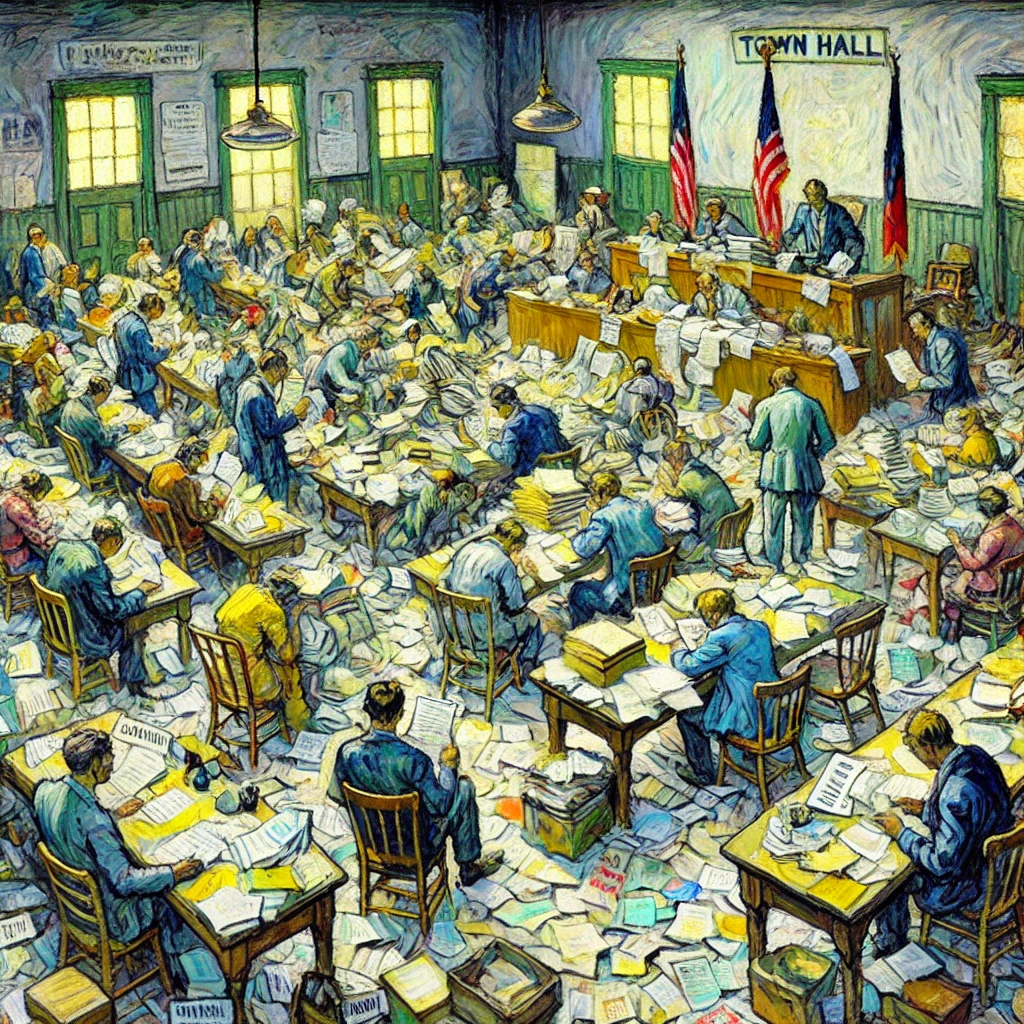
By now, Sequatchie Crossing had achieved something rare.
Everyone was involved.
No one was happy.
Committees were suggested.
Subcommittees discussed.
Ad hoc groups formed in the hallway.
Someone proposed online comments.
Someone else gasped.
A third asked whether the internet could be trusted.
A rule was passed requiring speakers to remain “on topic.”
The next meeting consisted almost entirely of arguments about what the topic was.
Clovis recorded everything.
His notes became legendary.
People referenced them without asking.
He did not correct them.
He simply nodded.
Act VI – Process Eats the Meeting
Act VII – Nostalgia for Silence
In quieter moments – between motions, between objections – someone would sigh and say it.
“It was better when nobody came.”
This was not said with irony.
It was said with fatigue.
People missed efficiency.
They missed certainty.
They missed the illusion that agreement existed simply because no one contradicted anything.
But they kept coming.
They kept talking.
The parking lot meetings grew longer.
The diner hosted unofficial hearings.
The gas station became a rumor clearinghouse.
Silence had not been eliminated.
It had been relocated.
Act VII – Nostalgia for Silence
Act VIII – The Permanent State of Civic Motion
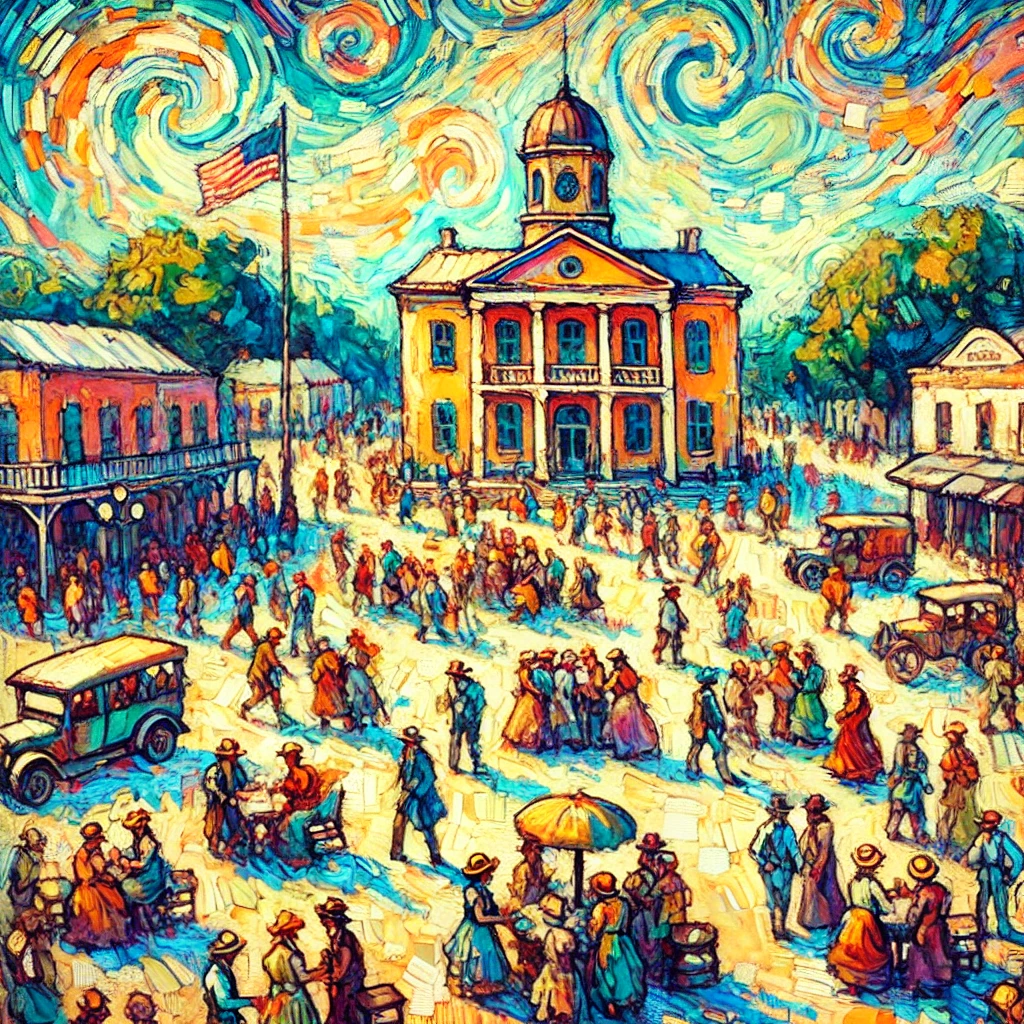
Eventually, Sequatchie Crossing settled into its new rhythm.
Meetings were long.
Attendance fluctuated.
Complaints remained steady.
Silence was now suspicious.
Noise was now exhausting.
Everyone agreed on only one thing:
Something was wrong.
Town Hall updated its meeting minutes:
Civic Engagement:
Achieved.
Under review.
Pending revision.
Clovis filed his notes.
No one read them.
Everyone quoted them.
Act VIII – The Permanent State of Civic Motion
Epilogue – What Never Changed
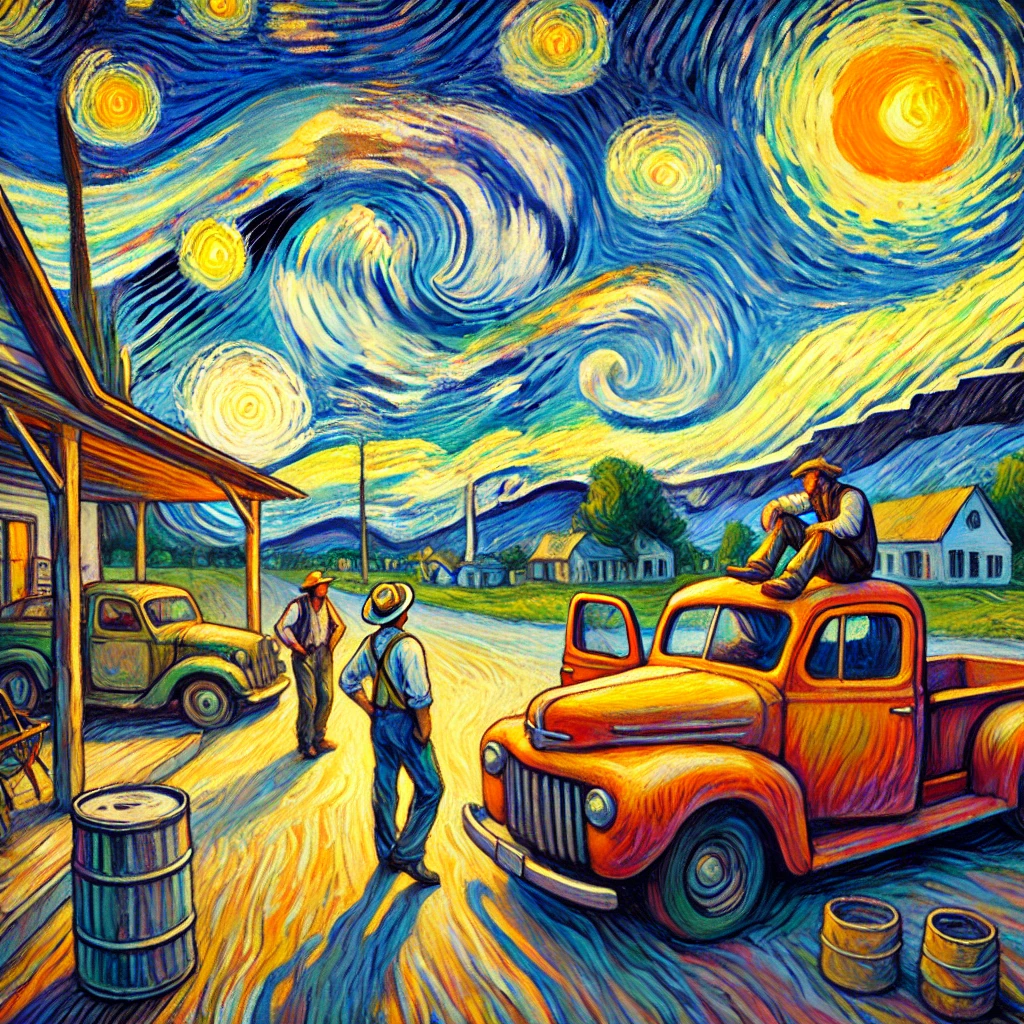
Years later – though it felt like weeks – someone would again say it at the gas station.
“People just don’t care like they used to.”
Someone else would nod.
Another would disagree.
A third would suggest bringing it up at the next meeting.
They would all agree.
And whether they showed up or not, the town would continue its oldest, most successful tradition:
Complaining – faithfully – about the condition of participation itself.
Epilogue – What Never Changed
Disclaimer
Sequatchie Crossing is a work of fiction. All characters, events, meetings, ordinances, and moments of civic confusion depicted in this story are fictional. Any resemblance to actual towns, officials, committees, public comment periods, or heated debates over five-minute speaking limits is purely coincidental.
This story is intended as satire and commentary on small-town civic life. It does not describe real people, real proceedings, or real grievances, even if it feels uncomfortably familiar.
No gavels were harmed in the making of this account.

Disclaimer – Attendance Was the Problem Until Attendance Became the Problem
Real Places Behind the Ruckus – From The Dunlap Directory

Real Places Behind the Ruckus – From The Dunlap Directory
Yes, this story was fictional; even the parts that weren’t true. These places? Absolutely real. Stop by, support local, and keep the Wi-Fi away from livestock:
- Friends of Lewis Chapel Community
- Fall Creek Bike Shop
- Cafe on 28
- RJ’s Garage
- Hickerson Land Management
- Factory Connection (Dunlap TN)
- Harris Mowing Service
- Whitzell Excavation
- L & C Concrete Finishing
- Sequatchie Valley Brewing Co.
- Coops Creek Veterinary Clinic
- Possum Creek RV Park & Campground
- Dennis Auto Glass Mobile Service
- Cascade Inn at Fall Creek Falls

Real Places Behind the Ruckus – From The Dunlap Directory
At Sequatchie Crossing, we tell the stories of Sequatchie Crossing.
Please share this post with your friends, family, or business associates who may want follow the news from Sequatchie Crossing.

0 Comments