



Locals Demand Ban on Cul-De-Sacs and Peanut-Shaped Business Drives After Widespread Navigational Confusion
By Tom Seest
At Sequatchie Crossing, we tell the stories of Sequatchie Crossing.
Please share this post with your friends, family, or business associates who may want follow the news from Sequatchie Crossing.
🎤 Audio Overview
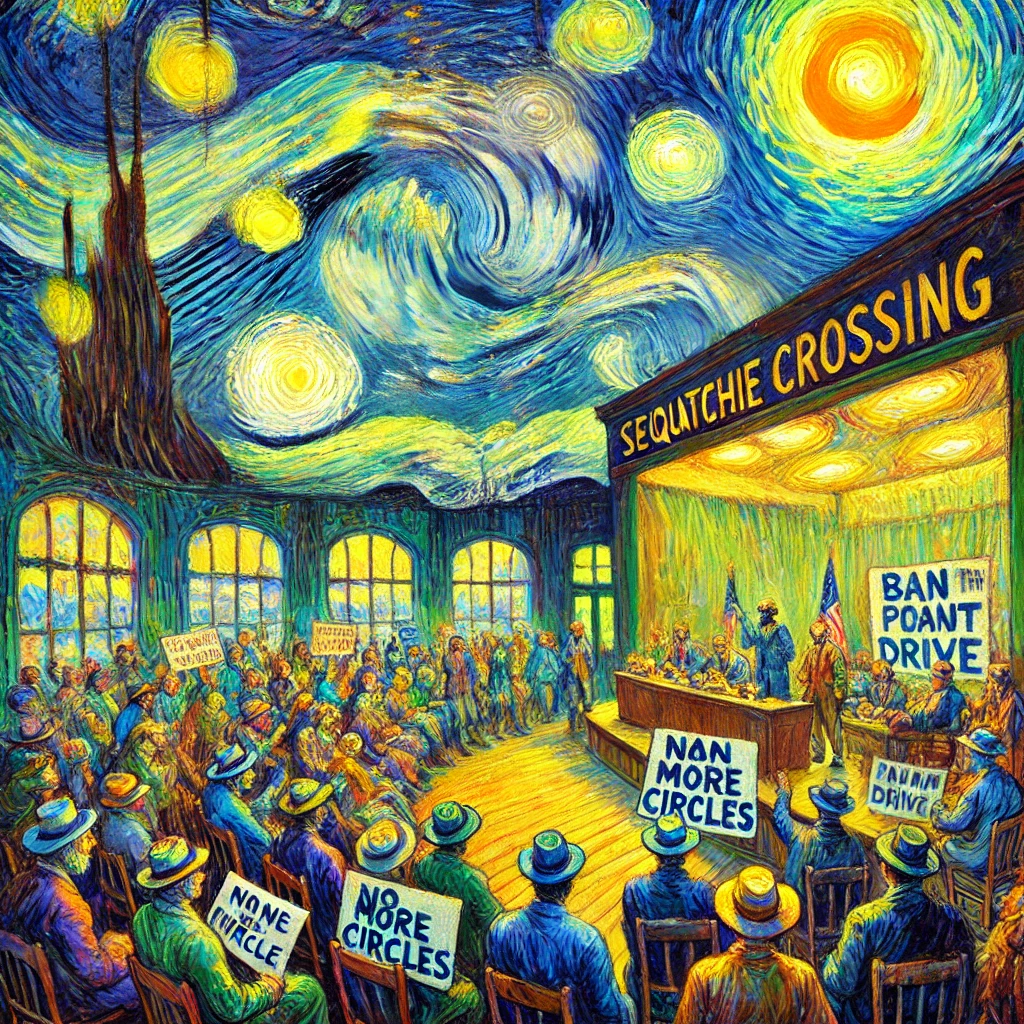
No More Circles – The Great Sequatchie Driveway Debate
ACT I – A Growing Circular Crisis
Sequatchie Crossing had survived many civic disputes over the years – whether the car wash was modern art, whether Mabel’s muffins constituted a biological threat to the military, why the town needed an official Sky Defense Committee – but nothing prepared it for the sudden county-wide panic over one unexpected menace:
Cul-de-sacs.
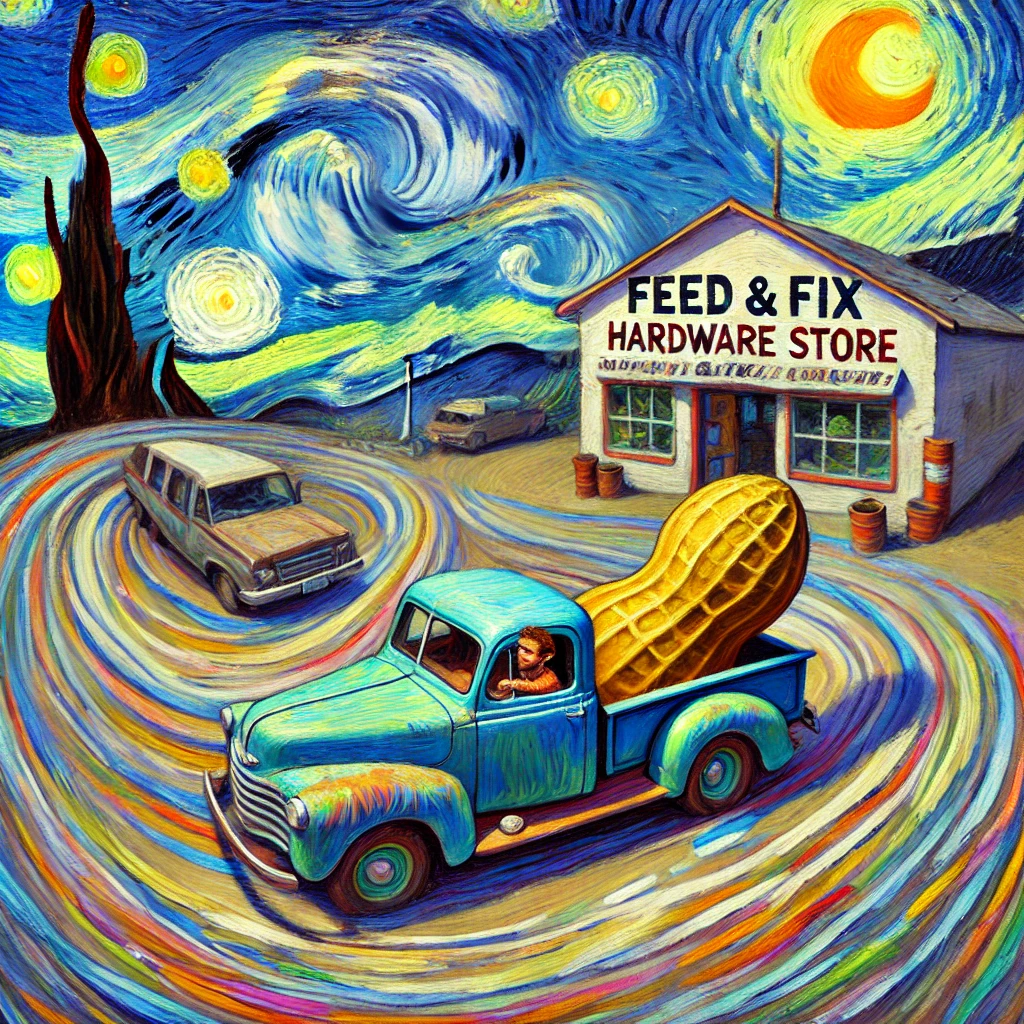
It all started on a foggy Tuesday morning when Harold Donnybrook attempted to visit the new Feed & Fix Hardware Outlet on the bypass. The owners, wanting to appear “modern,” had installed what they proudly described as a “flow-optimized peanut-shaped driveway.”
Harold entered the peanut.
Harold did not exit the peanut.
According to his statement later filed with the Sheriff’s Office, Harold “circled for an unknown number of minutes, passed the same parking spot six times, and ultimately abandoned the vehicle in emotional exhaustion.” Deputies found him wandering the mulch section mumbling, “I don’t trust beans or concrete that curves for no reason.”
By noon, half the county claimed to have personally witnessed Harold stuck in the peanut even though he’d been alone the entire time.
Town gossip spreads faster than road paint dries.
By the next day, locals were demanding immediate government intervention.
ACT I – A Growing Circular Crisis
ACT II – The Emergency Council on Straight Lines
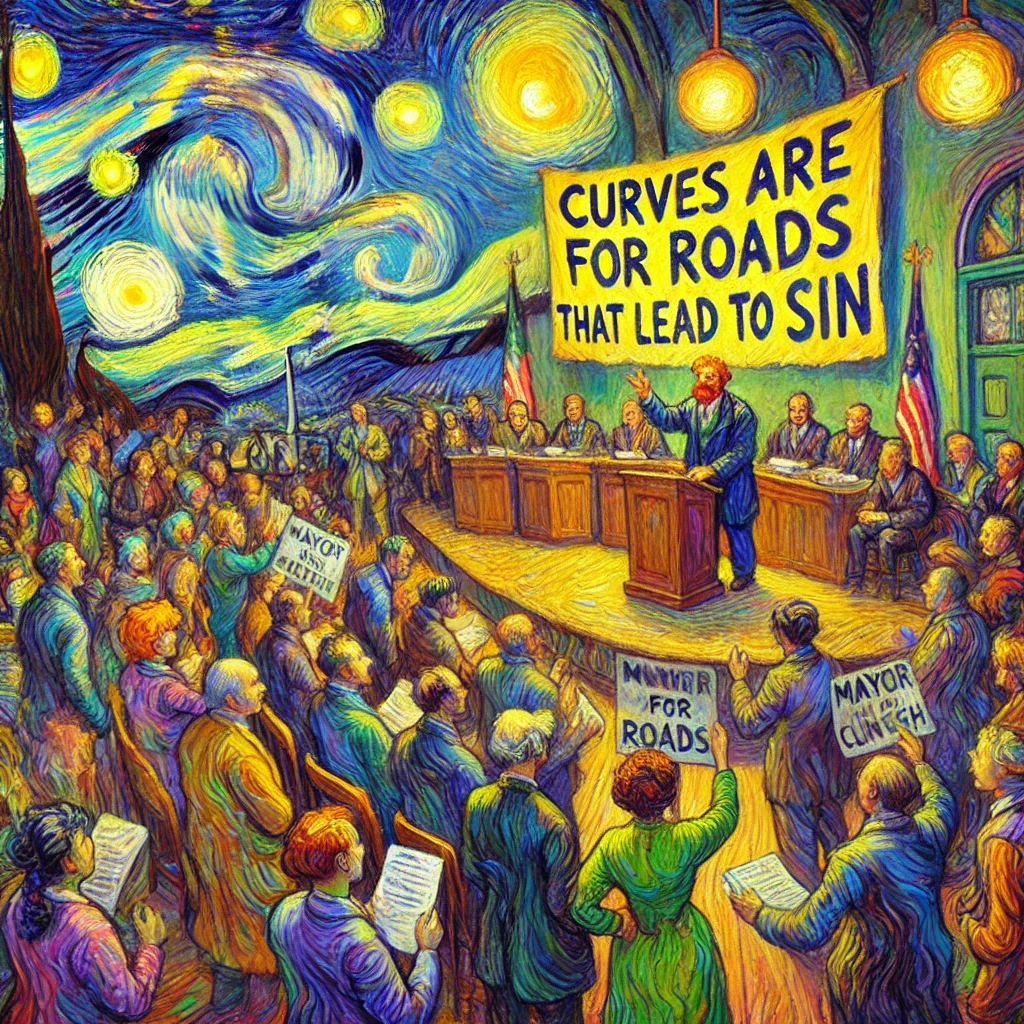
Mayor Cletus Hardbarger called an Emergency Special Meeting of the City Council, which meant two things in Sequatchie Crossing:
-
Someone printed paper name tags to make it look official.
-
There would be an argument long before any motion was even considered.
The Community Center filled up with regulars:
-
Mabel Dean Ashcroft, holding a sign: “Curves Are For Roads That Lead to Sin.”
-
Boot Barnes, who wore a t-shirt reading: “STRAIGHT LINES SAVE LIVES.”
-
Clovis Strickland, scanning the ceiling tiles for potential aerial spies.
-
Trixie Jo Bartlett, already live-streaming to the Sequatchie Crossing Neighborhood Group (members: 4,203; productive posts: 0).
Mayor Cletus banged the gavel.
“Folks, we are here because of widespread public confusion regarding the new cul-de-sac on Maple Lane and the peanut-shaped drive over at Feed & Fix Hardware. Sheriff Peeler reports fourteen calls in three days from drivers unable to determine where the exit is.”
Sheriff Peeler sighed.
“We found one man driving in reverse the entire loop because he said ‘that’s how the road wanted him to do it.’”
Mabel stood.
“We weren’t made to go in circles, Mayor. That’s how you summon dizziness, confusion, and questionable judgment. I got off the county fair teacups in ’73 and haven’t trusted circular motion since.”
Trixie Jo chimed in, “The city needs to outlaw these things. Last week I tried to visit the Dollar Barn and the truck in front of me froze at the entrance of the cul-de-sac. Froze! Like the road was askin’ him a riddle!”
Boot Barnes nodded gravely.
“I say we return to the natural American driveway shape: a straight line, maybe a rectangle if you’re feelin’ fancy.”
Clovis stood without being asked.
“I have reason to believe,” he said, lowering his voice, “that these cul-de-sacs are designed to trap vehicles so drones can scan them.”
Everyone sighed.
Everyone also considered the remote possibility he might be onto something.
Mayor Cletus scribbled notes. “Alright. So the public’s request is: ban cul-de-sacs and peanut-shaped driveways within city limits.”
The entire room erupted in applause as if they’d just declared independence from geometry.
ACT II – The Emergency Council on Straight Lines
ACT III – The Counter-Argument: Voices from the Circle
Not everyone was ready to ban rounded pavement.
A delegation from Sequatchie Crossing’s three civil engineers (all cousins, all named Benton) arrived with charts, diagrams, and a small 3D-printed cul-de-sac showing how traffic was supposed to flow.
Engineer Benton #1 displayed a poster board titled:
“Benefits of Circular Traffic Designs in Rural Municipalities.”
Engineer Benton #2 explained, “Cul-de-sacs reduce congestion, improve fire truck turning, and – ”
“Fire trucks don’t turn,” Mabel snapped. “They commit.”
Engineer Benton #3 tried again. “Curved entrances help reduce speed – ”
“That’s the point!” yelled Boot Barnes. “I ain’t trying to slow down to visit a business!”
The Bentons exchanged a look that could best be described as borderline despair.
Then someone opened the floor for public comment, which in Sequatchie Crossing is a phrase equivalent to “prepare for chaos.”
A stream of testimonies followed:
-
“I lost my bumper in the Maple cul-de-sac.”
-
“I missed my exit three times and ended up at a birthday party I wasn’t invited to.”
-
“My GPS kept saying ‘turn right’ but all the turns were right.”
-
“It made my husband motion sick and he ain’t stopped complaining.”
The mood of the room firmly shifted in favor of legislating road geometry.

ACT III – The Counter-Argument – Voices from the Circle
ACT IV – Committee on Linear Progress
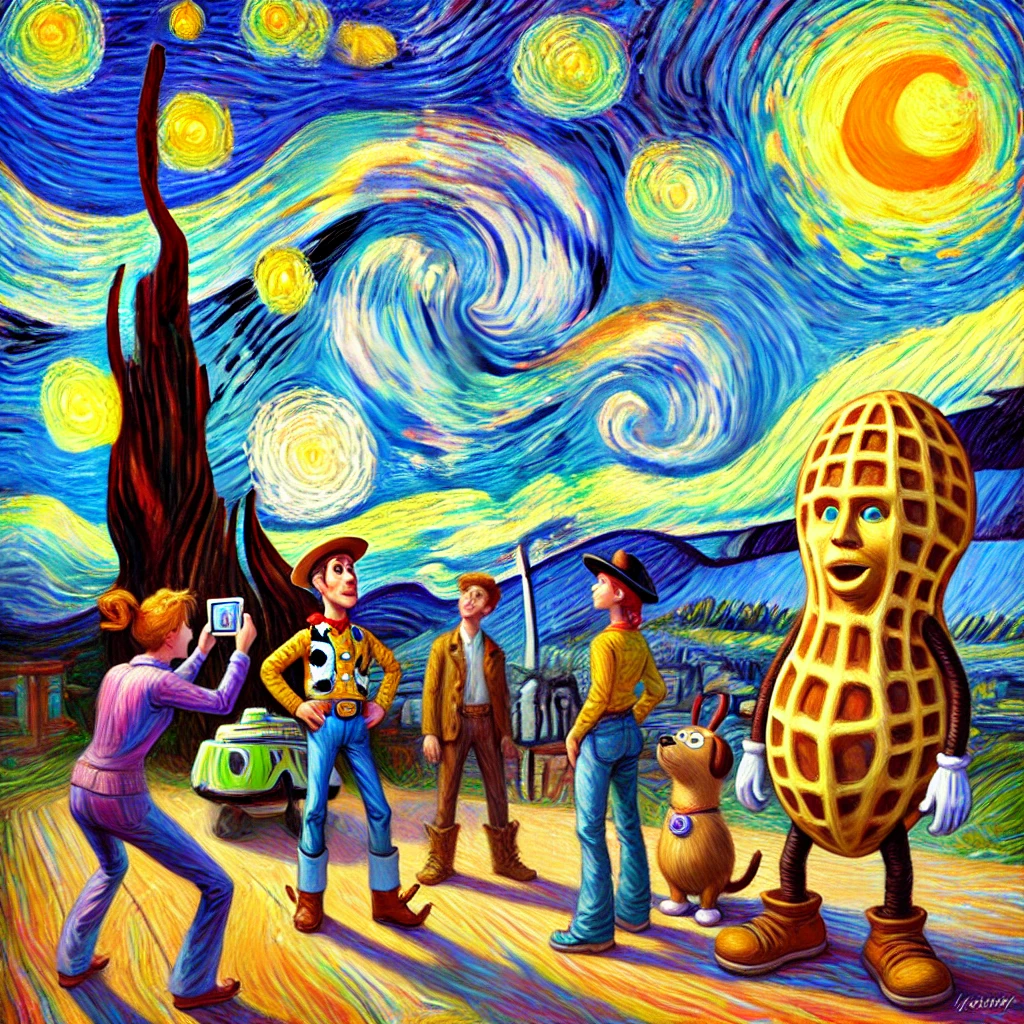
Mayor Cletus appointed a special citizen panel, the Committee on Linear Progress, consisting of:
-
Mabel
-
Boot
-
Trixie Jo
-
Clovis (later added without explanation)
Their mission: inspect every cul-de-sac and curved driveway in town and return with recommendations.
Three hours into the first inspection, Clovis insisted the peanut shape at Feed & Fix resembled a “surveillance lens.”
Boot got a nosebleed walking in circles.
Trixie Jo performed live commentary the entire time.
Mabel refused to walk the curve because “the Lord made me upright, not roundabouts.”
Their official written conclusion – submitted on a crumpled church bulletin – read as follows:
“Curves sow confusion and spiritual discomfort. Recommend immediate prohibition. Straight lines promote order, clarity, and blessed predictability.”
Mayor Cletus sighed, stamped it APPROVED, and prepared the ordinance.
ACT IV – Committee on Linear Progress
ACT V – The Vote Heard ’Round the Valley
The next Council meeting was packed so tightly the Fire Marshal issued a warning before the meeting even started.
Mayor Cletus read aloud:
Ordinance 24-B: Prohibition of Circular, Semi-Circular, Peanut-Shaped, Oblong, or Otherwise Non-Linear Vehicular Entryways Within the Town of Sequatchie Crossing.
Residents cheered.
The vote:
5–1 in favor.
The lone opposing vote came from Councilman Dwight “Diddy” Laymon, who whispered, “I just like circles,” before being met with thirty-seven disapproving glares.
The ordinance passed.
Celebration broke out in the Community Center parking lot, where ironically everyone had trouble finding the exit because the lot itself was – of course – a circle.
Mayor Cletus stood on a bench and addressed the crowd:
“From this day forward, Sequatchie Crossing shall remain faithful to the straight and the rectangular!”
Boot Barnes saluted.
Mabel Dean shed a single tear of patriotic geometry.
Clovis scanned the horizon for drone retaliation.
Peace returned to Sequatchie Crossing.
At least until someone suggested adding a roundabout to reduce traffic at the elementary school drop-off zone.
That’ll be next week’s meeting.
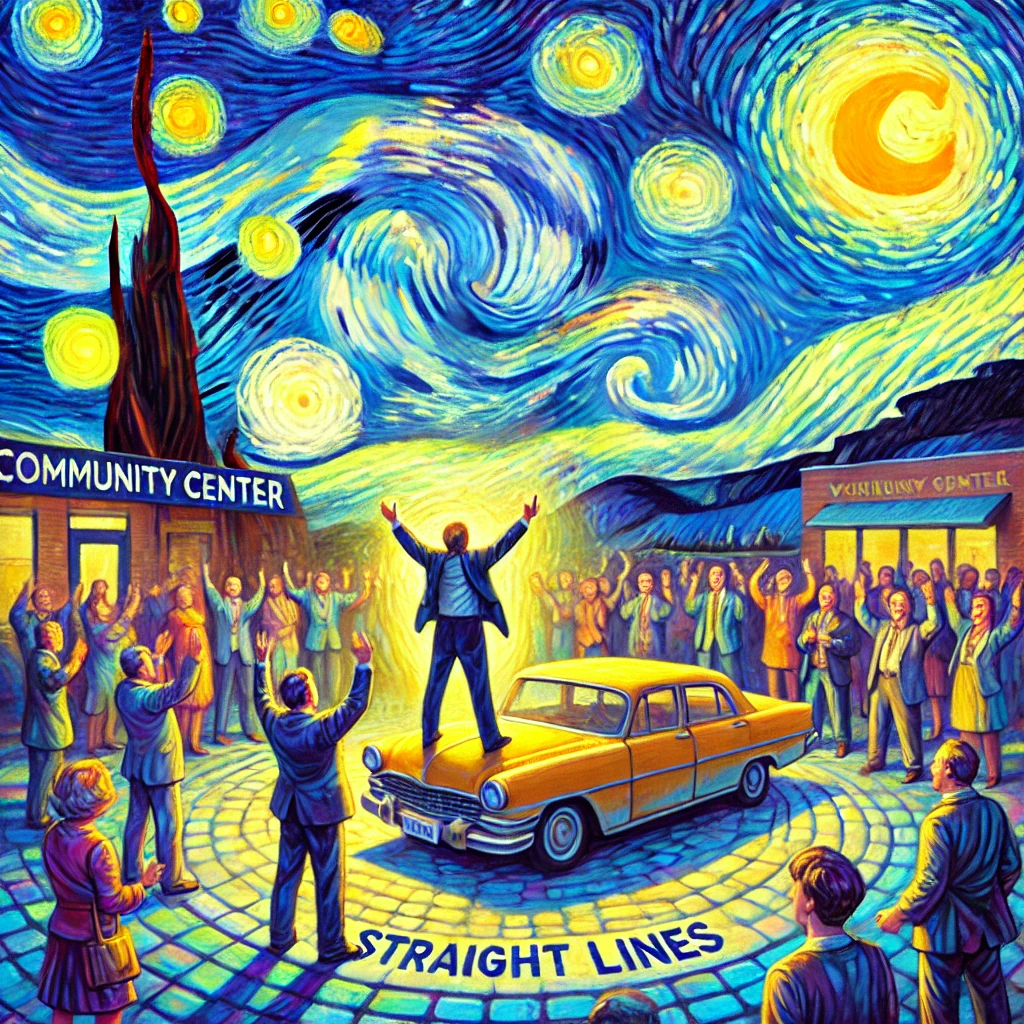
ACT V – The Vote Heard Round the Valley
DISCLAIMER
This story is a work of fiction set in the whimsical town of Sequatchie Crossing. All characters, events, organizations, and situations are entirely imagined and are not based on any real individuals, businesses, or local governments. Any resemblance to real people, living or dead, is purely coincidental (and honestly rather impressive given how unpredictable this place is). Sequatchie Crossing exists solely for entertainment and satirical storytelling. No civic ordinances were harmed in the making of this tale.
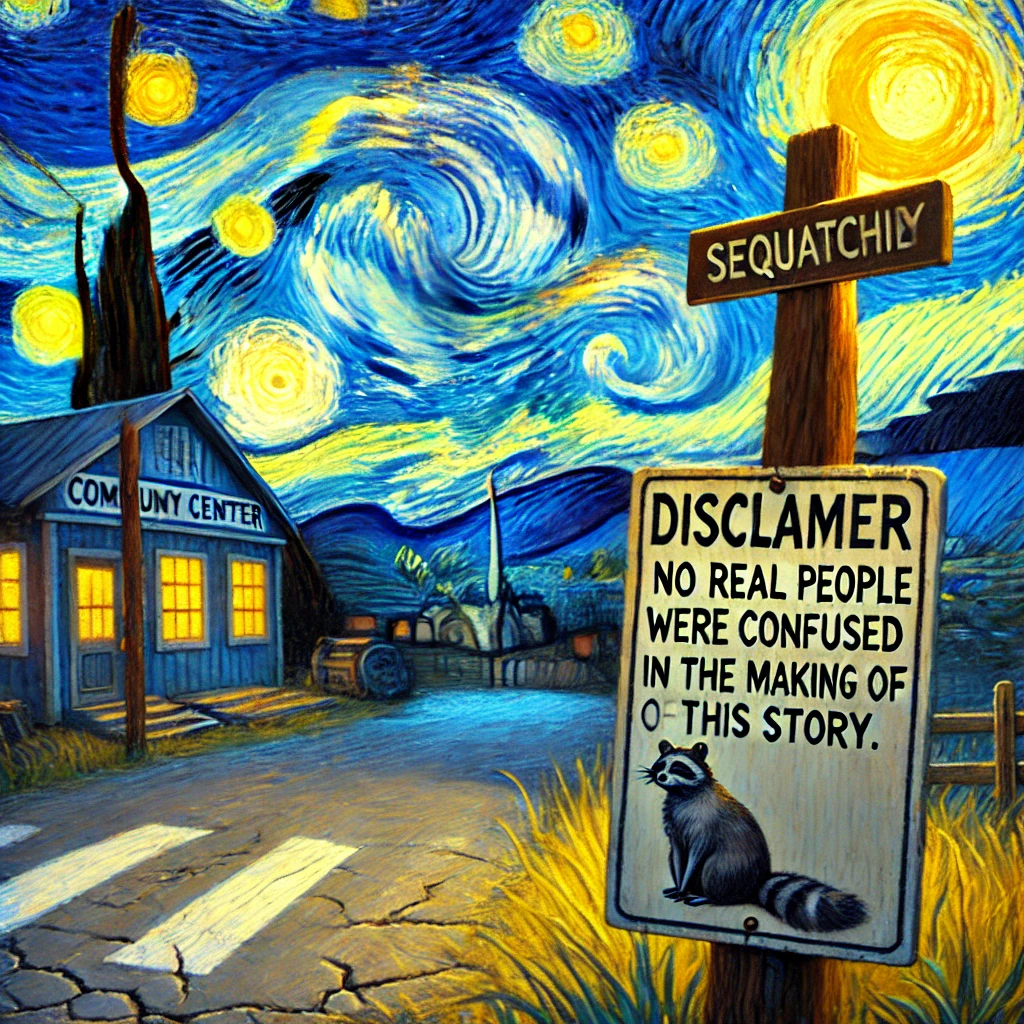
No More Circles – The Great Sequatchie Driveway Debate – Disclaimer
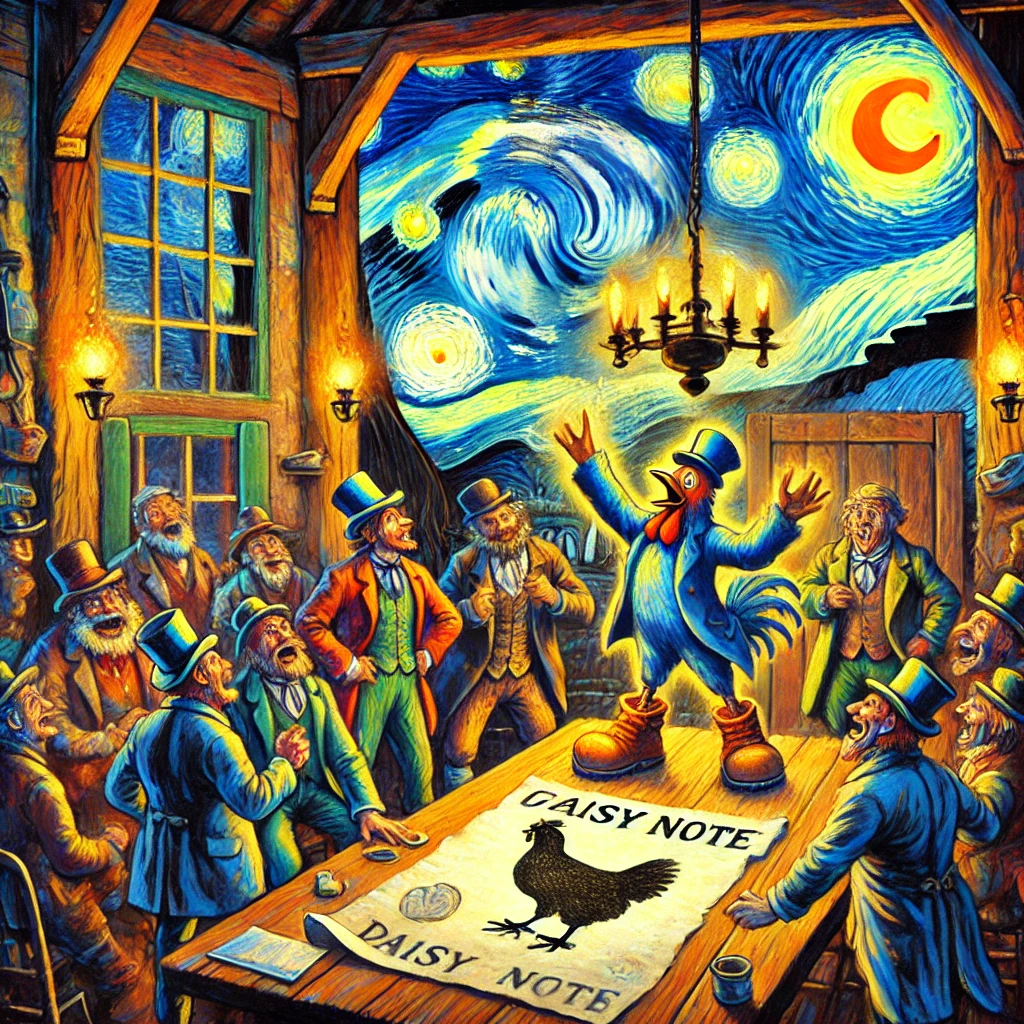
Real Places Behind the Ruckus – From The Dunlap Directory

Real Places Behind the Ruckus – From The Dunlap Directory
Yes, this story was fictional; even the parts that weren’t true. These places? Absolutely real. Stop by, support local, and keep the Wi-Fi away from livestock:
- Clayton Homes
- Natural Affinity – Handcrafted Herbal Essentials
- TN Waterfront Vacation Rental
- Baker & Sons Plumbing
- Kate’s Simply Baked Dough
- Gibson Construction Services
- Dunlap Iron & Metals
- Three Star Cinema
- Kilgore’s Tilling & Bush-Hogging
- Whitzell Excavation
- Legend Wine And Spirits
- Bigfoot Adventure TN Zipline
- Keith’s Affordable Plumbing Service
- JM Lawncare
Real Places Behind the Ruckus – From The Dunlap Directory
At Sequatchie Crossing, we tell the stories of Sequatchie Crossing.
Please share this post with your friends, family, or business associates who may want follow the news from Sequatchie Crossing.

0 Comments