


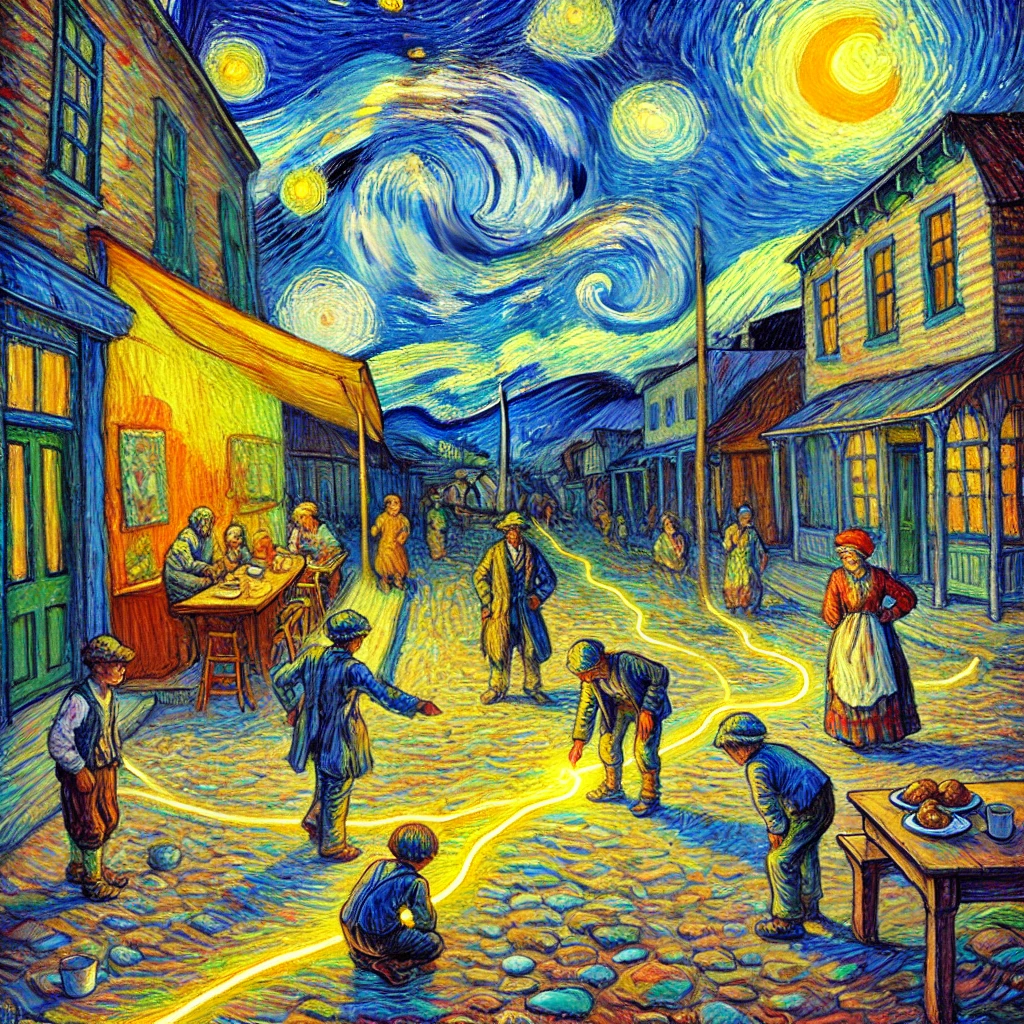
Children Discover an Invisible Border. Adults Panic and Start Arguing About It Immediately.
By Tom Seest
At Sequatchie Crossing, we tell the stories of Sequatchie Crossing.
Please share this post with your friends, family, or business associates who may want follow the news from Sequatchie Crossing.
🎤 Audio Overview
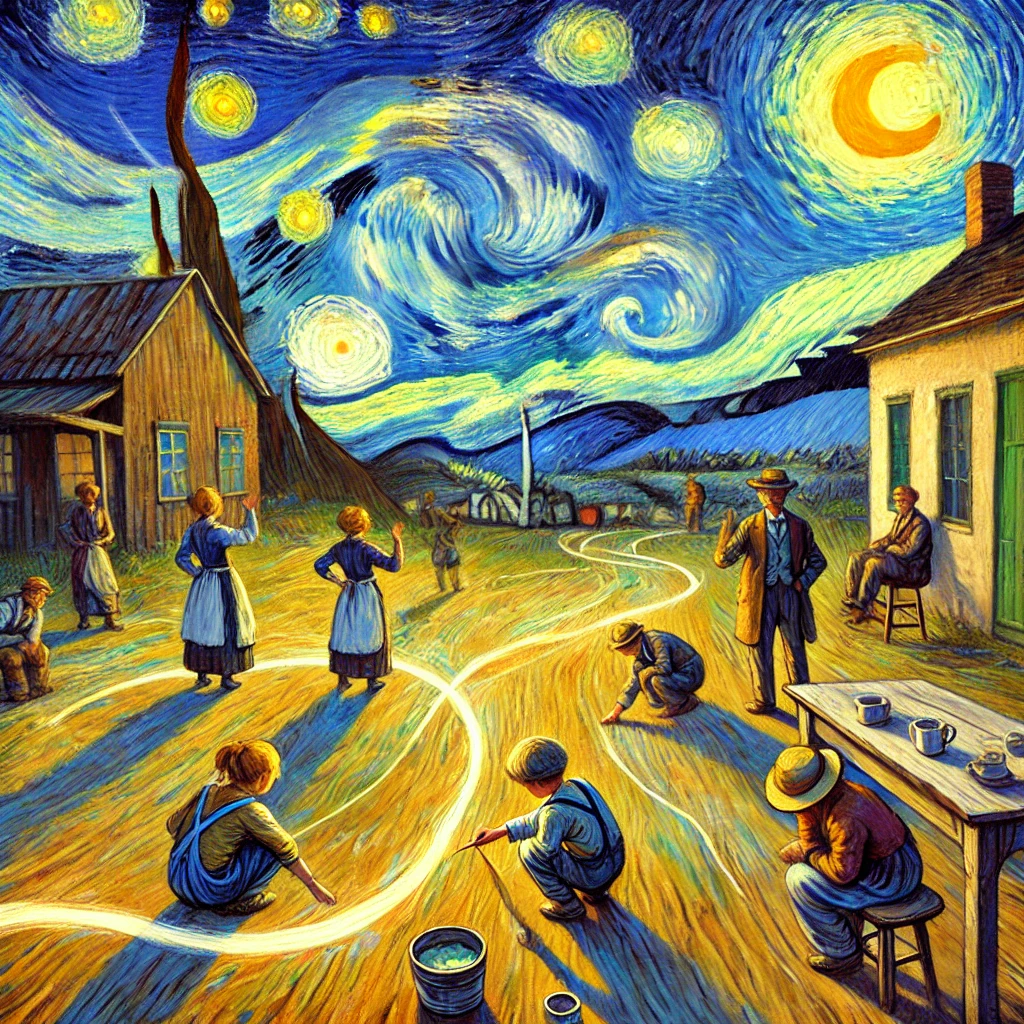
The Line That Wasn’t There
Act I – The First Step Across
It began, as most things in Sequatchie Crossing do, without a meeting, a motion, or anyone particularly in charge.
It began with a stick.
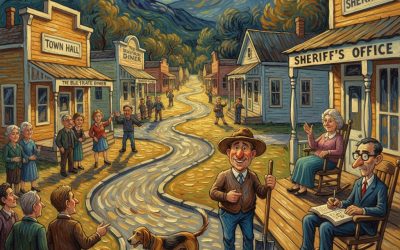
Young Caleb Mullins—grand-nephew of Ricky Travis “RT” Mullins and widely considered “a boy with too much imagination and not enough supervision”—dragged a crooked stick across the dusty stretch of the town square one Tuesday afternoon. The line wasn’t straight. It wandered, looped slightly, and curved near the courthouse steps as if it had second thoughts about its own purpose.
“Alright,” Caleb said, stepping back and squinting at it. “That’s the line.”
“Line for what?” asked Lila Mae Pruitt’s youngest cousin, who had been eating a melted popsicle with the seriousness of a courtroom stenographer.
“It’s the border,” Caleb said. “Over there is another country.”
“Which one?”
Caleb paused. This had not been fully considered.
“…The Other One.”
That seemed sufficient.
Within minutes, the game established its rules:
- Step over the line → you’re in a different country
- Different country → different rules
- You must ask permission to cross
- Or sneak across and risk being “arrested” (definition pending)
No one asked who made the rules. Children rarely do, especially when the rules are interesting.
They just played.
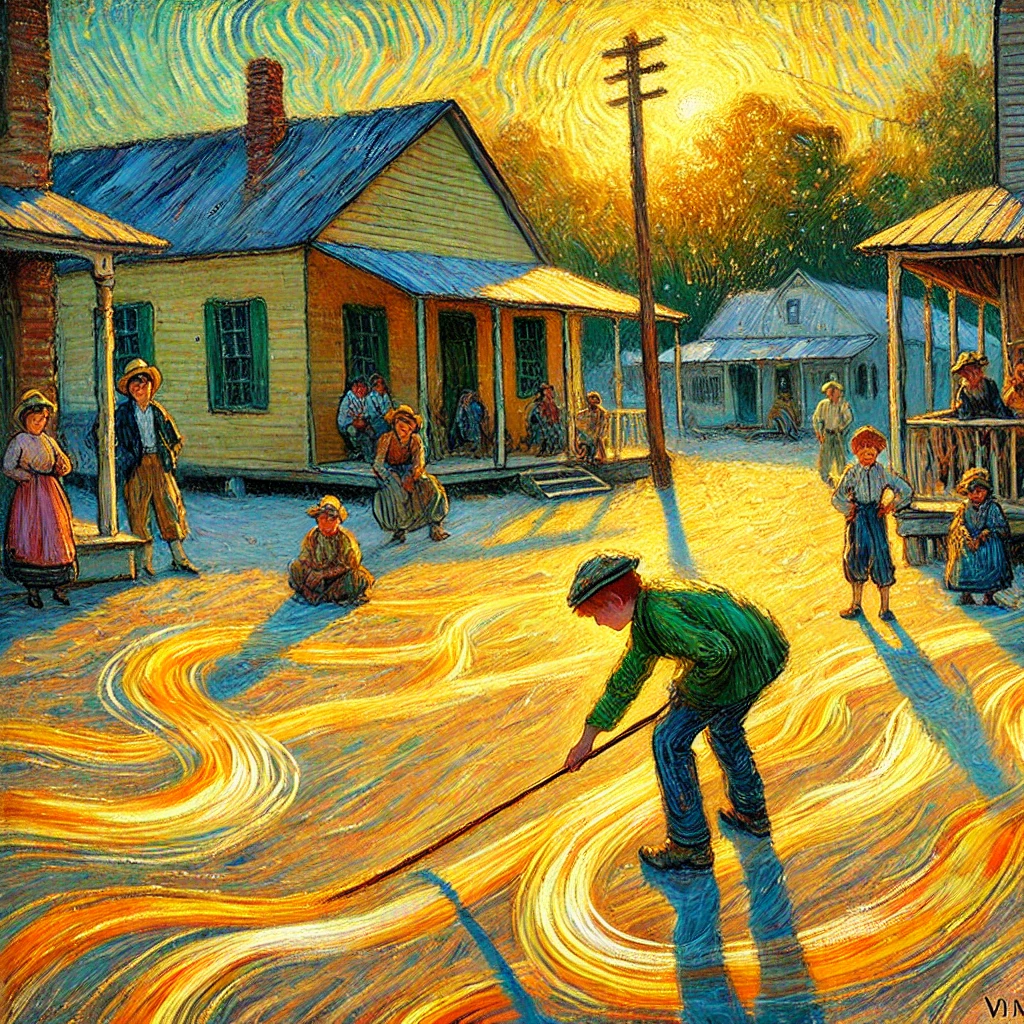
ACT I – The First Step Across
Act II – The First Adult Notices
The first adult to encounter the line was Maggie Sue Dillard, who nearly tripped over it while carrying a tray of iced tea glasses across the square.
“What in the world is this?” she said, balancing the tray as she looked down.
“It’s a border,” Caleb explained helpfully.
“Well, it’s in the way,” Maggie Sue said, stepping over it.
“Ma’am,” said one of the children solemnly, “you’ve just entered the other country.”
Maggie Sue paused mid-step.
“…Have I?”
“Yes ma’am.”
“Well I didn’t bring a passport,” she said.
“That’s okay,” Caleb replied. “You’re just visiting.”
Maggie Sue considered this, then nodded.
“Well alright then. I won’t stay long.”
She crossed back over and continued on her way.
For approximately six minutes, nothing happened.
Then she mentioned it to Tiffany Annette Roark, who mentioned it to Shelley Fawn Wexler, who immediately decided this was either:
- A creative breakthrough in experiential childhood learning
- A potential liability issue
Possibly both.
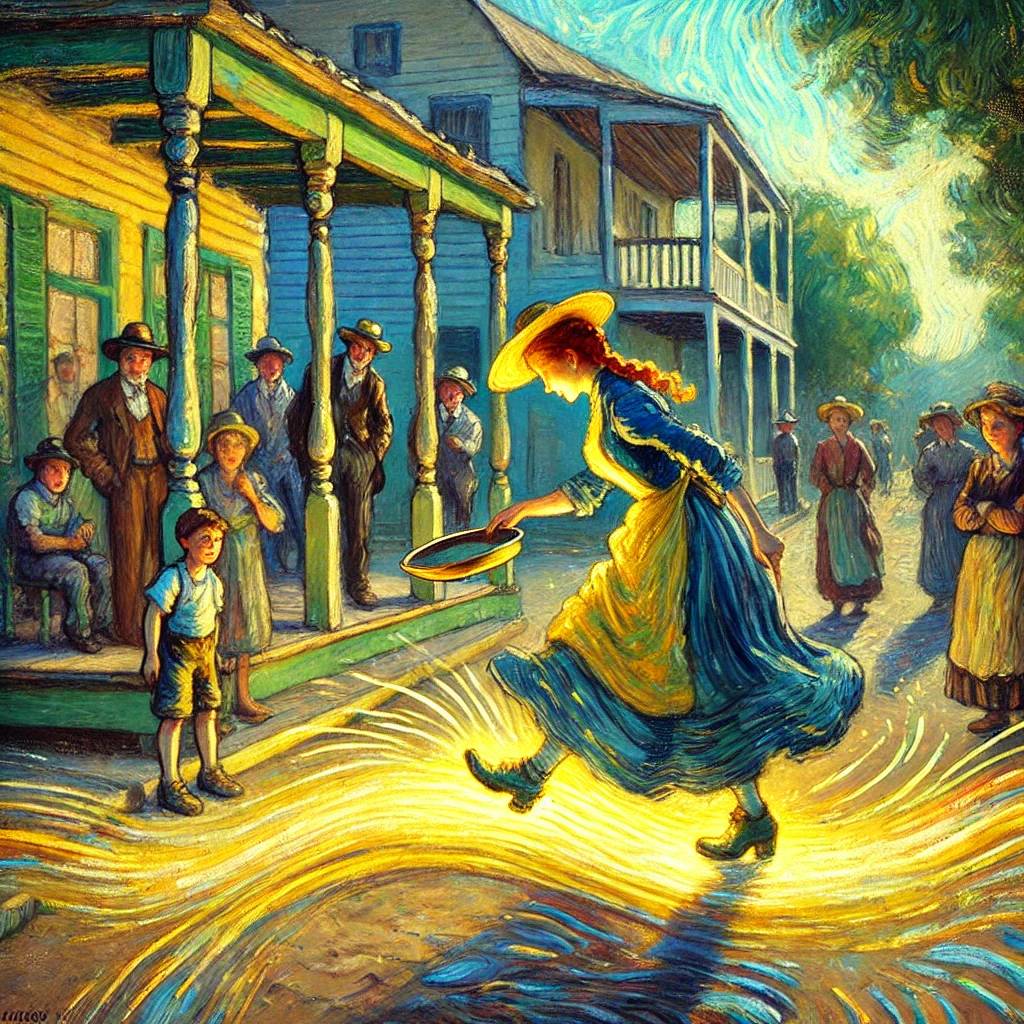
ACT II – The First Adult Notices
Act III – Clovis Takes Notice
No situation in Sequatchie Crossing reaches full maturity until Clovis Strickland becomes aware of it.
Clovis encountered the line at approximately 3:17 PM, while conducting what he described as a “routine observational sweep of the square.”
He stopped.
He studied the line.
He did not step over it.
“Who authorized this?” he asked.
The children stared at him.
“Authorized what?”
“This boundary.”
“It’s just a line,” Caleb said.
“No,” Clovis replied, adjusting his hat. “It’s a demarcation. And demarcations imply jurisdiction.”
This was the moment things began to tilt.
Clovis crouched down, tracing the line with a finger.
“It’s not straight,” he said.
“We didn’t want it to be boring,” Caleb explained.
Clovis stood slowly.
“Well,” he said, “it won’t be.”
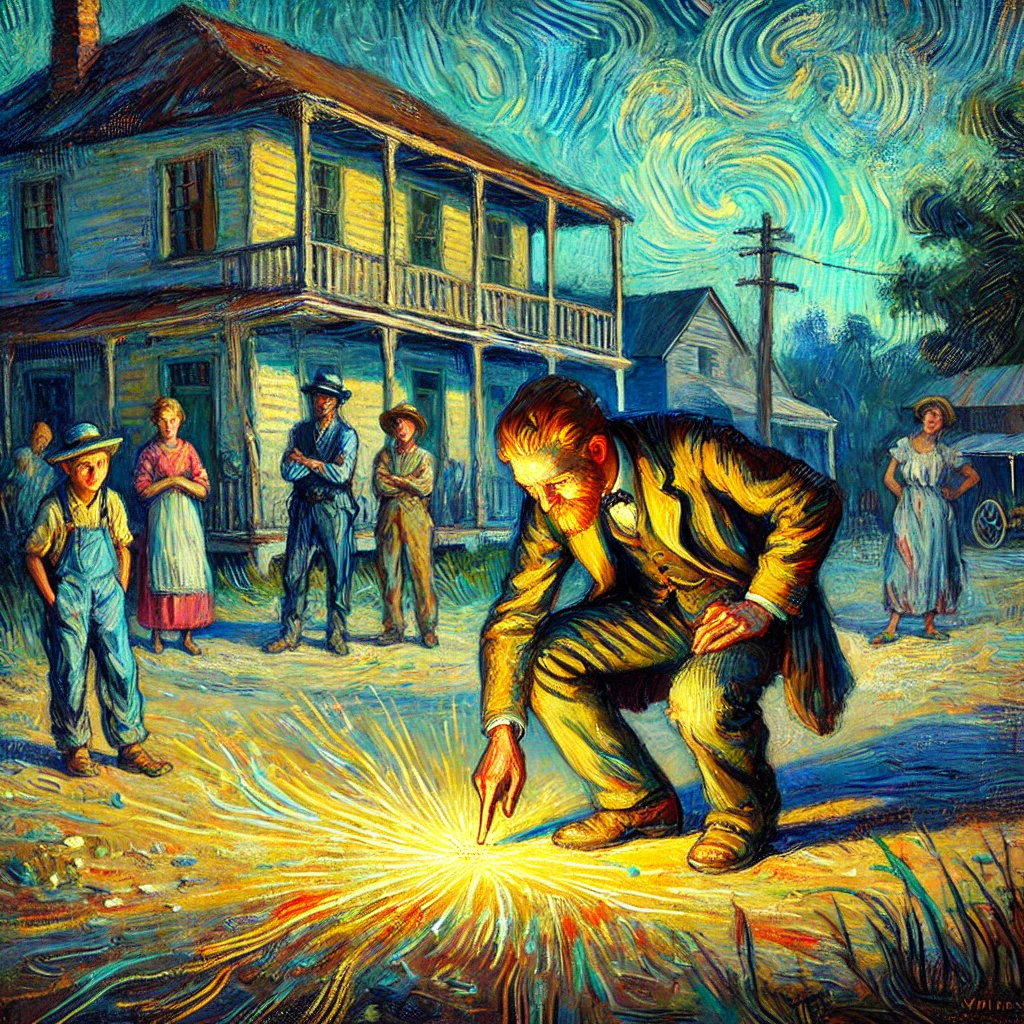
ACT III – Clovis Takes Notice
Act IV – Muffins for Both Sides
By the next morning, the line had been redrawn.
Not by the children.
By Clovis.
It now ran straighter, longer, and with a certain sense of intention that had been entirely absent before.
There were stakes.
Literal ones.
Small wooden stakes had been placed at intervals, connected by a length of string that sagged slightly in the middle.
“Temporary reinforcement,” Clovis explained to anyone who asked.
“Reinforcement of what?” asked Evelyn Grace Tipton.
“The boundary.”
“Which boundary?”
Clovis paused.
“…The one that’s there now.”
Meanwhile, Mabel Dean Ashcroft had responded in her own way.
She set up a folding table precisely three feet from the line and began distributing molasses muffins.
One table.
Two sides.
“I don’t cross lines,” she said firmly. “But I believe in hospitality.”
So she served muffins to both sides… from her side.
When asked which side she was on, she replied:
“I’m on the muffin side.”
This clarified nothing, but it did improve morale.
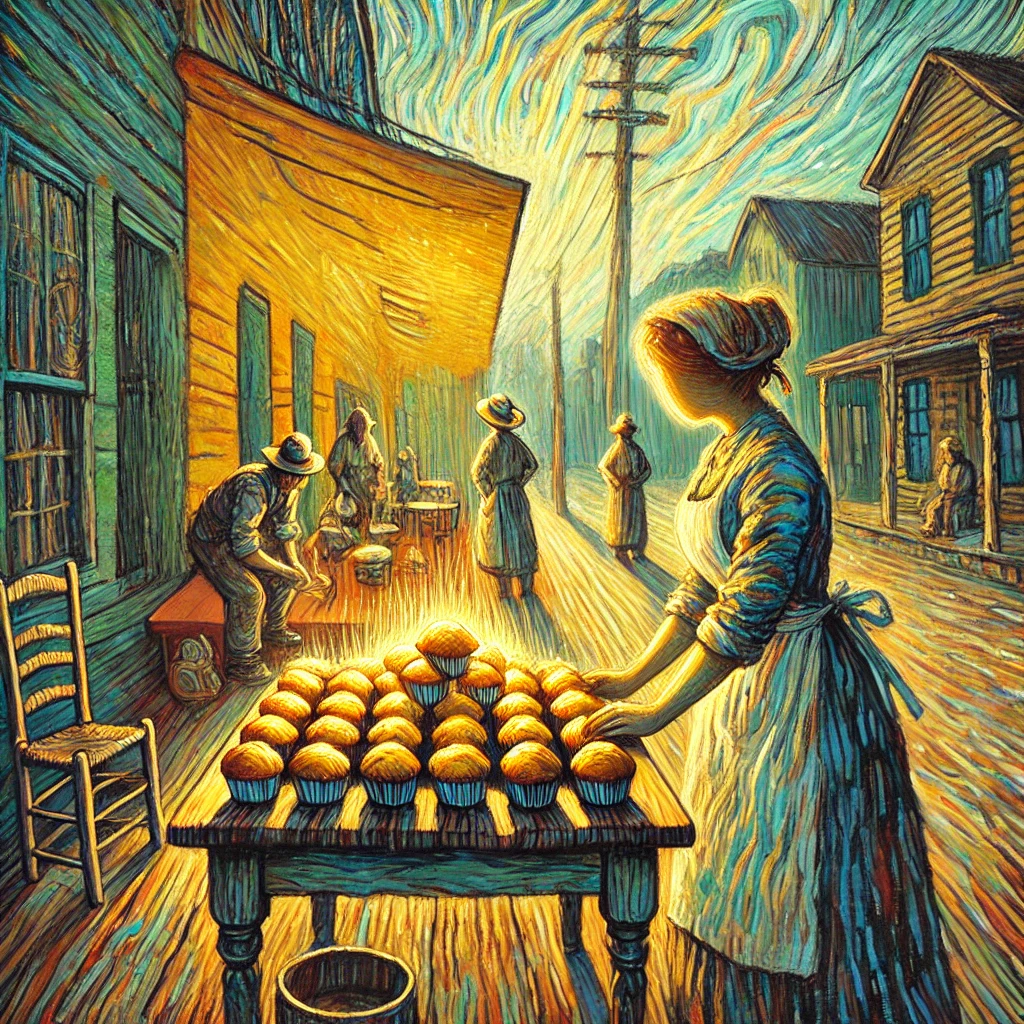
ACT IV – Muffins for Both Sides
Act V – Pastor Peeler Creates a Third Zone
Recognizing a growing tension, Pastor Arnold Peeler stepped in to mediate.
He approached the line cautiously, Bible in hand, expression thoughtful.
“Now folks,” he said, “we don’t need division in this town.”
“That’s what the line is for,” Clovis replied. “To define things.”
“Define what?”
Clovis opened his mouth.
Closed it.
Then gestured vaguely.
“Things that need defining.”
Pastor Peeler nodded slowly, then took a step forward.
Right onto the line.
“Let’s just meet in the middle,” he said.
And just like that, a third zone was created.
Not this side.
Not that side.
But… the middle.
“The Neutral Zone,” Pastor Peeler declared.
This introduced several complications:
- People standing on the line were now neither here nor there
- Conversations across the line became triangular
- Disputes required three perspectives instead of two
Within an hour, someone asked:
“Can you be neutral about something you don’t understand?”
No one answered.
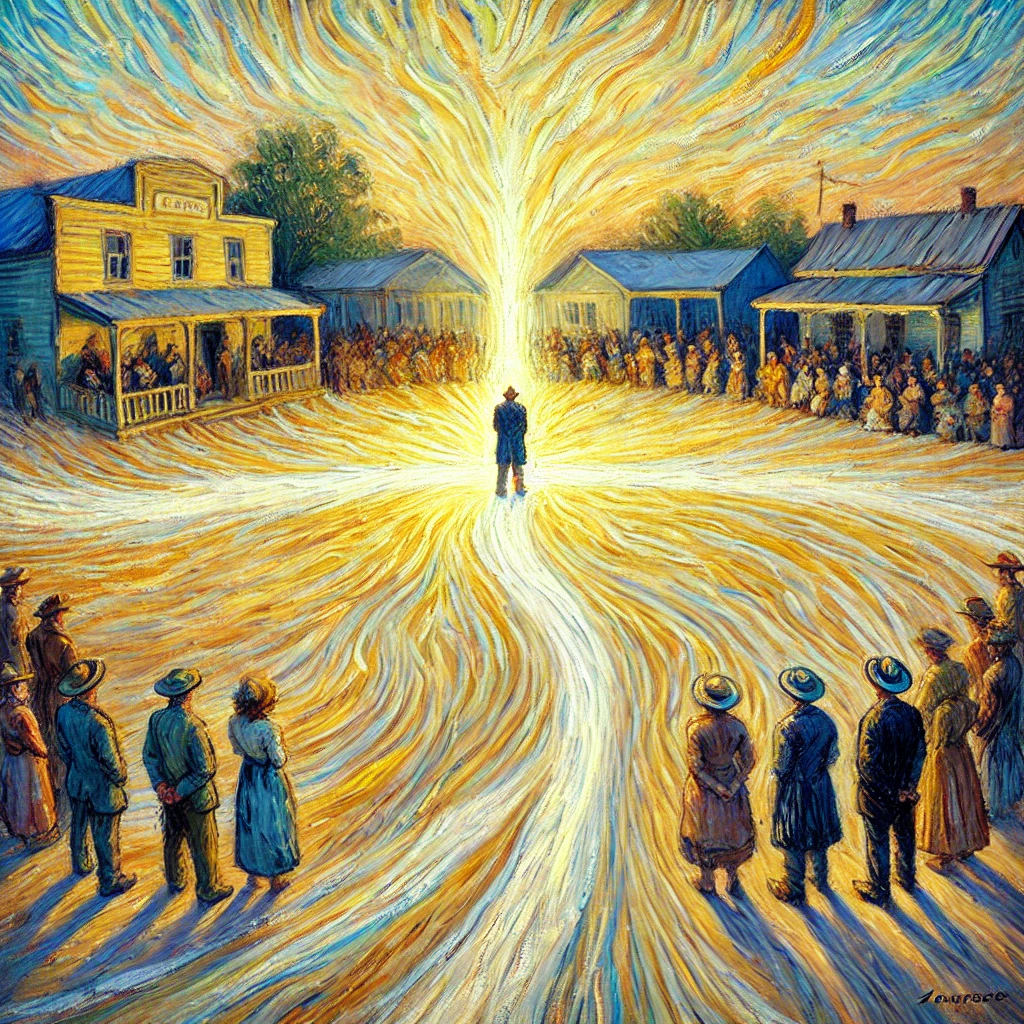
ACT V – The Third Zone
Act VI – The Sheriff Tries to Enforce It
By midweek, the situation had escalated to the point where Officer Kenny Joe Teeter was dispatched to “assess the situation.”
He arrived in his cruiser, stepped out, and immediately tripped over one of Clovis’s stakes.
“What is all this?” he asked.
“Boundary enforcement,” Clovis said.
“Enforced by who?”
Clovis gestured toward the children.
“They started it.”
Officer Teeter looked at the children.
Then at the line.
Then back at Clovis.
“Alright,” he said. “Where exactly is the line?”
Everyone pointed.
In different directions.
Because overnight, the line had changed.
Children had added curves.
Loops.
A small spiral near the courthouse bench.
“It moves,” Caleb explained.
“It moves?” Teeter repeated.
“Well, we move it,” Caleb said. “Depending on the game.”
Officer Teeter took off his hat and scratched his head.
“So I’m supposed to enforce something that… moves?”
“Yes sir,” Caleb said.
“…Based on what?”
“Mostly feelings.”
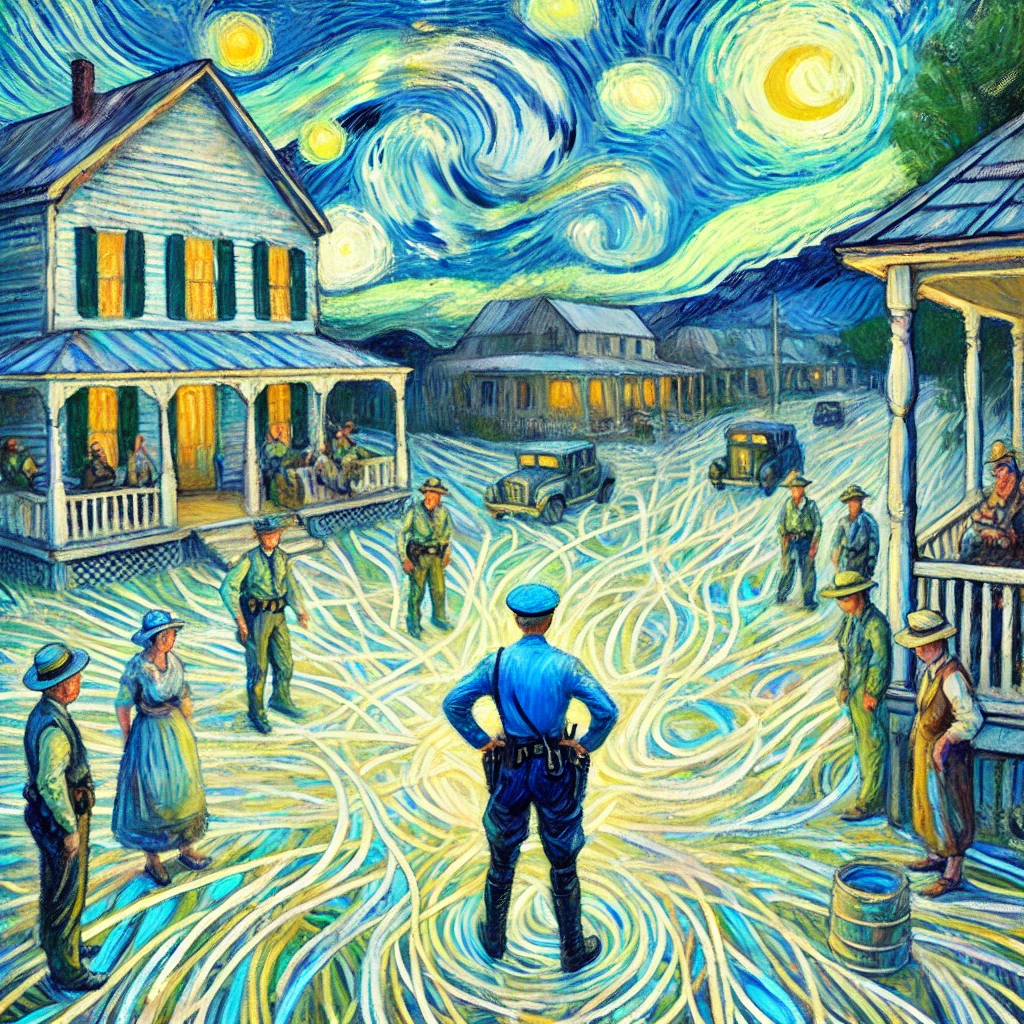
ACT VI – Attempted Enforcement
Act VII – The Expansion
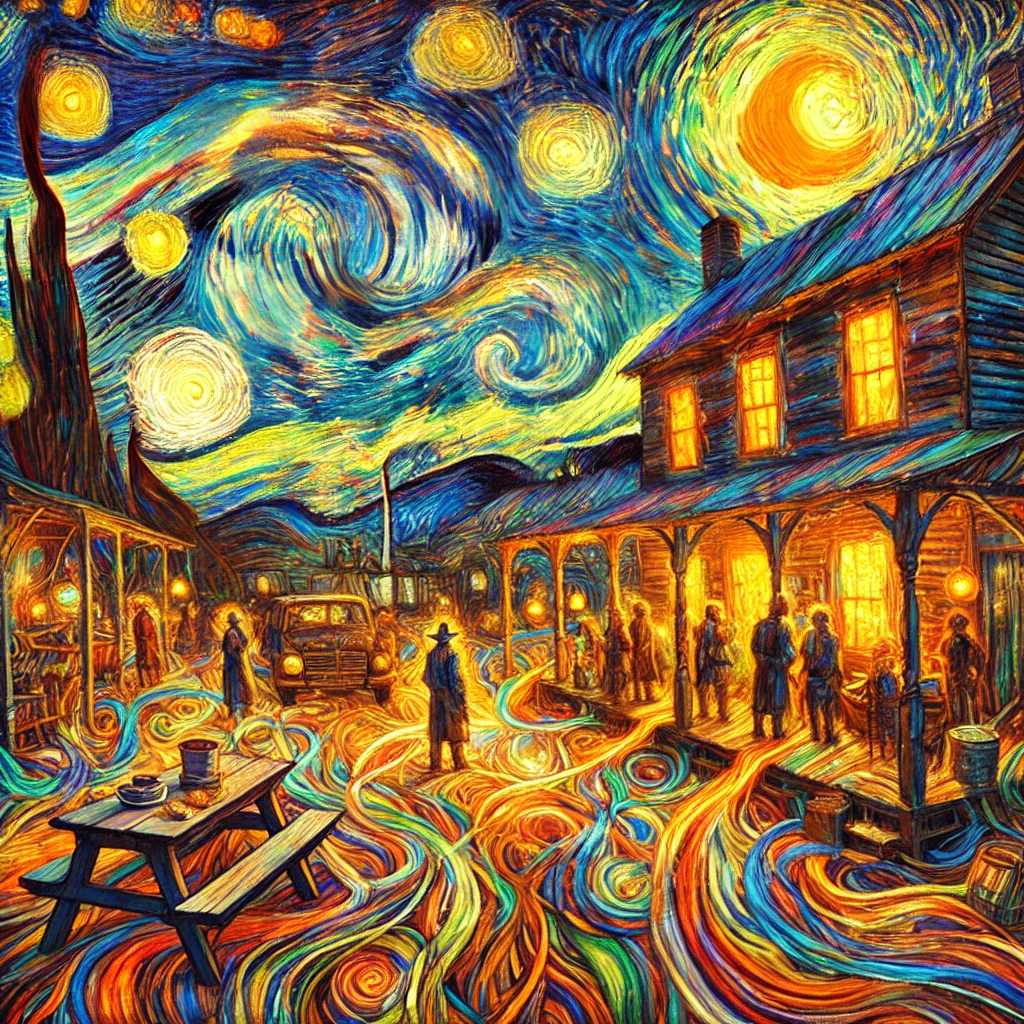
By Friday, the line was no longer a line.
It was:
- A series of overlapping loops
- Several intersecting boundaries
- One accidental circle that enclosed the post office
- A zigzag pattern that ran through Mabel’s muffin table
People began to notice something unsettling:
No matter where you stood…
You were always:
- Inside something
- Outside something else
- Possibly in the middle of something you didn’t agree to
Clovis called this “multi-layered jurisdiction.”
Maggie Sue called it “confusing.”
Mabel called it “bad for muffins.”
ACT VII – The Expansion
Act VIII – The Questions Begin
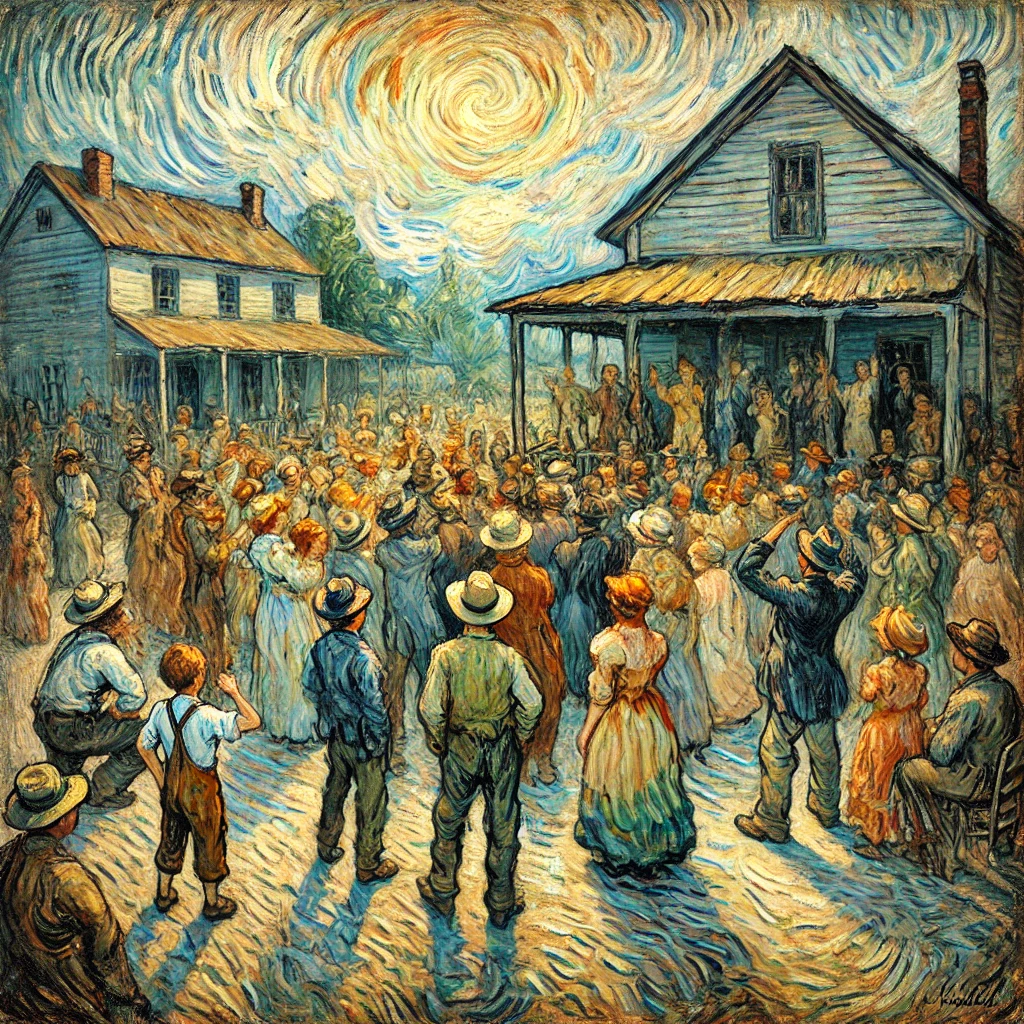
Children, having initiated the situation, began asking questions.
Simple ones.
Persistent ones.
“Where exactly is the line?”
“Who decides it?”
“Why does it change?”
“Can you be on both sides at once?”
Adults responded with:
- Long explanations
- Contradictory answers
- Occasional hand gestures
No one gave the same answer twice.
Even Clovis, who had been the most certain at the beginning, began to hesitate.
“Well,” he said at one point, “it depends on your position.”
“Position where?” Caleb asked.
Clovis paused.
“…Exactly.”
ACT VIII – The Questions
Act IX – The Loop
Late Saturday afternoon, something remarkable happened.
The line…
Looped back on itself.
Not intentionally.
Not strategically.
Just… by accumulation.
Children had drawn.
Adults had adjusted.
Clovis had reinforced.
Pastor Peeler had mediated.
And somewhere in all that activity, the line had formed a complete loop around the entire square.
Meaning:
Everyone inside…
Was also outside.
Everyone outside…
Was also inside.
And the Neutral Zone…
Was everywhere the line overlapped itself.
Silence fell over the square.
Even Clovis didn’t speak.

ACT IX – The Loop
Act X – The Realization
It was Shelley Fawn Wexler who said it first.
“So… what does this mean?”
No one answered.
Because the answer was both obvious and unacceptable.
The line had no meaning.
Except the meaning everyone had given it.
And now that meaning had become too tangled to untangle.
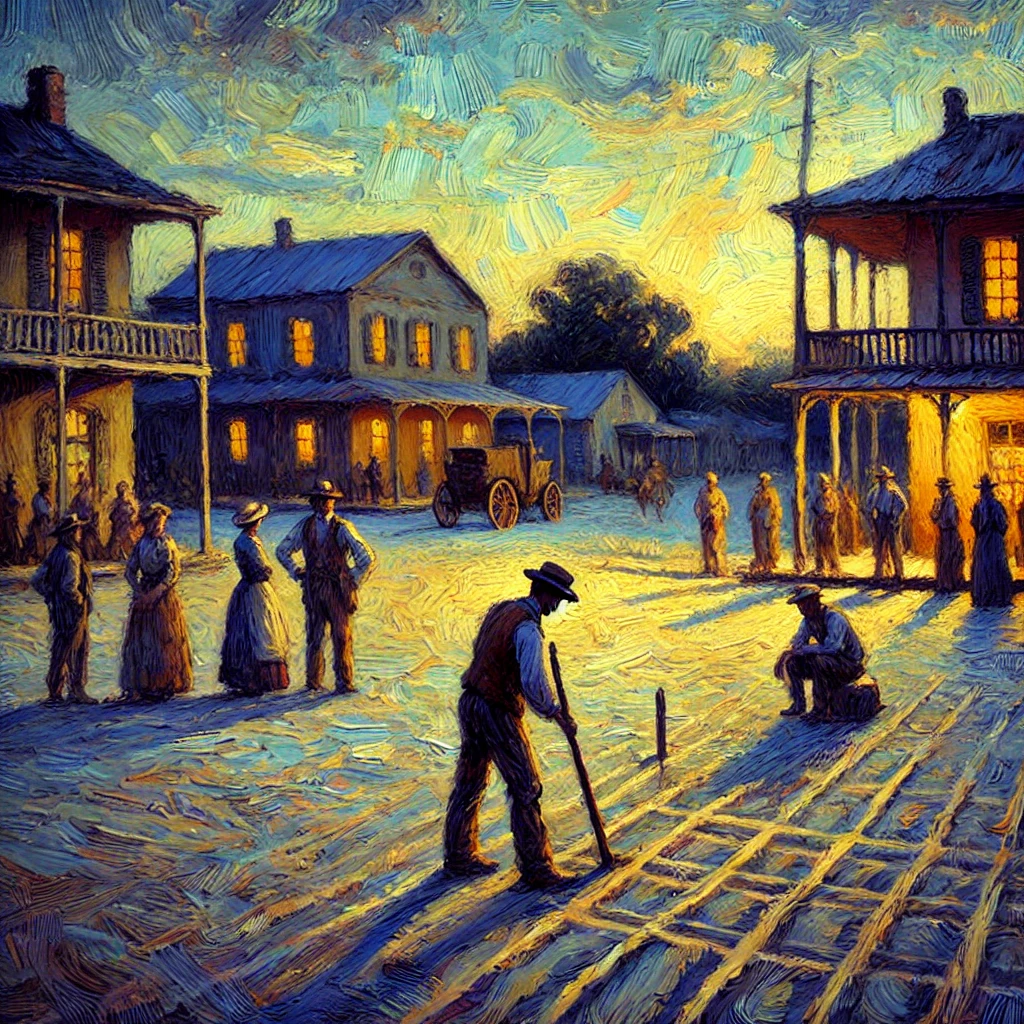
Mabel quietly packed up her muffins.
Pastor Peeler stepped off the line.
Clovis removed one of the stakes.
Then another.
Officer Teeter got back in his cruiser and left.
ACT X – The Realization
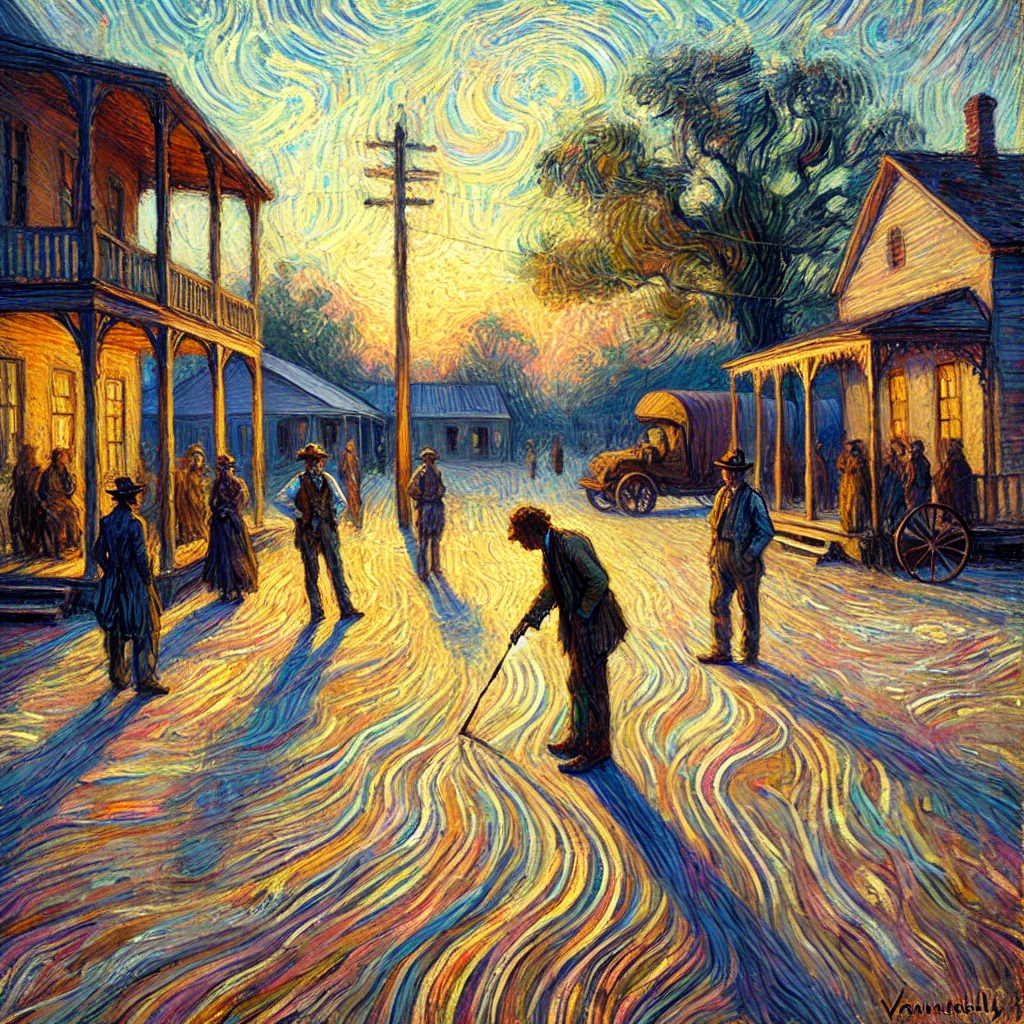
The children looked at the line.
Then at each other.
Then Caleb picked up his stick.
And erased a small section.
Nothing happened.
So he erased another.
Still nothing.
Until finally, the line was gone.
ACT X – The Realization
Epilogue – The Space That Remained
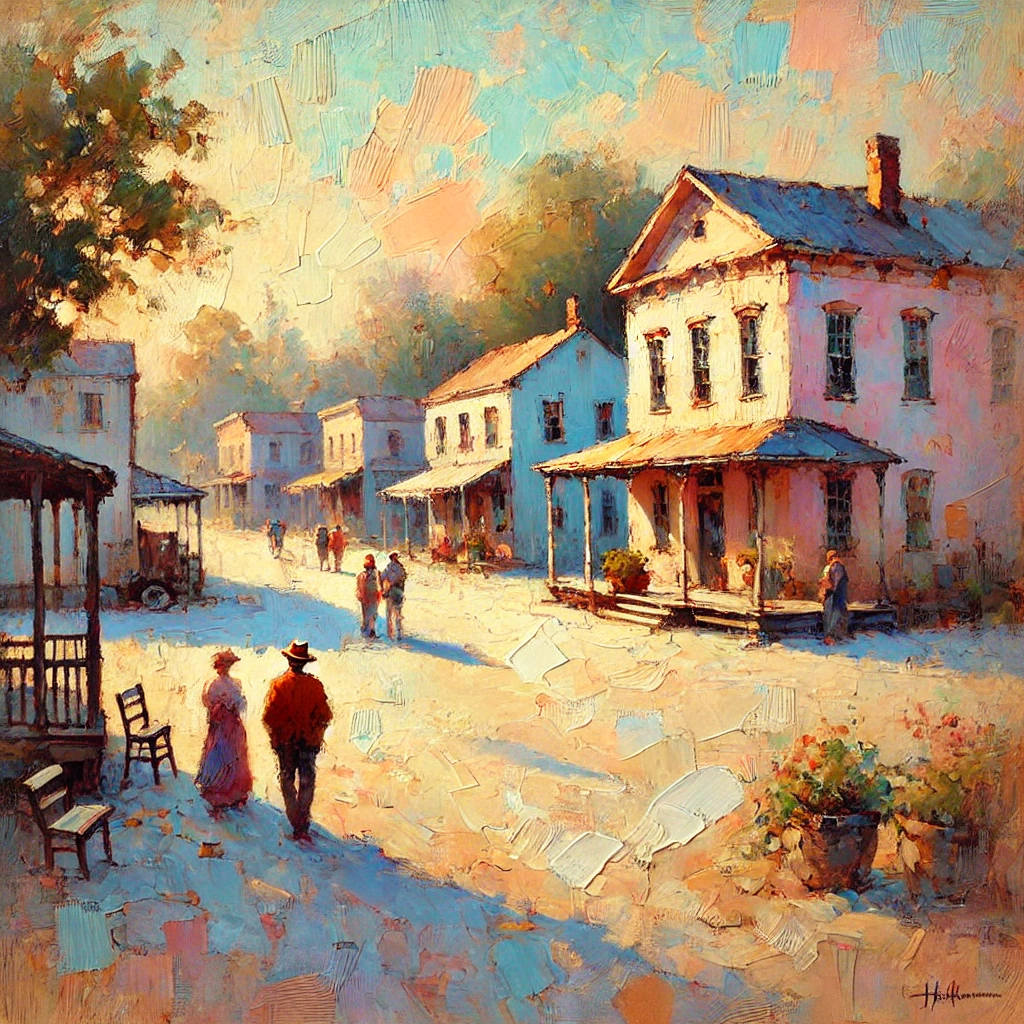
The next morning, the square looked exactly as it always had.
No line.
No stakes.
No Neutral Zone.
Just open space.
People crossed it freely.
No one asked permission.
No one enforced anything.
But every now and then…
Someone would pause.
Look down.
And hesitate.
As if remembering something that had once been there.
Something invisible.
Something real.
And not real at the same time.
EPILOGUE – The Space That Remained
Disclaimer
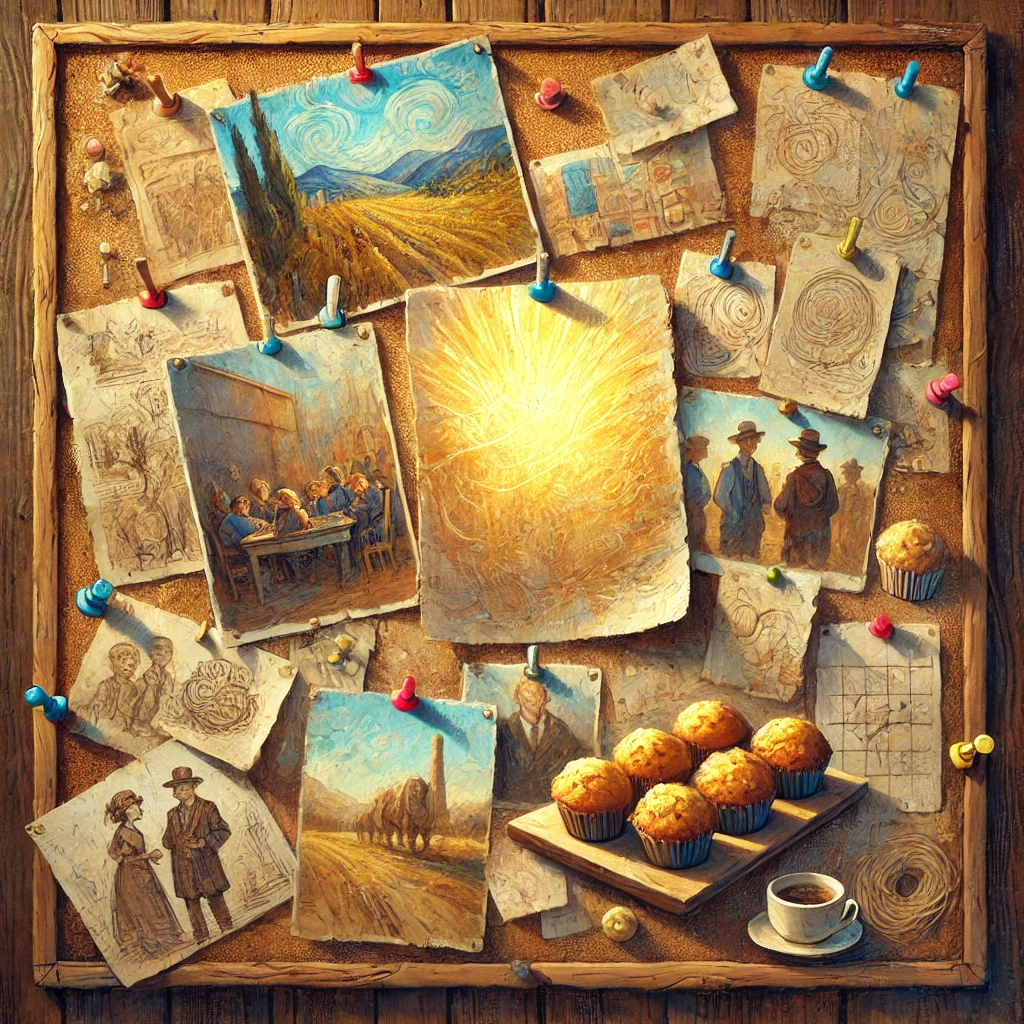
No official borders were created, enforced, or recognized in the making of this story. Any resemblance to real lines—drawn, imagined, or argued into existence—is purely coincidental and likely under dispute.
DISCLAIMER – The Story Acknowledges Itself
Real Places Behind the Ruckus – From The Dunlap Directory

Real Places Behind the Ruckus – From The Dunlap Directory
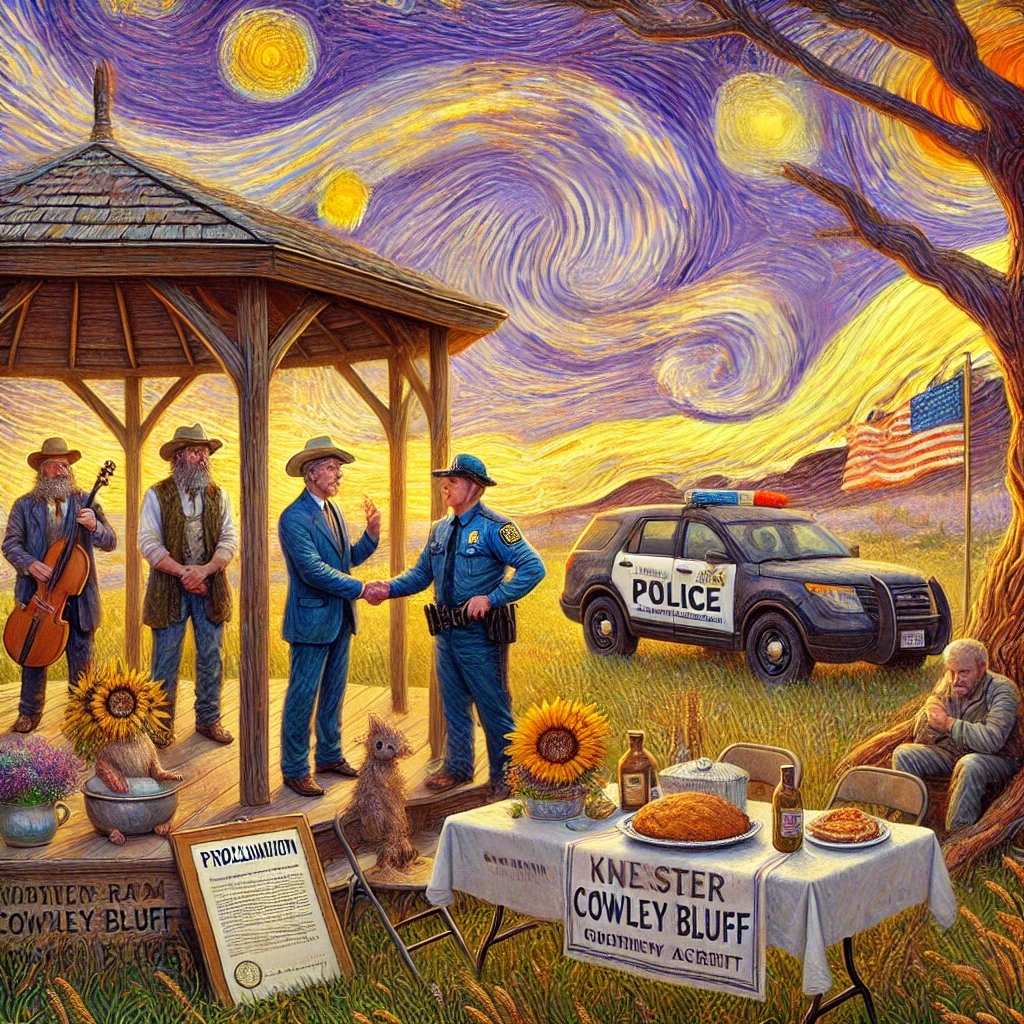
Yes, this story was fictional; even the parts that weren’t true. These places? Absolutely real. Stop by, support local, and keep the Wi-Fi away from livestock:
- Cagle Mountain Trading Post
- Little Caesars
- Cedar Springs Bakery
- Wendy’s
- The Southern Oven
- Spee-D Tires
- Omni Rehab – Dunlap Office
- Cynthia’s Kitchen
- Baker & Sons Plumbing
- Berg’s Diesel Repair
- Eco Home Solutions
- Johnson’s 7
- Battles For Chattanooga
- Whitwell Dunlap Buy Sell Trade
- Buy, and Sale in Crossville, Pikeville, Dunlap, Cookeville TN
- New Shade Painting & Co
- Days Inn by Wyndham Chattanooga Lookout Mountain West
- Fix’nz 4 The Soul
- Willow Rose Stables – Event Pony Rental
Real Places Behind the Ruckus – From The Dunlap Directory
At Sequatchie Crossing, we tell the stories of Sequatchie Crossing.
Please share this post with your friends, family, or business associates who may want follow the news from Sequatchie Crossing.

0 Comments