


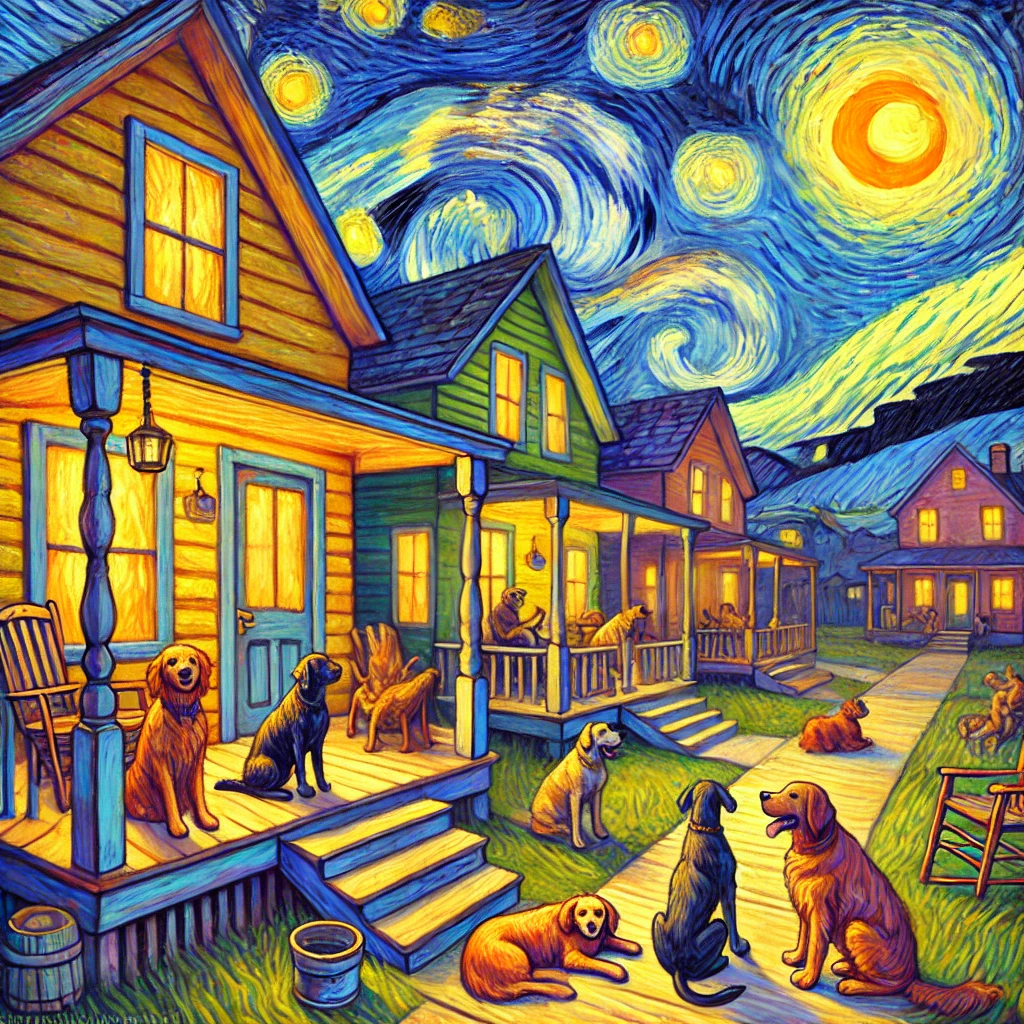
Nobody Is Sure If the Dogs Are Lost Or Just Rotating Houses.
By Tom Seest
At Sequatchie Crossing, we tell the stories of Sequatchie Crossing.
Please share this post with your friends, family, or business associates who may want follow the news from Sequatchie Crossing.
🎤 Audio Overview
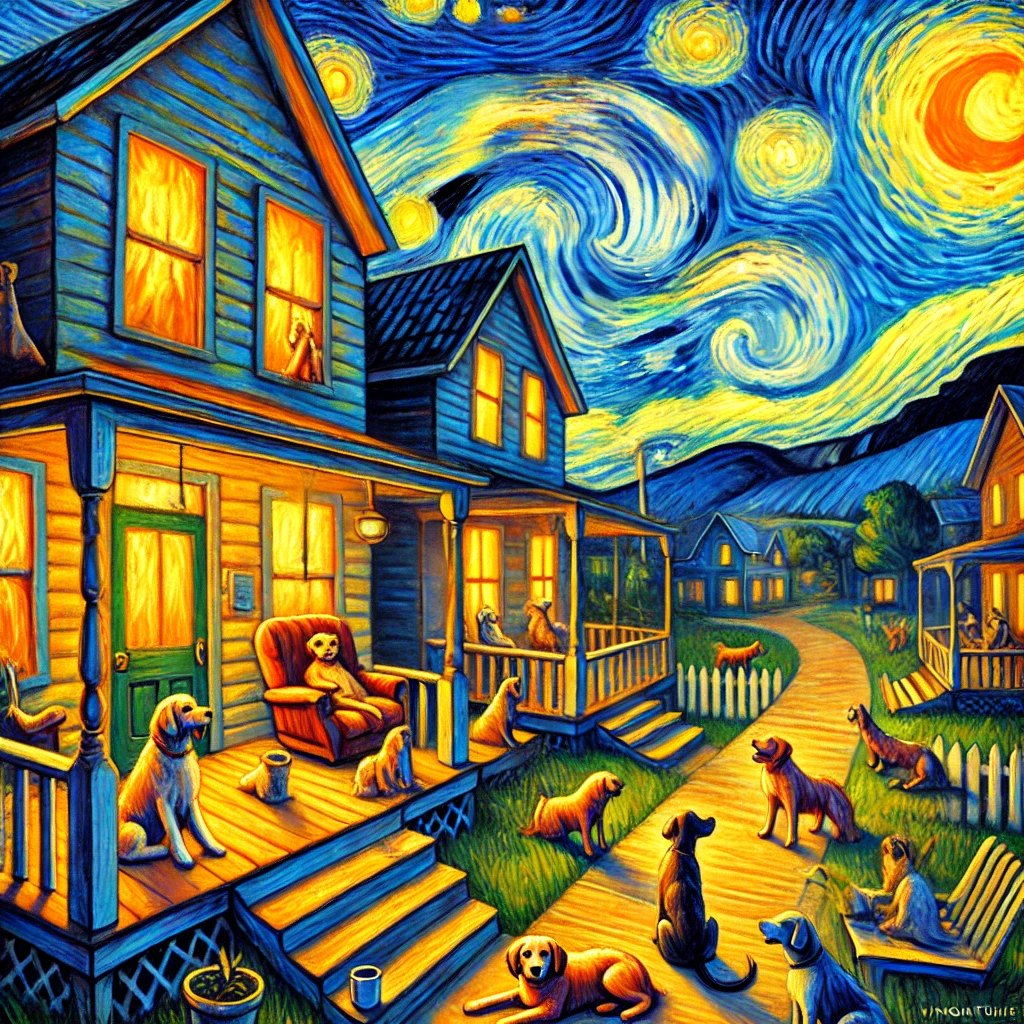
Sequatchie Has More Missing Dogs Than Dogs
Sequatchie Has More Missing Dogs Than Dogs
Act I: The First Missing Dog (That Wasn’t Missing Yet)
It began, as most civic emergencies in Sequatchie Crossing do, with a Facebook post that used too many capital letters.
MISSING DOG. PLEASE SHARE.
The post appeared at 6:42 a.m., which already placed it in a questionable category. Anything posted before 7:00 a.m. in Sequatchie Crossing was assumed to have been written either in a state of emotional distress or while standing in pajamas on a dew-covered porch, coffee still brewing inside.
The dog in question was described as:
“Medium-sized. Brown-ish. Answers to Buddy, Bud, Bud-Bud, or sometimes just looks at you.”
Within four minutes, the post had seven comments.
Within ten minutes, it had fourteen theories.
Within twenty, someone suggested coyotes.
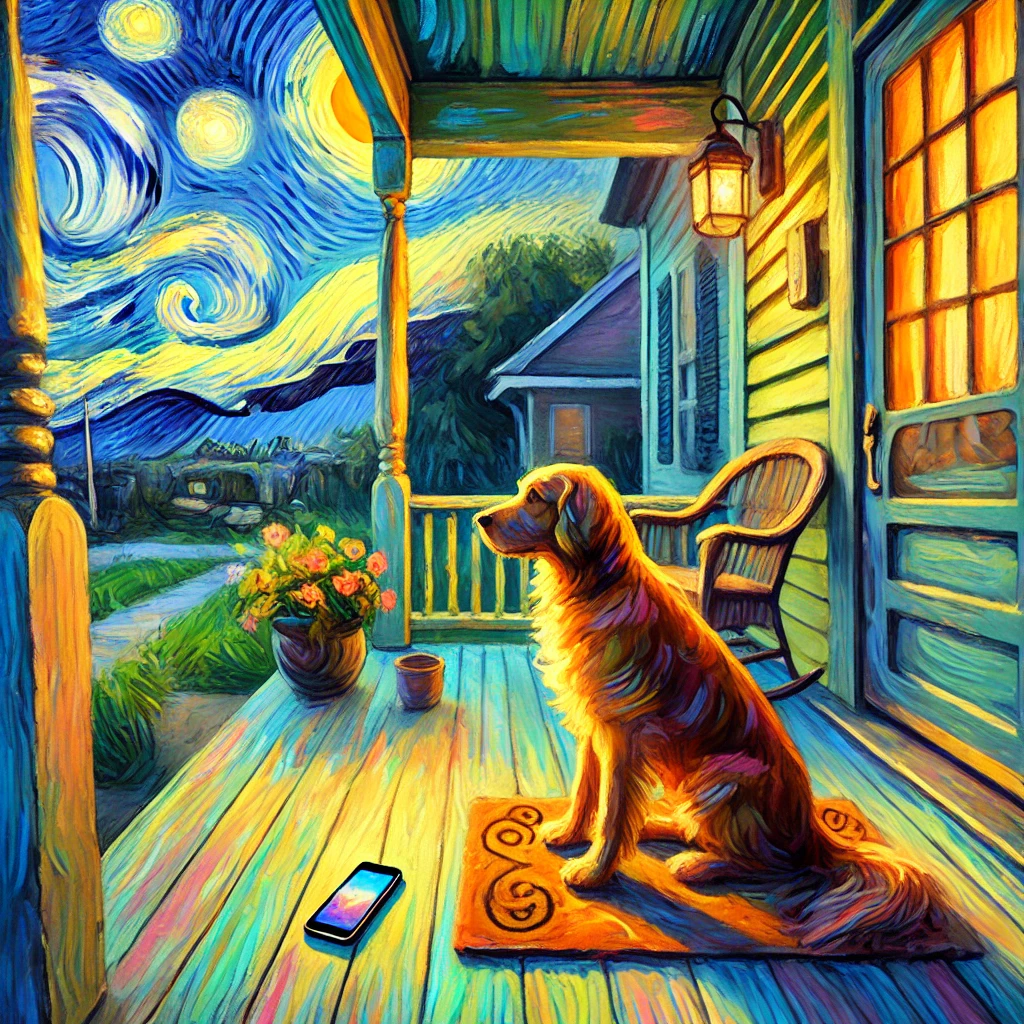
ACT I – The First Missing Dog (That Wasn’t Missing Yet)
By 7:30 a.m., Mabel Dean Ashcroft had already printed the photo and taped it to the bulletin board at the Fellowship Hall, despite the fact that the Fellowship Hall did not open until noon and the printer had jammed twice.
“Dogs don’t just vanish,” Mabel said aloud to no one in particular, smoothing the paper with the authority of someone who had lived through three church splits and one disputed casserole competition. “They relocate.”
Across town, Boot Barnes leaned on the hood of his truck, squinting at the same Facebook post on his phone.
“That ain’t missing,” he said. “That’s just a dog on a different porch.”
Boot knew dogs. He had never owned one on purpose, but they appeared on his property regularly, slept under his porch, ate from his bowls, and left whenever they felt judged.
He scrolled.
Someone had commented:
“Pretty sure I saw him yesterday near the Dollar Saver.”
Another replied:
“That’s not him, ours looks similar but has more personality.”
A third added:
“Could be mine, but mine doesn’t usually leave without letting us know.”
Boot snorted. “Dogs don’t notify.”
By lunchtime, three more missing dog posts appeared. Different dogs. Same tone. Same blurry porch photos taken at odd angles, always with one foot visible at the bottom of the frame.
By sunset, Sequatchie Crossing officially had more missing dogs than confirmed dogs.
No one noticed the math at first.
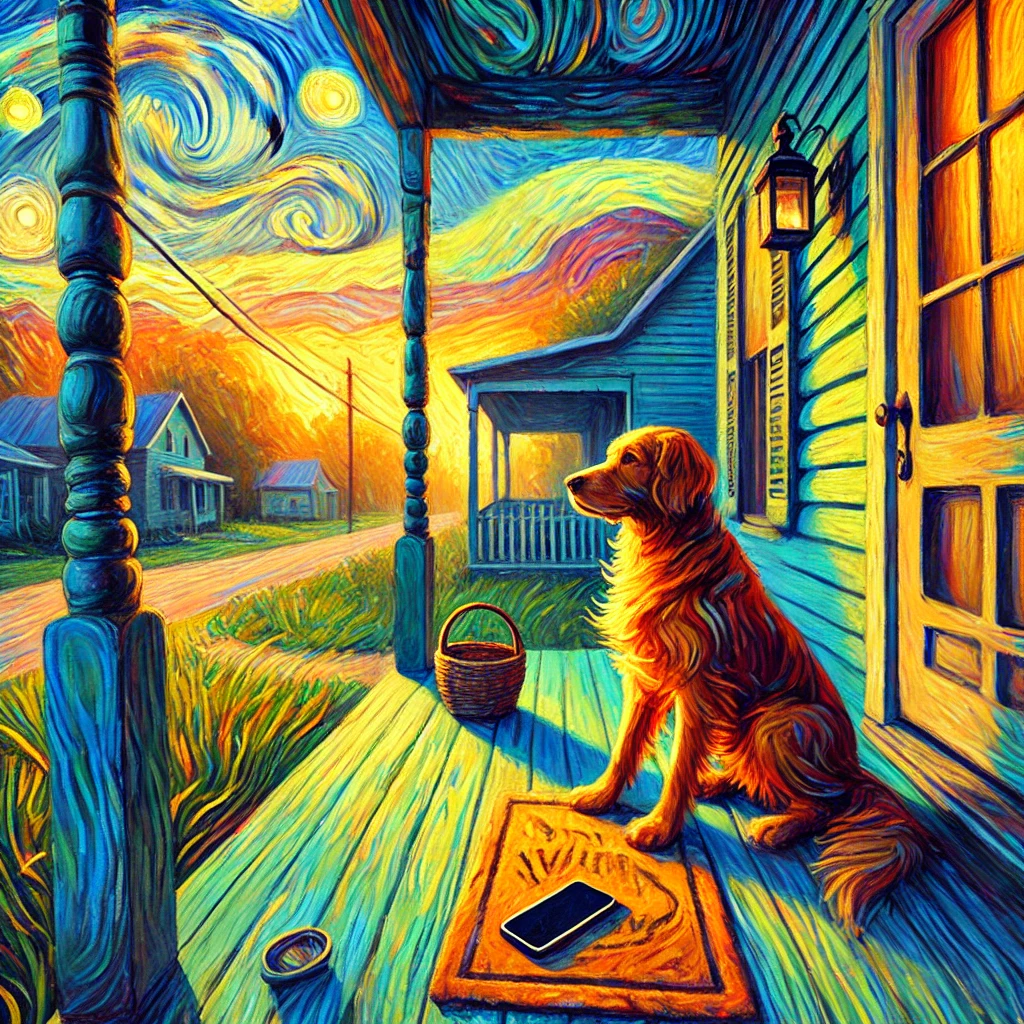
ACT I – The First Missing Dog (That Wasn’t Missing Yet)
Act II: The Facebook Phase (Or: When the Dogs Became Content)
By day two, the situation had escalated from concern to engagement.
The Facebook group – Sequatchie Crossing Community Watch (Unofficial but Serious) – created a new album titled:
“LOST DOGS – PLEASE SHARE”
It filled immediately.
There were dogs sitting politely on porch swings. Dogs standing in open truck beds like they owned the vehicle. Dogs asleep on welcome mats that did not belong to them.
One dog appeared in four different photos, posted by four different households, under four different names.
“This is Rusty,” one woman insisted.
“That’s Peanut,” replied another.
“No, that’s the one that follows the mailman,” said a third.
The mailman weighed in:
“He follows everyone.”
Clovis Strickland, who had recently appointed himself head of the Neighborhood Awareness Subcommittee (a role no one had formally approved), began cross-referencing posts.
“I’ve seen this dog,” Clovis said, tapping his screen. “He was at my place Tuesday, but only for an hour. Ate a biscuit. Left.”
“Left where?” asked his wife.
Clovis paused. “Forward.”
Soon, a theory emerged.
The dogs were not missing.
They were circulating.
A heat map was proposed. It was never completed, but several people tried.
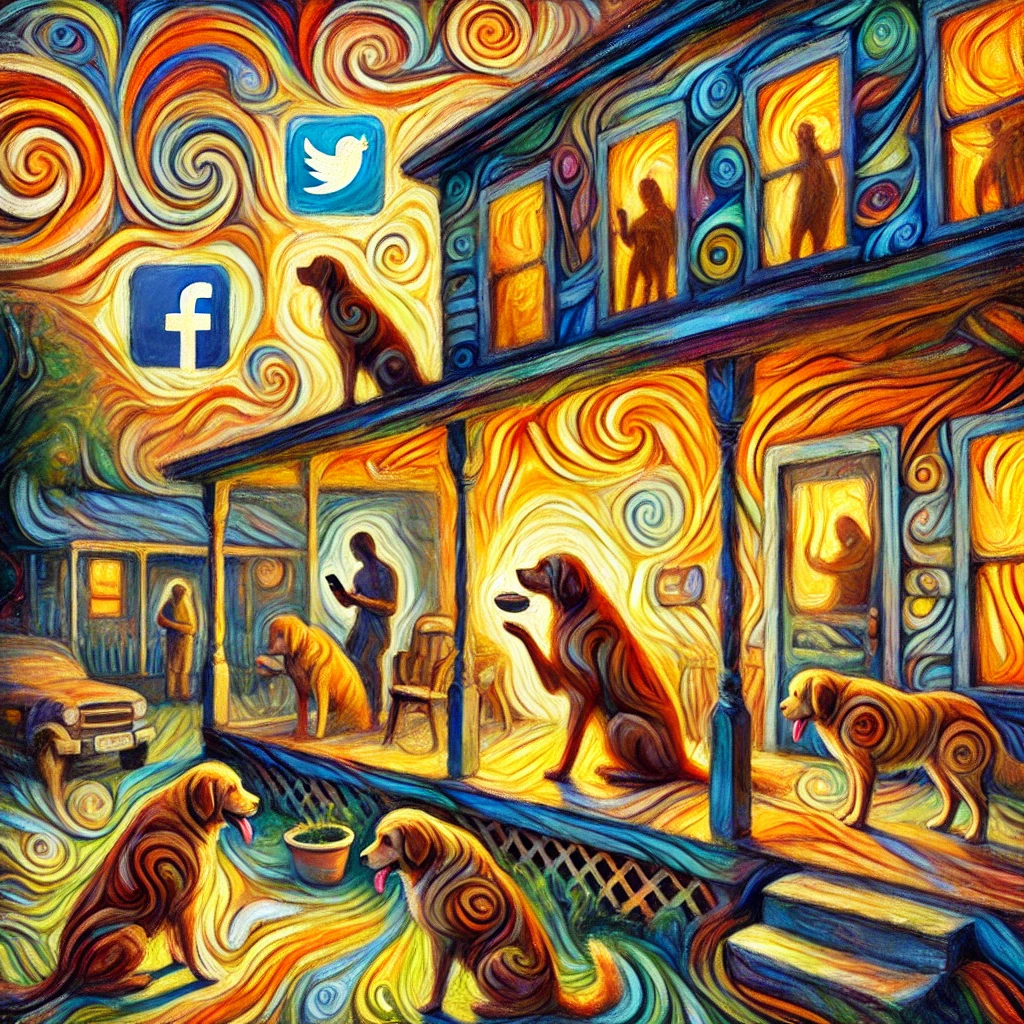
ACT II – The Facebook Phase
One man attempted to draw arrows on screenshots.
Another created a spreadsheet that listed:
-
Dog description
-
Porch last seen on
-
Treats consumed
-
Emotional vibe
The spreadsheet collapsed under the weight of subjectivity.
Meanwhile, Sheriff Peeler was receiving calls.
“Sheriff,” one woman said, “someone’s dog is on my porch.”
“Is it bothering you?” Peeler asked.
“No, it’s asleep.”
“Then let it finish,” Peeler replied.
By the end of the week, the Sheriff’s Office released an official statement written on letterhead but clearly dictated over the phone:
“At this time, no dogs are considered criminally missing. Please stop calling unless the dog is driving.”
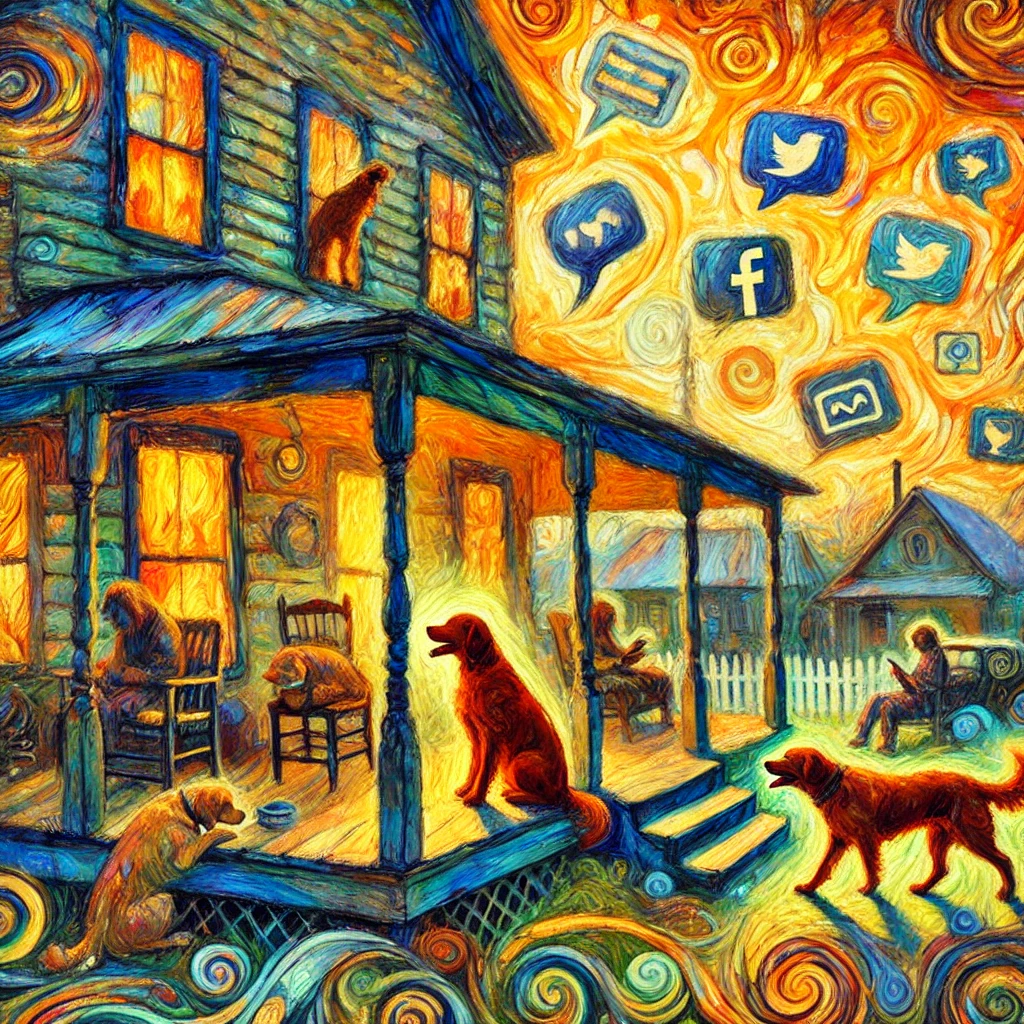
ACT II – The Facebook Phase
Act III: The Committee Forms (Because Of Course It Does)
Sequatchie Crossing did what it always did when confusion lingered longer than three days.
It formed a committee.
The Canine Clarification Committee met on a Tuesday evening in the Fellowship Hall. Attendance was high. Dogs were present.
Boot Barnes counted seven dogs inside before the meeting officially started. None of them belonged to him. One sat beside him anyway.
Mabel Dean opened the meeting with a prayer that included the phrase “and also the dogs, Lord, wherever they are tonight.”
Clovis stood to present his findings.
“We are not dealing with missing dogs,” he said. “We are dealing with a rotational housing system.”
Murmurs.
“Dogs,” Clovis continued, “appear to be selecting homes based on snack availability, porch comfort, and emotional openness.”
Someone raised a hand. “Are you saying the dogs are choosing us?”
“Yes,” Clovis said solemnly. “And sometimes rejecting us.”
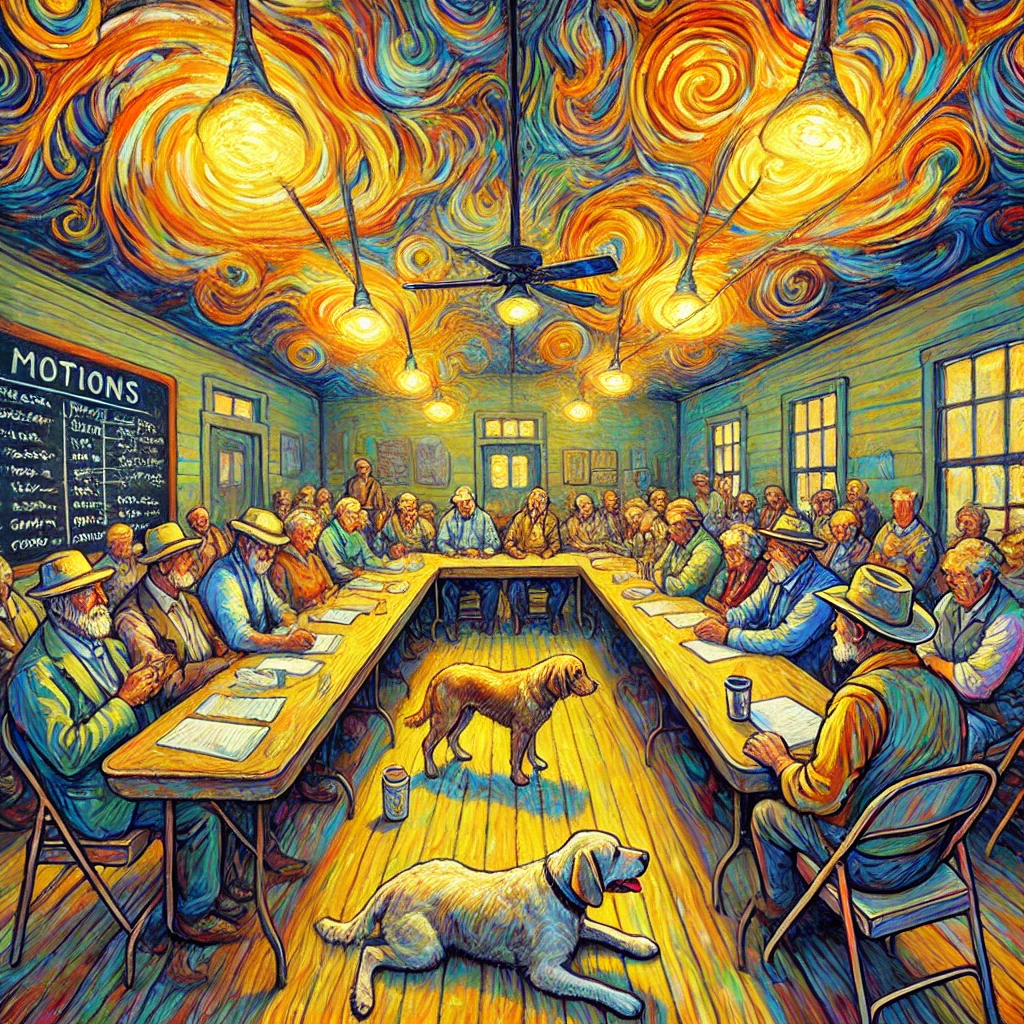
ACT III – The Committee Forms
This did not sit well with several attendees.
“What about ownership?” demanded a man who had brought no dog but looked defensive.
“That’s outdated thinking,” said Mabel. “We’re more of a shared-custody town now.”
Boot leaned over to Sheriff Peeler. “We’re gonna regulate dogs before potholes.”
Peeler nodded. “Always do.”
A motion was proposed:
Motion 1: Dogs seen on three or more porches shall be considered “Community Familiar.”
Motion 2: Feeding a dog does not constitute ownership unless accompanied by naming and vet paperwork.
Motion 3: Renaming a dog already named by someone else is frowned upon but unenforceable.
The dog beside Boot barked once, as if in agreement.
The motions passed.
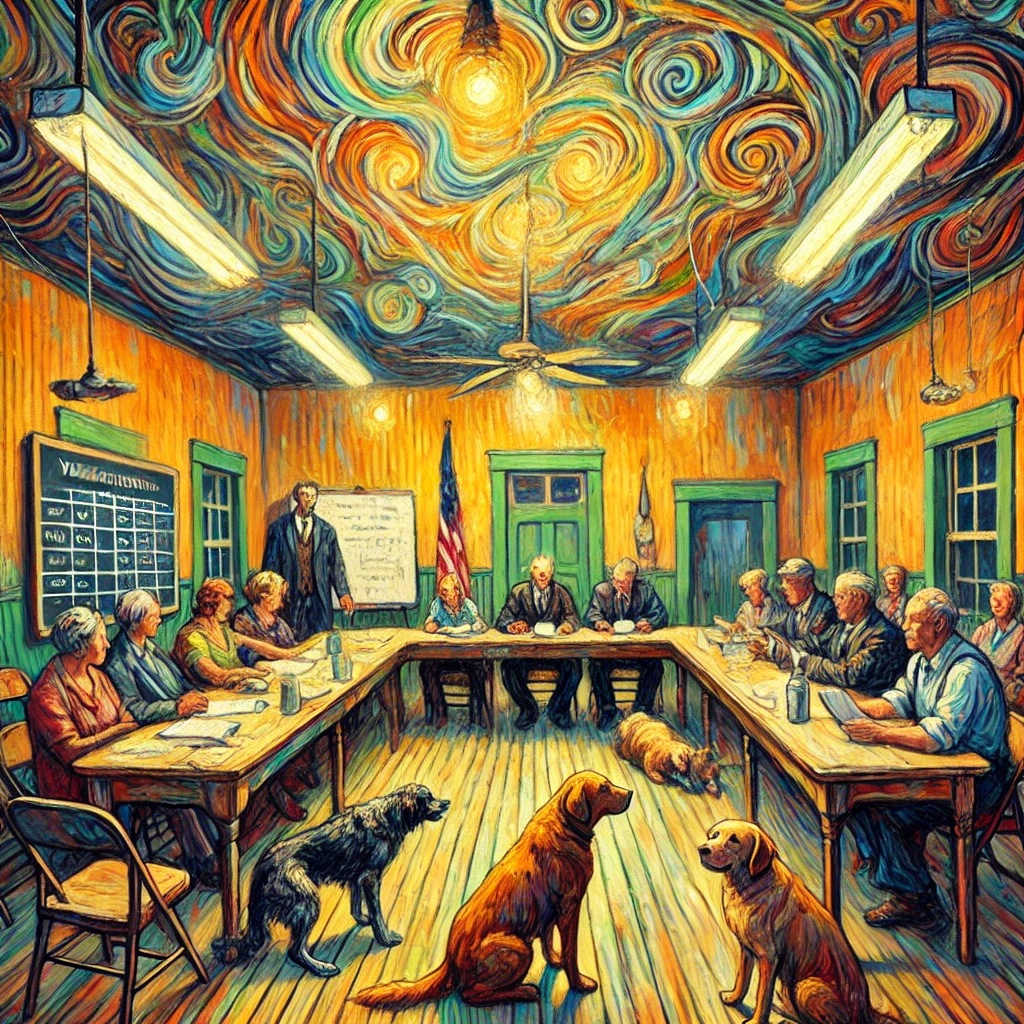
ACT III – The Committee Forms
Act IV: When the Dogs Started Posting (Sort Of)
The photos became more artistic.
Sunrise shots. Black-and-white filters. One woman captioned her post:
“He chose us today. 💛”
Another wrote:
“This is NOT our dog. But he seems emotionally invested.”
Someone created merchandise.
It began with a mug:
SEQUATCHIE CROSSING DOG DISTRIBUTION SYSTEM
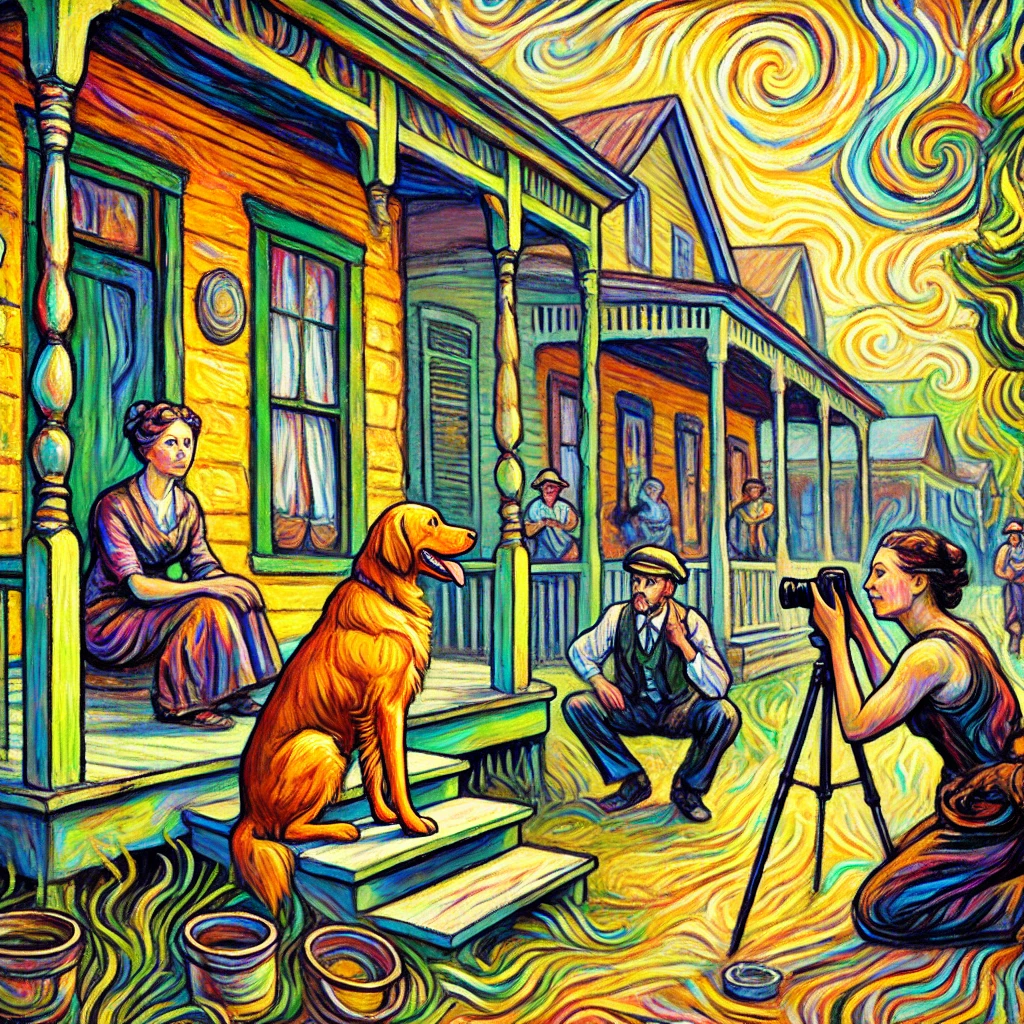
ACT IV – When the Dogs Became Content
Then shirts.
Then a bumper sticker that read:
IF YOU LOST YOUR DOG, CHECK THE NEXT PORCH
Dogs appeared in unexpected places.
At the post office.
Inside the hardware store.
In the front pew during Sunday service, where one dog stood during the final hymn and left before the benediction.
The Reverend paused. “I think that was a sign.”
“No,” Mabel whispered. “That was Hank.”
Meanwhile, an outsider passing through town made the mistake of asking, “Whose dog is that?”
The entire diner went quiet.
“Depends,” Boot finally said, “what time is it?”
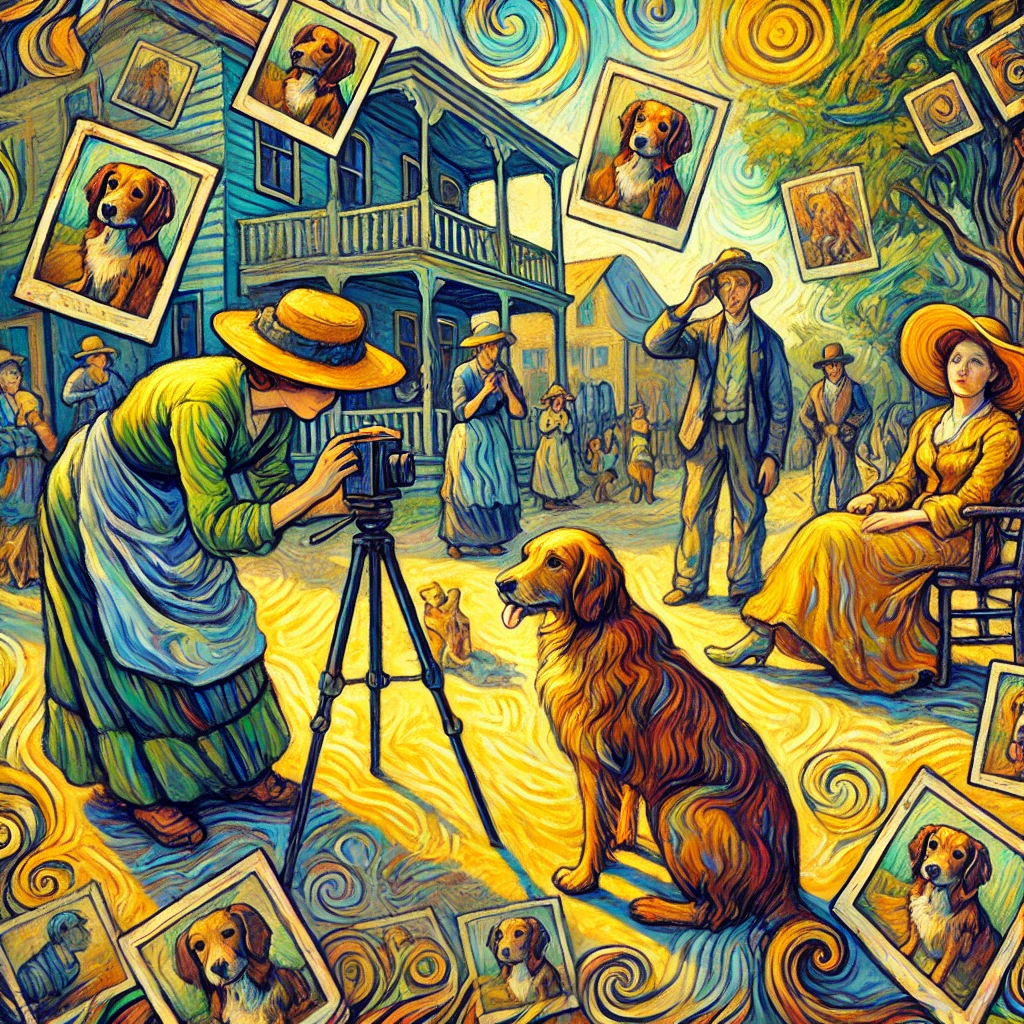
ACT IV – When the Dogs Became Content
Act V: The Attempt to Count the Dogs (And Why It Failed)
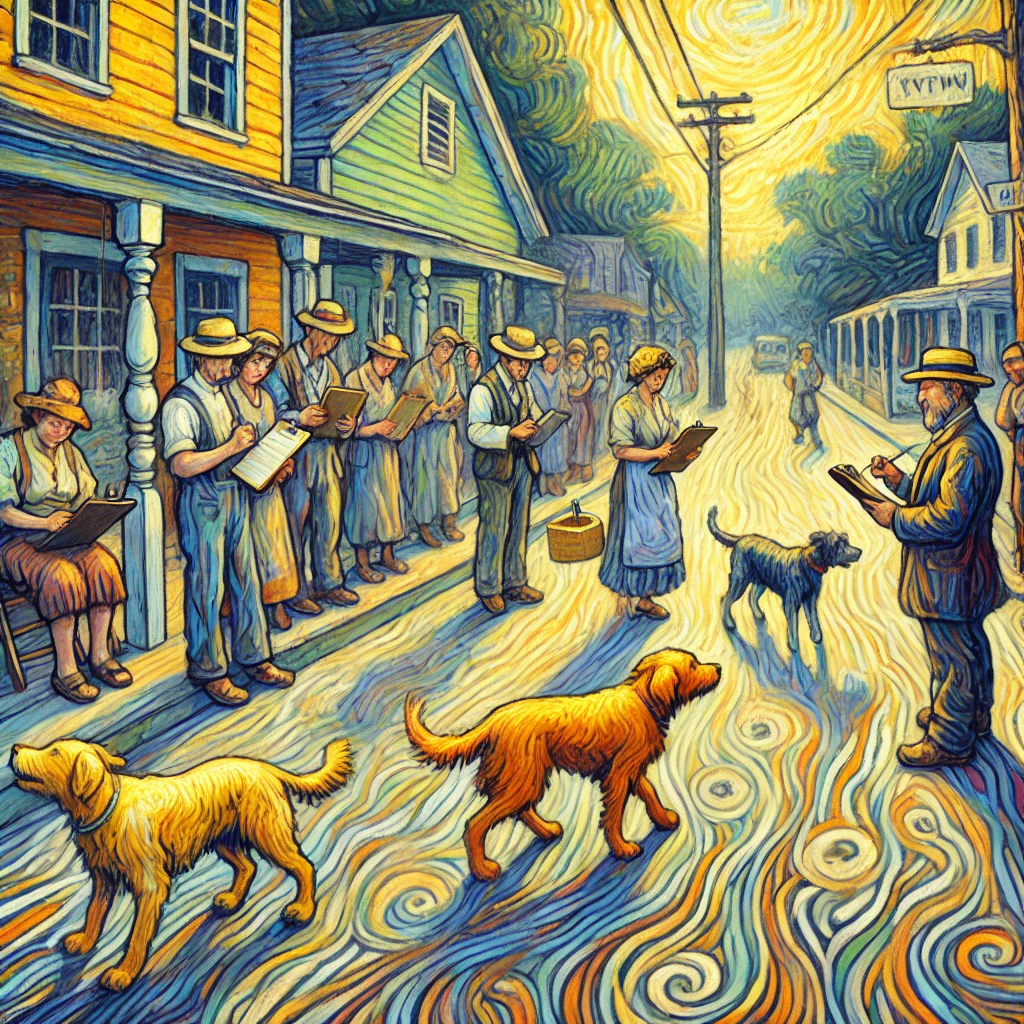
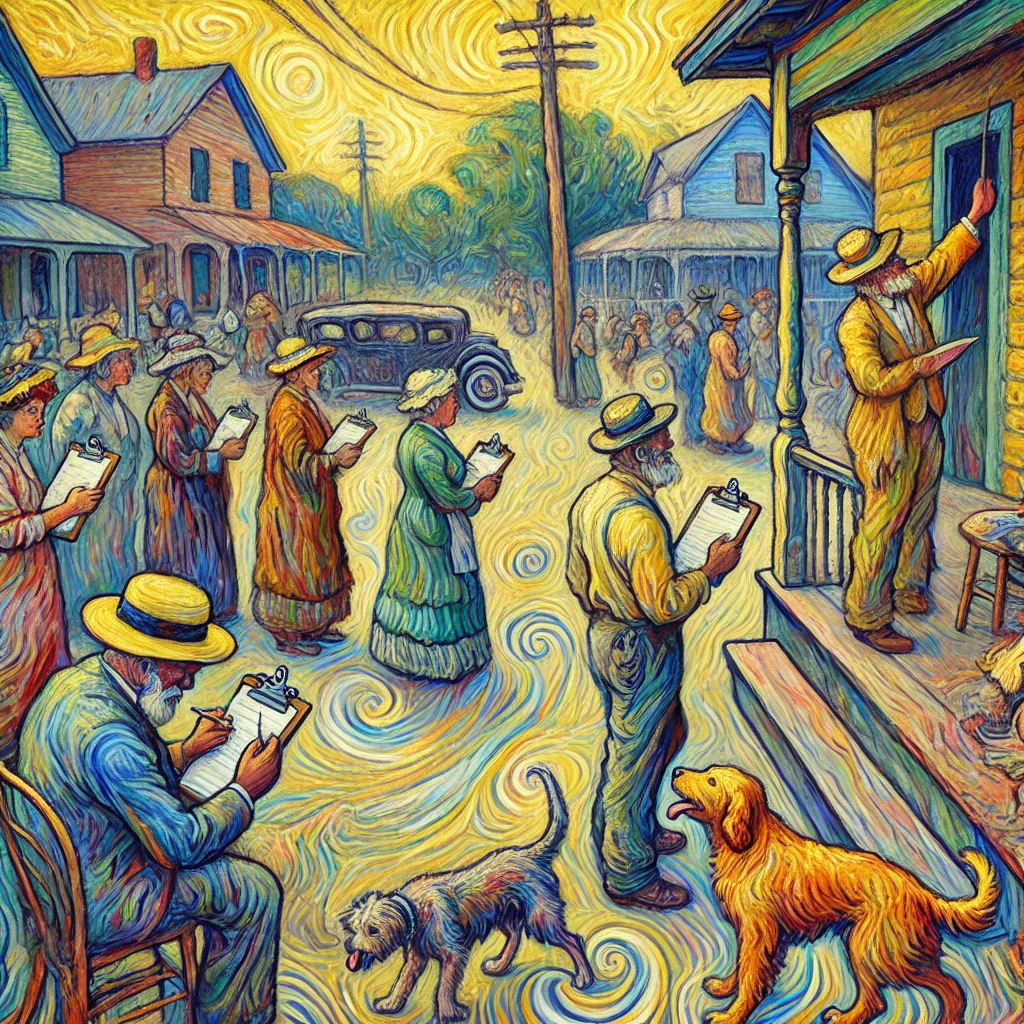
A census was attempted.
Clipboards were distributed.
The rules were simple:
-
Count dogs you see
-
Do not assume ownership
-
Do not follow dogs home
The rules were immediately broken.
One dog was counted six times.
Another evaded clipboards entirely.
ACT V – The Attempt to Count the Dogs
A third sat patiently for his tally mark, then walked to the next house and waited again.
By the end of the day, the count showed:
-
42 dogs observed
-
27 households claiming at least one dog
-
19 dogs claimed by multiple households
-
6 dogs claimed by no one
-
3 dogs that appeared only once and were never seen again
“Those are the wild ones,” Clovis said.
“They looked fed,” someone replied.
“They always do.”
ACT V – The Attempt to Count the Dogs
Act VI: The Argument About Whether Dogs Can Be Lost If They’re Happy
This was the debate that split the town.
“If a dog leaves,” said one faction, “it’s lost.”
“If a dog leaves and comes back,” said another, “it’s visiting.”
“If a dog never comes back,” said Boot, “it found better biscuits.”
A woman stood up during the town hall meeting.
“My dog has been gone three days.”
Gasps.
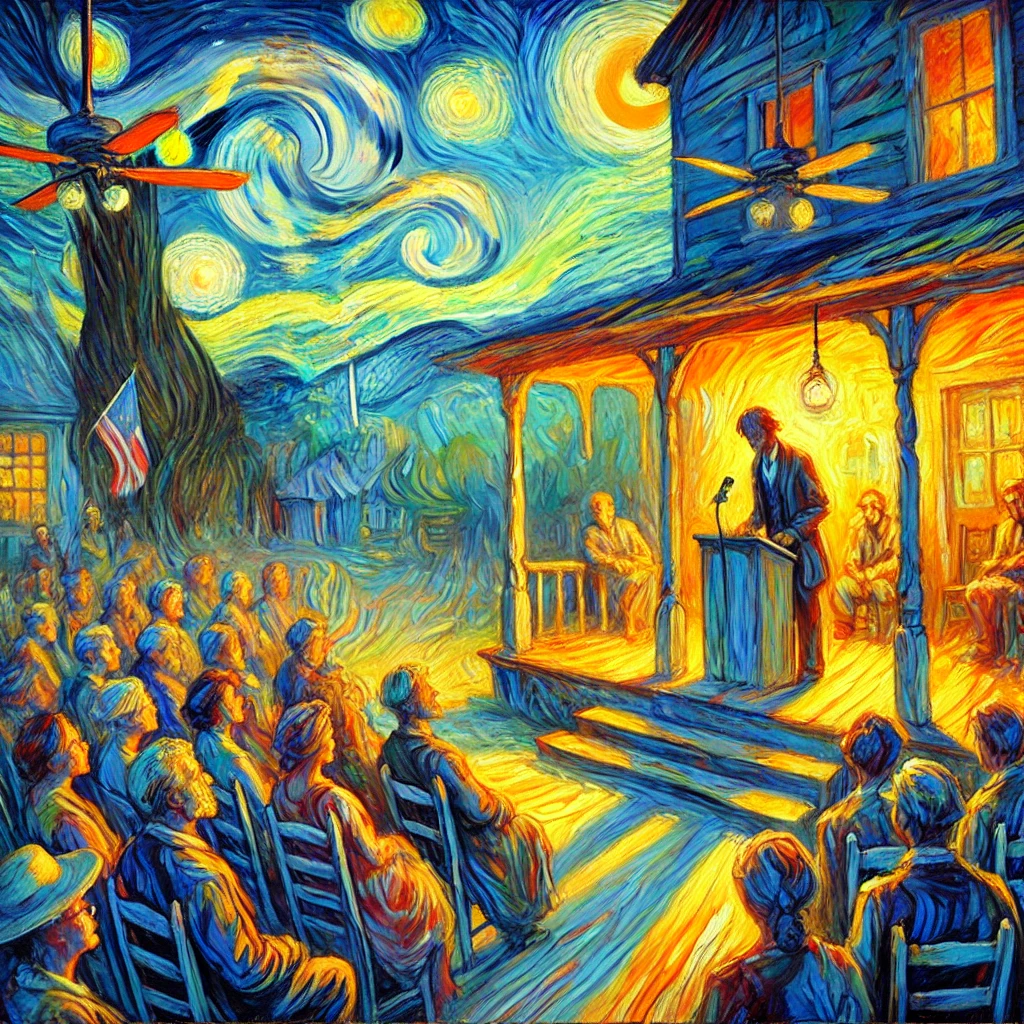
ACT VI – Are Dogs Lost If They’re Happy?
“And?” Sheriff Peeler asked gently.
“He looks very happy in the photos.”
Silence.
“I don’t want to interrupt his journey,” she said.
The room nodded.
A man in the back muttered, “That’s growth.”
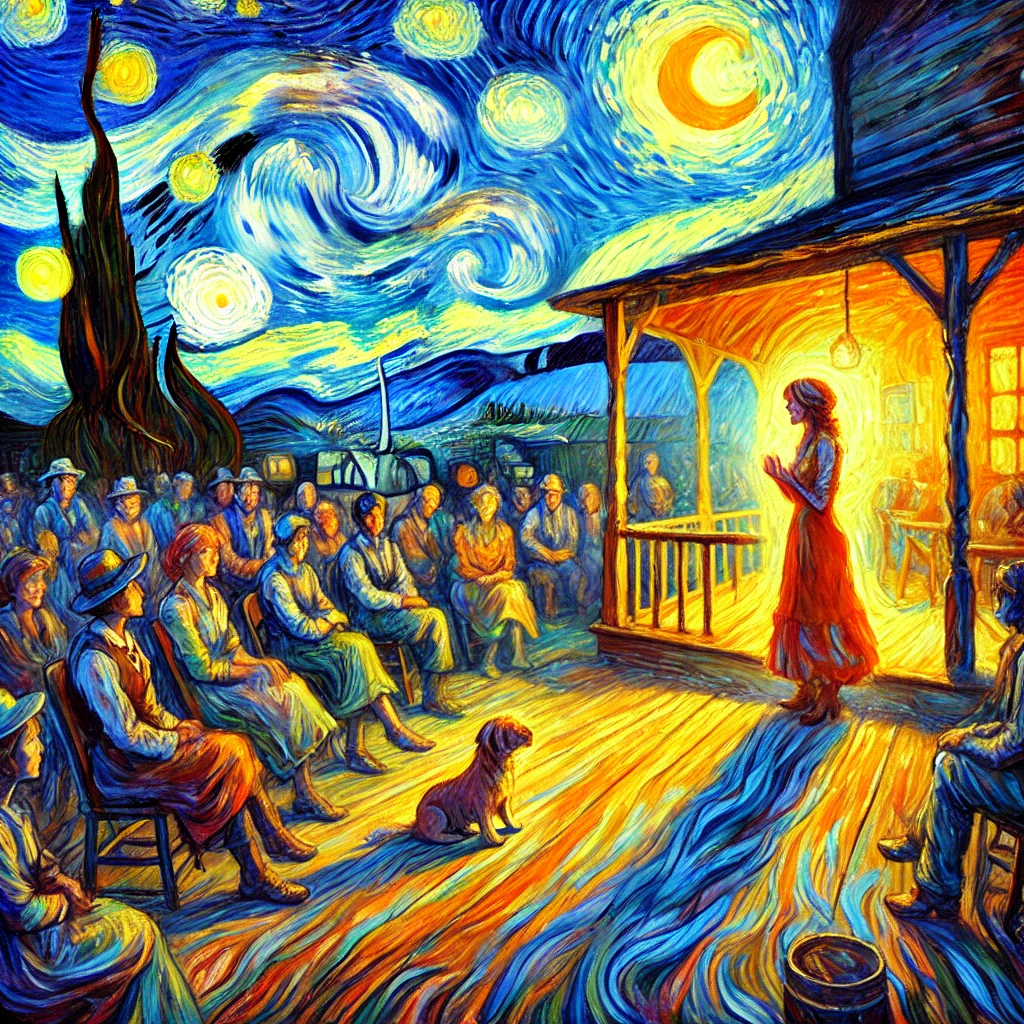
ACT VI – Are Dogs Lost If They’re Happy?
Act VII: The Dogs Decide (Without Telling Anyone)
Gradually, something shifted.
Dogs began settling.
Not permanently. But mostly.
A few favorites emerged.
Porches with shade. Kitchens with dropped food. Houses with people who didn’t ask questions.
Some dogs continued rotating.
Those were respected.
“That one’s a traveler,” Mabel said of a spotted hound who appeared once a week for soup scraps and left before dishes were cleared.
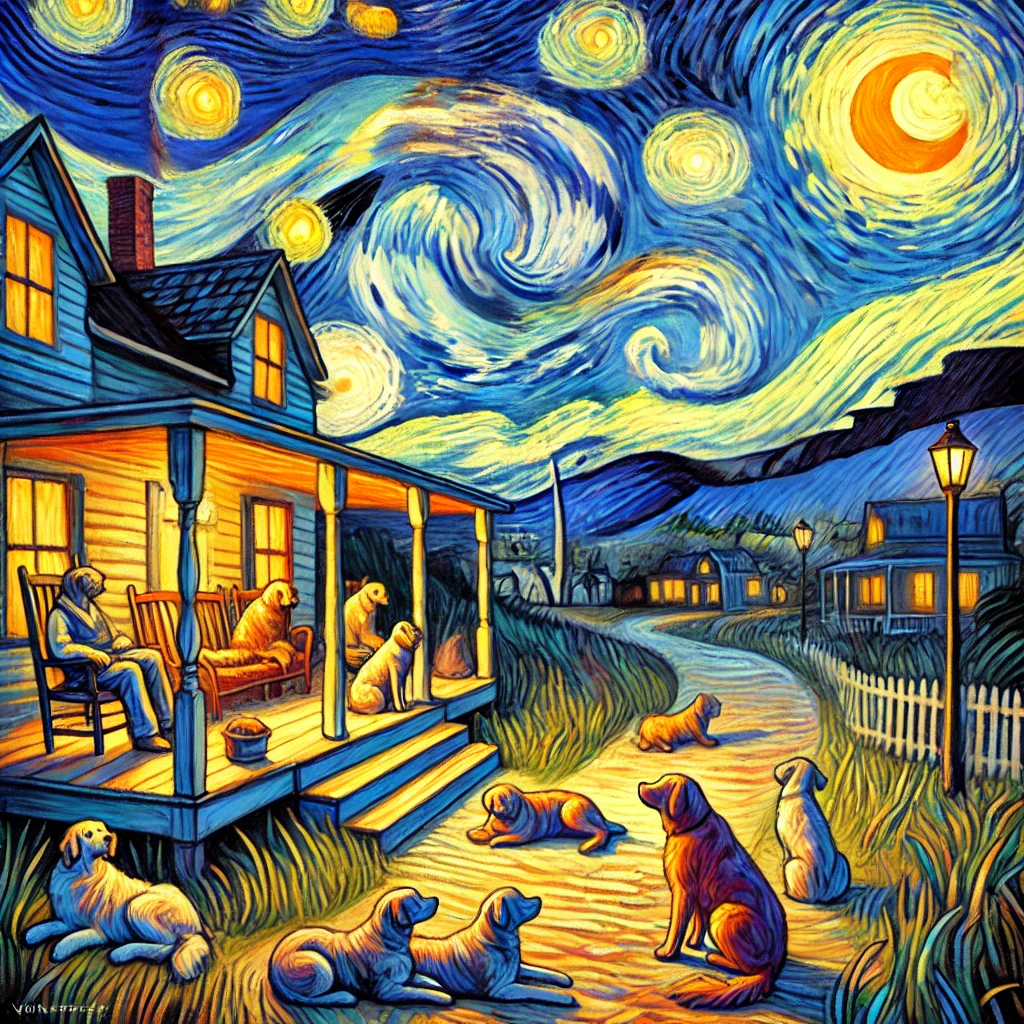
ACT VII – The Dogs Decide
No official announcement was made, but the missing dog posts slowed.
They were replaced with:
“Seen Again ❤️”
“Still Visiting”
“He’s okay, y’all.”
The Facebook album was renamed:
“OUR DOGS (TEMPORARILY)”
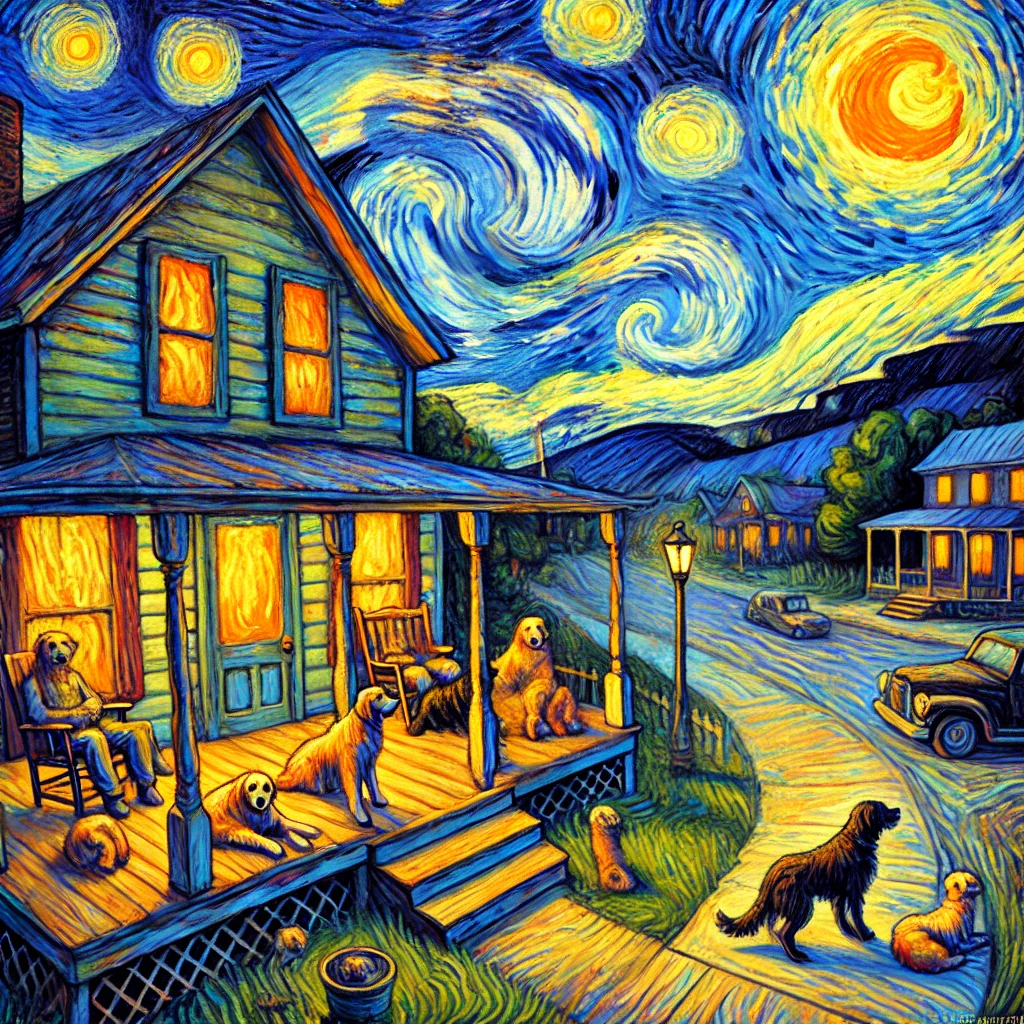
ACT VII – The Dogs Decide
Epilogue: The Dog That Never Belonged to Anyone (And Everyone Knew It)
Months later, a new family moved into town.
On their first morning, they found a dog on their porch.
They posted nervously.
“Is this someone’s dog?”
The comments came fast.
“He’s fine.”
“He knows where he’s going.”
“Don’t worry, he’ll let you know.”
The dog lifted his head, accepted a biscuit, and lay back down.
Boot drove by later and nodded.
“Welcome,” he said.
The dog did not look up.
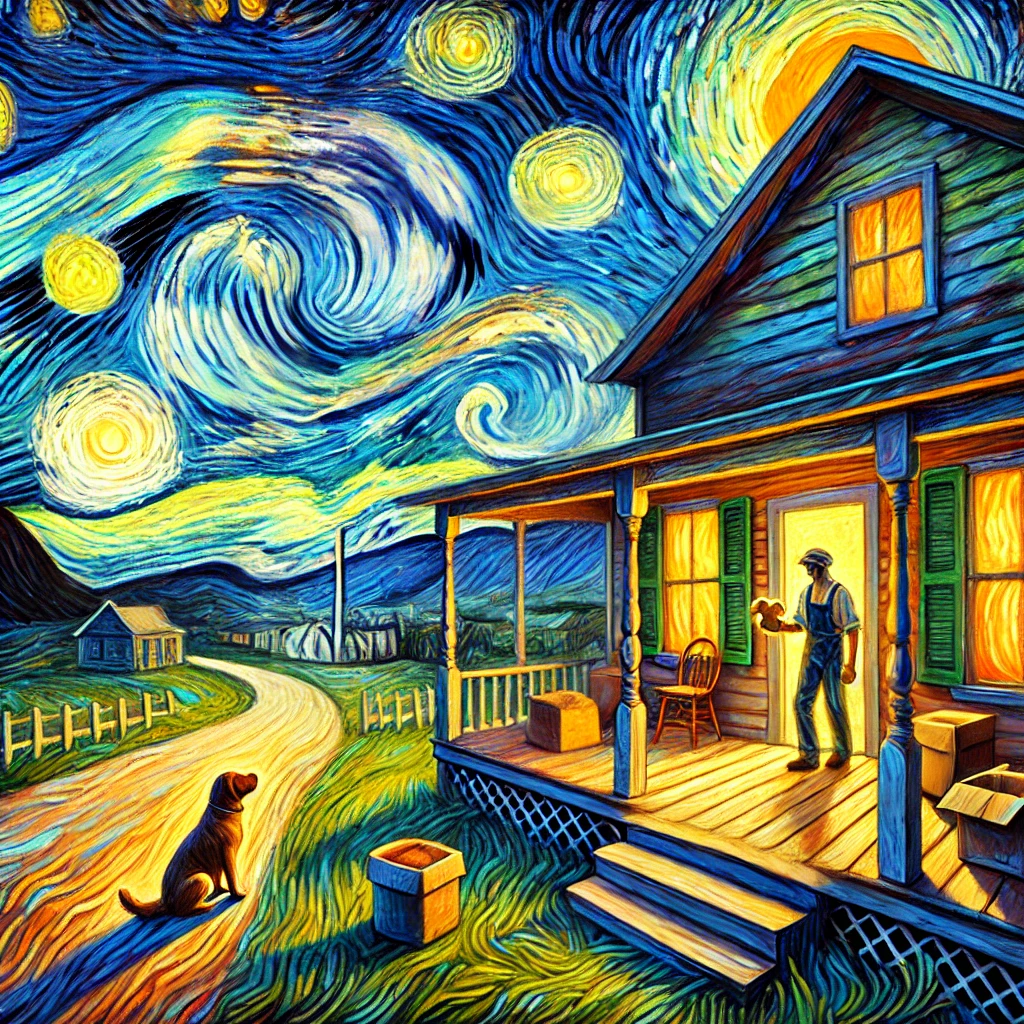
EPILOGUE – The Dog That Belonged to Everyone
Closing Note from the Dispatch
Sequatchie Crossing never did figure out how many dogs it had.
But it learned something more important.
Dogs don’t get lost here.
They just try on lives.
And sometimes, they stay.
Key Takeaways (Unofficial, Unanimous)
-
Ownership is flexible
-
Porches matter
-
Biscuits influence destiny
-
Dogs know more than we do
-
Facebook is not a tracking system
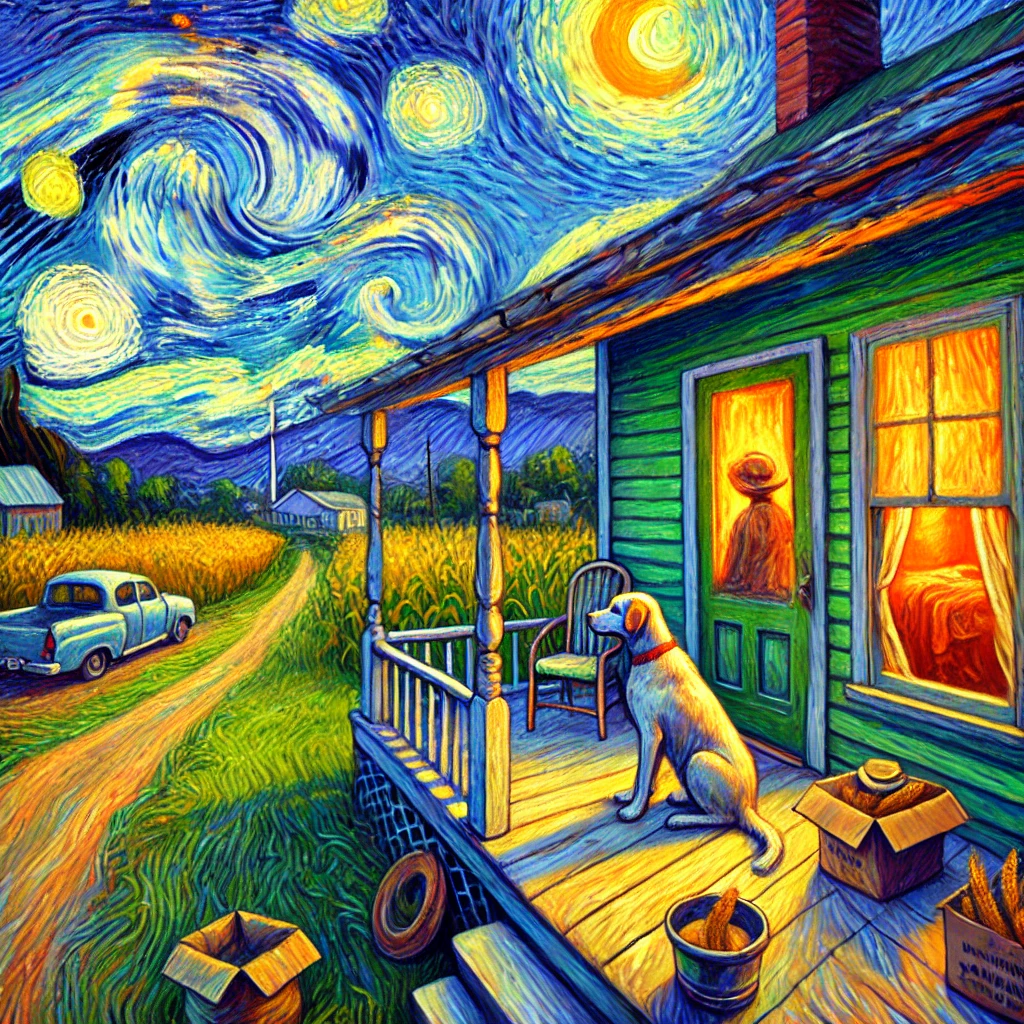
EPILOGUE – The Dog That Belonged to Everyone
Disclaimer
The following account is a work of fiction set in the town of Sequatchie Crossing, where dogs may belong to everyone, no one, or whoever fed them last. Any resemblance to real people, real dogs, or real Facebook posts is purely coincidental, though several residents insist it feels uncomfortably accurate. No animals were harmed in the making of this story, though several were emotionally confused, overfed, and temporarily renamed.
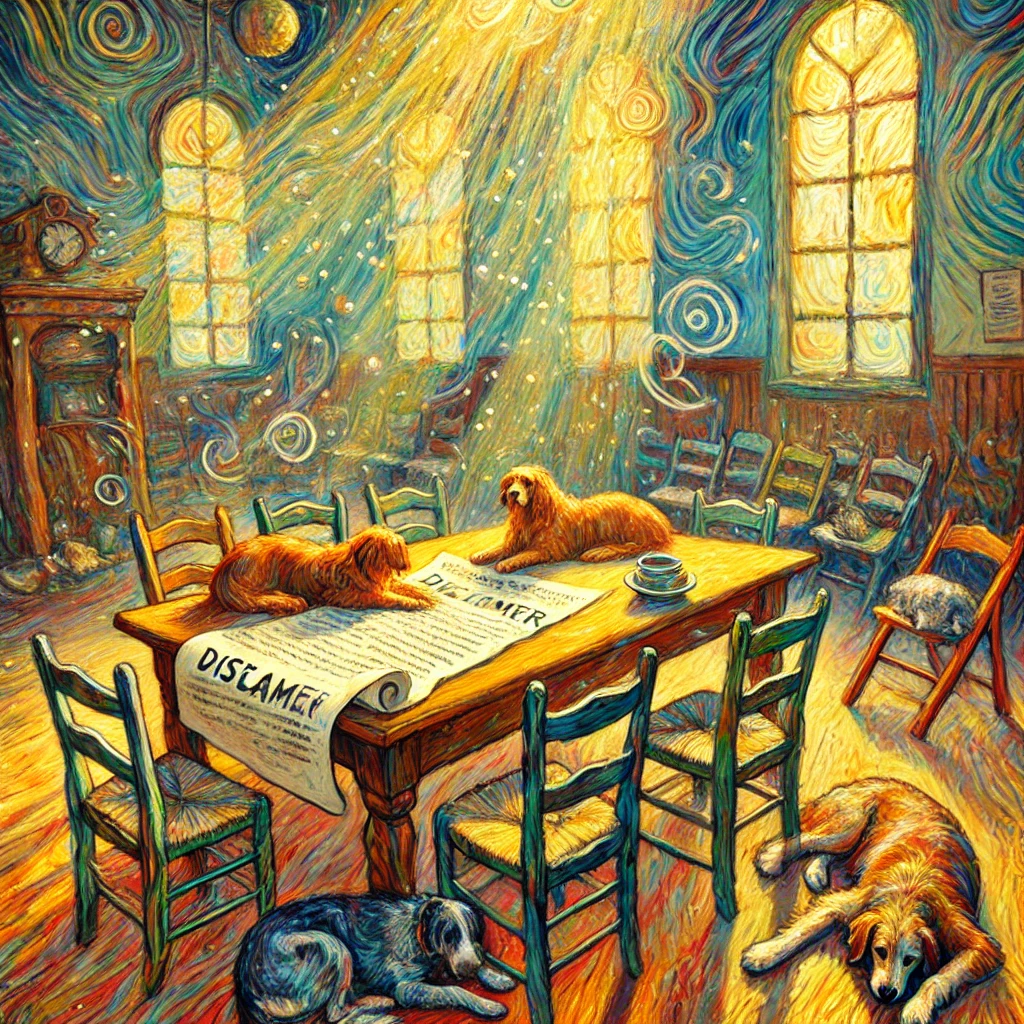
DISCLAIMER – Sequatchie Has More Missing Dogs Than Dogs
Real Places Behind the Ruckus – From The Dunlap Directory
Real Places Behind the Ruckus – From The Dunlap Directory
Yes, this story was fictional; even the parts that weren’t true. These places? Absolutely real. Stop by, support local, and keep the Wi-Fi away from livestock:
- Chattanooga VIP Tours
- Kosha Hibachi Chattanooga
- ProMobile Automotive
- Dunlap and Pikeville Yard Sale on Facebook
- Wheeler Service Inc.
- Campbell Tire
- Shell
- Dunlap Farmers Market
- Sequachee Valley Electric Cooperative
- Dolce In Dunlap
- Gigi’s Sweet Stop
- BTC Fiber
- Jeff Harrell – United Real Estate
Real Places Behind the Ruckus – From The Dunlap Directory
At Sequatchie Crossing, we tell the stories of Sequatchie Crossing.
Please share this post with your friends, family, or business associates who may want follow the news from Sequatchie Crossing.

0 Comments